


What are the advantages of a carbon foil?
The sport of foiling has seen rapid growth in recent years, especially with the emergence of wing foiling, which allows you to glide on water using a wing and a foil.
A foil consists of a mast, a fuselage, and two wings: a lifting front wing and a rear wing for stabilization.
There are different types of foils, depending on the materials used, such as aluminum or carbon.
In this article, we will focus on the advantages of carbon foils, while debunking some misconceptions, particularly those that claim carbon foils are systematically more efficient and lighter than their aluminum counterparts.
Is a carbon foil really more efficient than an aluminum foil?
1. Stiffness and performance, yes but no.
Firstly, a carbon mast is not necessarily stiffer than an aluminum mast. If a 16mm thick mast only has 2mm of carbon, then it will not be stiffer than an aluminum mast, and above all, it will be less solid.
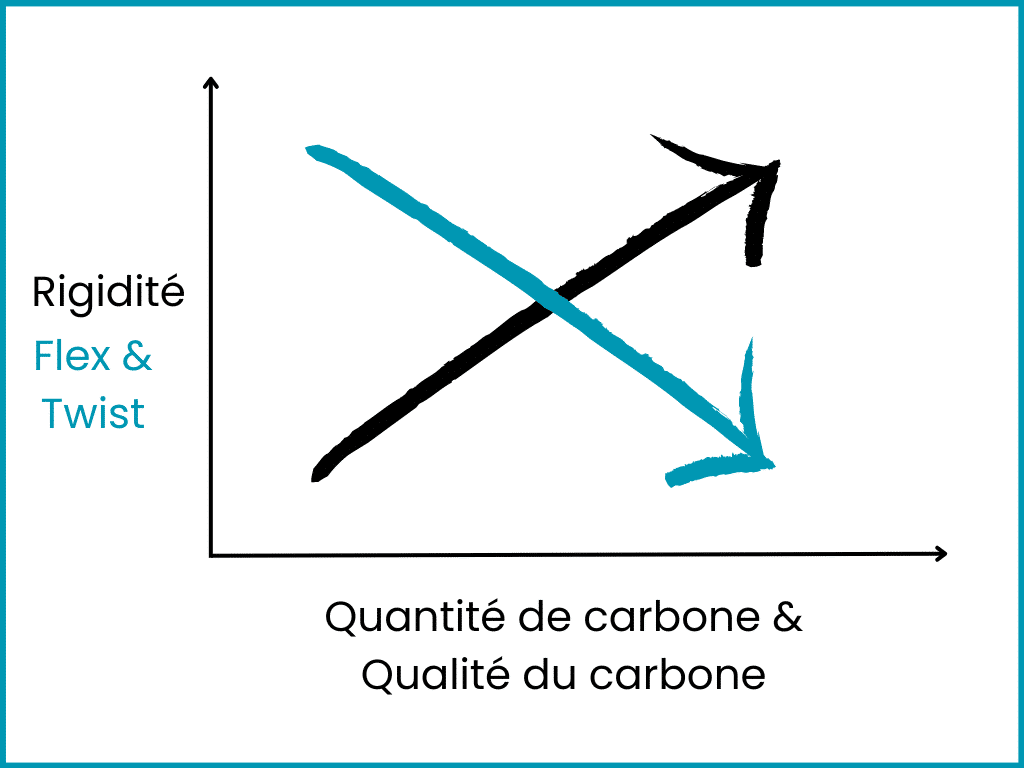
The advantage of a carbon mast is to be able to minimize drag while maintaining stiffness in both bending and torsion.
To achieve this, it is necessary to increase the quantity of carbon, improve the quality of the carbon fibers, and have a coherent and relevant lay-up plan.
This is not the case for all carbon masts. One of the great advantages of having a carbon foil is to reduce drag as much as possible with the maximum possible stiffness. This provides stability, better acceleration, and improved maneuverability. The performance is significantly superior.
If the carbon foil is well-constructed, it provides a feeling of responsiveness, agility, control, and glide.
For example, let's compare a carbon foil and an aluminum foil. With the same thickness and chord (11mm chord, and 14mm thickness), the aluminum mast is more flexible and twists during navigation, which creates latency, a loss of responsiveness, glide, and/or control. This is why aluminum masts are made thicker.
The carbon foil, on the contrary, will provide increased responsiveness and agility if and only if the quality of the carbon fibers and the quantity of carbon are increased.
If there is deformation under the stress of a strong effort, the carbon will return to its initial position more quickly. The carbon foil will then provide precision in foot pressure and finer control during navigation.
Lightness, yes but no.
The density of a carbon part is 1.80 g/ml, while that of aluminum is 2.7 g/ml. So on paper, carbon seems much lighter. However, if you want an ultra-stiff carbon foil, you have to increase the amount of carbon.
If you produce a solid carbon mast, it will not be much lighter than a hollow aluminum mast. On the other hand, the carbon mast will be much thinner (14mm vs 18.5mm for aluminum) with a smaller chord. You will save about 200-300g for the same size.
However, if you thicken the carbon mast and put foam inside, you can save between 500 and 900g per mast. In this case, we can say that the carbon mast is lighter.
Durability and Versatility
Durability is added to the many advantages of carbon foil. Damaging your wing due to a rock or getting scratches from friction can happen.
The advantage of a carbon foil is that it can be easily repaired by sanding it and adding more carbon. However, it is not recyclable, unlike aluminum. Therefore, it is important to choose your carbon foil carefully to maximize stiffness, fineness, and ensure it is as durable as possible over time, accompanying you in your practice and progression.
Another advantage of carbon is that it resists corrosion and wear well, unlike aluminum, which can pit or crack over time. Carbon is therefore a non-recyclable but durable material that guarantees optimal use for several years if properly cared for.
Some tips.
- To maximize the durability of your foil, avoid any friction with sand or rocks and avoid resting your board on its rail with the foil leaning on the ground on one side. You risk damaging the wings and losing efficiency.
- Protect your mast in a mast bag to prevent any impact.
- It is advisable not to leave a carbon foil in direct sunlight. Epoxy resins polymerize at temperatures starting from 65-70 degrees (generally, sometimes even earlier). A foil in direct sunlight with high temperatures can easily exceed 80 degrees. Consequently, the resins soften, and if you use your foil immediately, you risk weakening the entire structure. It is therefore recommended to let the foil cool down before going back into the water.
- The same applies if your foil has been exposed to high heat in your car for a long time.
- Remember that even if your foil is well-built, a foil is an underwater airplane. Any contact with an obstacle will damage it.
- Rinse it from time to time, and if you use it very frequently, check it regularly from all angles.
In conclusion
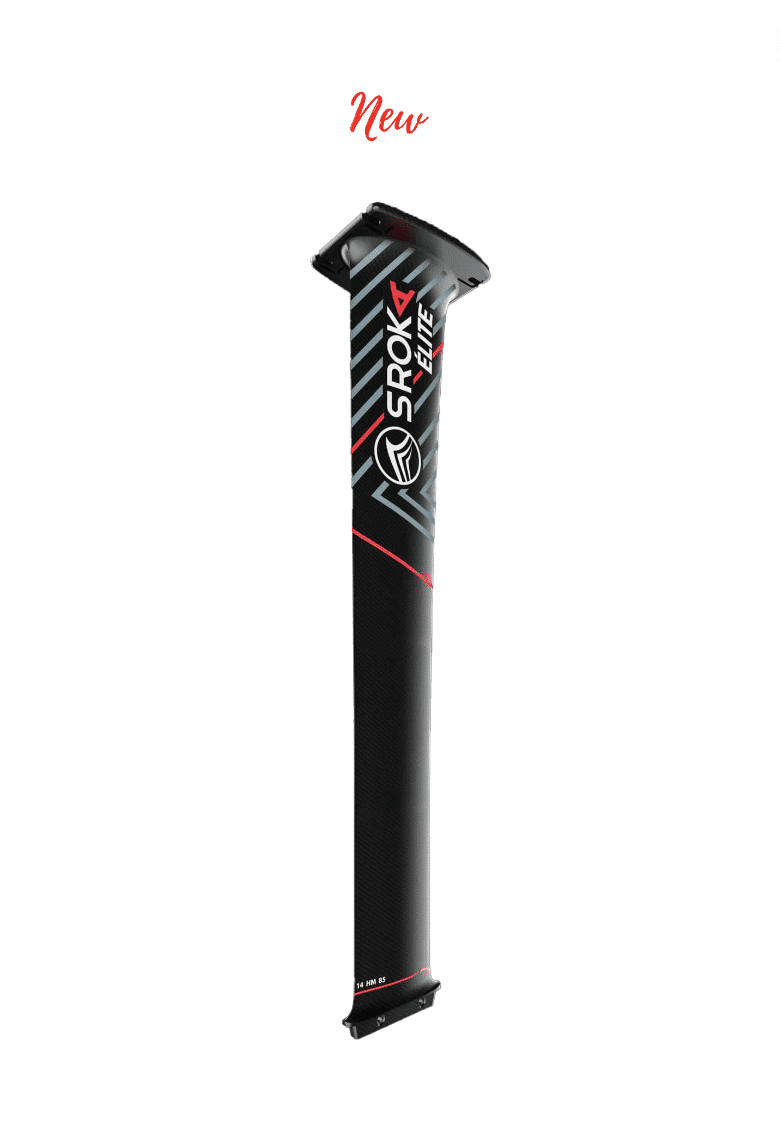
- In conclusion, using a carbon foil offers many advantages compared to aluminum. Carbon provides incomparable stiffness (when using high-modulus fibers), lightness, durability, and versatility, which will allow you to fully enjoy the gliding sensation offered by the foil. If you want to invest in a carbon foil, invest in a very good quality carbon mast. It will certainly cost you a little more, but it will save you from having to buy another one 1 or 2 years later. We recommend you discover our Sroka Elite Carbon range, which offers a 100% high-modulus M40J foil, with a thin mast (14mm thick with a 10.9 cm chord) and high performance.If absolute performance doesn't appeal to you, take a look at the SOLO carbon foil in 16mm thickness. It will provide lightness and stiffness at a more measured price. Finally, we have our range of aluminum foils which are very high-performing with the simplicity of an aluminum foil.
Do not hesitate to contact us for more information on Carbon Foils.