



Vous cherchez le meilleur pack wing foil pour vous lancer ou progresser en 2026 ? Ce guide comparatif passe en revue les meilleurs packs disponibles sur le marché — rigides et gonflables — pour vous aider à faire le bon choix selon votre niveau, votre gabarit et votre budget.
Notre verdict rapide : Pour un débutant, le meilleur pack wing foil rigide est le SROKA Sky Rider + S-Foil + Wing V4 (19/20), et le meilleur pack gonflable reste le SROKA Air V2 pour sa complétude et son évolutivité. Retrouvez le comparatif détaillé ci-dessous.
Le wing foil, mélange de windsurf, de kitesurf et de surf, gagne en popularité grâce à sa simplicité et à la sensation de glisse qu'il offre. Plus sécuritaire que le kitesurf et moins encombrant que le windsurf, il vous ouvrira les portes du foil avec de nombreuses sensations. Dans cet article, nous explorons les critères essentiels pour choisir le pack wing foil idéal — en fonction de votre gabarit, de votre spot et de votre niveau — et nous vous présentons les bonnes informations pour vous aider à choisir le meilleur pack wing selon vos besoins. Que vous soyez débutant ou expérimenté, découvrons ensemble les packs qui vous permettront de profiter pleinement de cette discipline.
Qu'est-ce qu'un pack wing foil ? Planche, foil, wing expliqués
Un pack Wing foil est un concept qui n’est pas totalement identique selon les marques, en particulier sur la constitution du pack. Il faudra donc faire attention aux petits détails. De manière généralisée, un pack Wing foil est constitué d’une planche de wing foil, d’une aile de wing et d’un foil. Il peut être constitué avec une planche gonflable ou dure, un foil en aluminium ou en carbone. Cependant, au niveau des accessoires, il y a beaucoup de différences.
Commençons par décrire les gros éléments
La planche
Elle peut être rigide ou gonflable. De manière générale, une planche rigide apportera plus de rigidité et de stabilité, mais elle sera plus encombrante et fragile. Pour débuter, une planche large et un peu plus grande vous apportera de la stabilité et donc de la facilité dans votre apprentissage.
La planche de wing gonflable a de nombreux avantages et quelques inconvénients. Elle est plus solide à l’impact et plus facile à transporter. Imaginez-vous partir en vélo avec un pack wing foil gonflable sur votre dos. Certains vont même naviguer en scooter pour éviter les embouteillages. En bateau ou dans le coffre de voiture, le pack gonflable se fera oublier. En revanche, cette planche sera un peu moins stable et, en raison du matériau, elle collera un peu plus à l’eau. Donc, si vous n’avez pas beaucoup de place ou que vous voyagez beaucoup, le gonflable peut être une très bonne alternative.
Wing
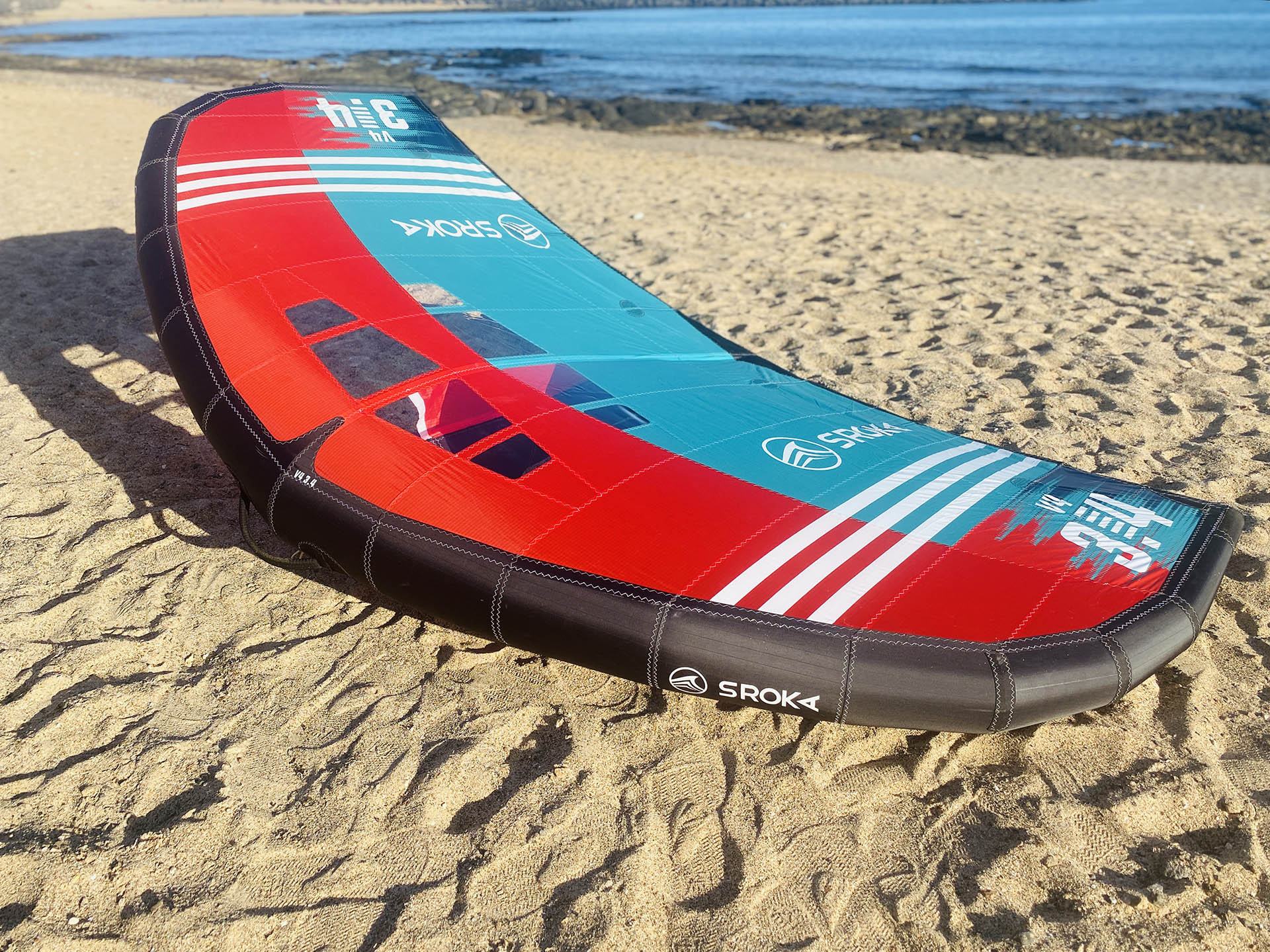
Quant à la wing, elles sont toutes gonflables, ce qui les rend pratiques à ranger et à transporter. Les tailles varient de 8 m pour certaines marques à 2 m² pour les plus petites. En règle générale, pour débuter, nous vous conseillons une aile de 5 m² pour un gabarit autour de 80 kg, 4,5 m² pour un gabarit inférieur à 70 kg et 6 m² pour un gabarit supérieur à 90 kg. Il en existe avec des poignées rigides, souples, des fenêtres pour voir à travers, avec des envergures différentes et des puissances différentes et des matériaux différents.
Le foil
Ah, le foil ! Ce qui était vrai pour la planche et la wing l’est tout autant pour le foil. De l’extérieur, un foil est un foil, mais pourtant, il y a de grosses différences entre les foils. Le foil est constitué d’une platine (connexion avec la planche), d’un mât, d’un fuselage, d’une ailette avant et d’un stabilisateur. Il peut être construit dans différents matériaux : bois, aluminium et carbone.
Lorsque vous avez un foil en carbone au même prix qu’un foil en aluminium, posez-vous la question : comment est-ce possible ? Ce n’est pas parce que le foil est tout en carbone qu’il est plus performant à prix égal. Pour être au même prix, le foil en carbone est moins rigide, moins solide, et il aura moins de nervosité et de réactivité qu’un foil en aluminium bien construit. Donc, “carbone pas cher” ne signifie pas forcément bonne qualité.
En résumé, on pourrait se dire que tous les packs se valent, car ils sont constitués des mêmes éléments. Cependant, en parlant des mêmes éléments, à savoir la planche, le foil et la wing, on peut se rendre compte qu’il y a beaucoup de différences qui font qu’un pack est plus accessible, plus performant ou plus évolutif.
Il y a d’autres éléments qui font partie de certains packs mais pas de tous. Les accessoires tels que la valise de transport, la housse, le leash et la pompe varient. Certains packs vous proposent des packs complets, tandis que d’autres se concentrent sur l’essentiel. Il faudra donc investir davantage pour avoir un pack complet
Pourquoi choisir un pack wing foil complet plutôt qu'acheter séparément ?
- Acheter un pack de la même marque permettra d’avoir une compatibilité garantie sur tous les éléments. Parfois, vous pouvez voir des planches d’une marque avec un foil d’une autre marque. Cependant, ce n’est pas toujours totalement compatible. Dans le doute, nous vous conseillons de choisir un pack de la même marque.
- Facilité et compatibilité : Acheter un pack de la même marque garantit la compatibilité entre les éléments. Vous évitez ainsi les problèmes d’ajustement et d’adaptation. Les packs sont soigneusement conçus pour fonctionner ensemble. Acheter un pack de la même marque vous assure une compatibilité parfaite entre la planche, l’aile et le foil. Vous évitez les problèmes d’ajustement et de compatibilité qui peuvent survenir avec des éléments achetés séparément. Par exemple, certaines marques de planches ont des boîtiers très reculés, tandis que d’autres les ont plus avancés, même à taille égale. Cela entraîne un positionnement du mât sur le fuselage différent, ce qui peut rendre le foil trop piqueur ou trop instable.
- Économies : Les packs de wing foil sont souvent plus avantageux financièrement que l’achat séparé des composants. Vous pouvez économiser entre 10 et 25 % parfois.
- Prêt à naviguer : Vous recevez un ensemble complet, prêt à être utilisé dès réception. Pas besoin de chercher chaque élément individuellement et de perdre du temps. Je tiens à souligner que certains packs sont minimalistes (sans accessoires), et il faudra penser à compléter votre équipement en achetant un leash, une pompe, etc.
- Conseils du fabricant : Les packs sont souvent recommandés par les fabricants pour une expérience optimale. En effet, les choix de développement varient en fonction des marques. Certaines privilégient un décollage très rapide avec un vent lent, tandis que d’autres optent pour un décollage modéré mais avec plus de vitesse. De plus, certaines planches incluses dans les packs sont moins larges et moins stables que d’autres.
En résumé, un pack wingfoil est un excellent choix pour les débutants, car il simplifie l’achat, assure la compatibilité et vous permet de vous concentrer sur l’apprentissage de cette discipline passionnante. Simplifiez votre expérience, économisez de l’argent et concentrez-vous sur l’essentiel : la glisse et le plaisir.

Comment choisir le meilleur pack wing foil selon son niveau et son gabarit
1) Niveau de Compétence
Le matériel doit correspondre à votre niveau. Les débutants ont besoin d’équipements plus stables et faciles, tandis que les experts peuvent opter pour des modèles plus performants avec des planches plus étroites, plus performantes et moins stables. C’est la différence entre stabilité et performance.
Si vous débutez, privilégiez la stabilité. Une planche large et un foil progressif vous aideront à progresser en toute confiance. Ne prenez pas du matériel trop petit par rapport à votre niveau et gabarit. Et faites attention à une chose : le volume est égal à une longueur multipliée par la largeur et l’épaisseur. Donc ce n’est pas parce que votre planche fait 90 L qu’elle est stable. La stabilité passe par la largeur de la planche. Il n’y a pas de miracle.
En ce qui concerne le type de pratique :
- Le wingfoil peut être pratiqué en freeride, dans les vagues ou en downwind. Chaque discipline a ses spécificités. Donc en fonction de vos envies, le choix du matériel sera différent.
- Cependant, si vous débutez, ne vous surestimez pas et restez sur un matériel débutant. Si vous choisissez du matériel trop performant et trop technique par rapport à votre niveau, votre vitesse de progression et votre apprentissage seront beaucoup plus longs, voire vous pourriez être dégoûté de l’activité.

2) Pour débuter en Wing foil
Pour débuter, nous vous conseillons des foils autour de 1750 cm², une planche autour des 6 pieds avec un volume compris entre 100 et 130 L, et une aile de 5 m². Solbach devra être adapté à votre gabarit. Si vous faites 50 kg, nous vous conseillons plutôt une planche aux dimensions plus petites : une planche aux alentours de 5’5×26 pouces de large. À l’inverse, si vous avez un fort gabarit, nous vous conseillons plutôt de prendre une planche un peu plus grande et un peu plus large avec un foil un peu plus grand aux alentours de 2000 cm² et une aile en 6 m².
3) Pour faire du Downwind en wing foil
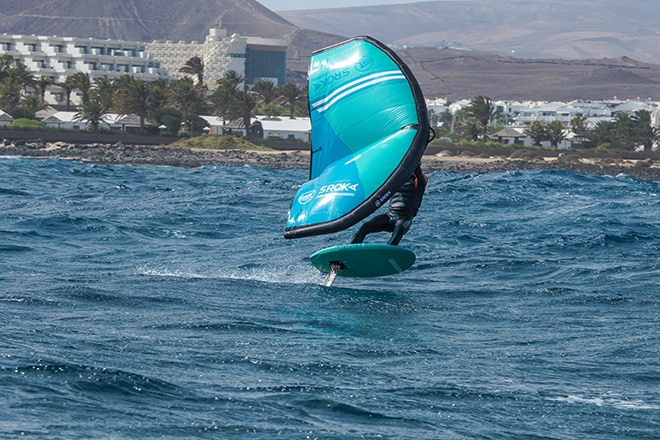
Si vous désirez aller faire du downwind, privilégiez des foils à fort allongement comme la gamme UHA de SROKA et des planches longues et étroites comme notre gamme de planches Down Wind, mais cela fera l’objet d’un autre article et de comparaisons afin de vous présenter différentes options.
Pour les amoureux des vagues, optez pour des petits foils qui tournent avec une grande maniabilité et des petites planches qui seront plus joueuses et plus maniables dans les vagues
4) Pour faire de la wave en wing foil ou jumper
Si vous désirez aller faire des jumps, privilégiez des foils à assez ramassé comme la gamme control de SROKA et des planches courtes avec peu de volume comme la gamme superfly pour faciliter les envols et les jumbs
Pour les amoureux des vagues, optez pour des petits foils qui tournent avec une grande maniabilité et des petites planches qui seront plus joueuses et plus maniables dans les vagues.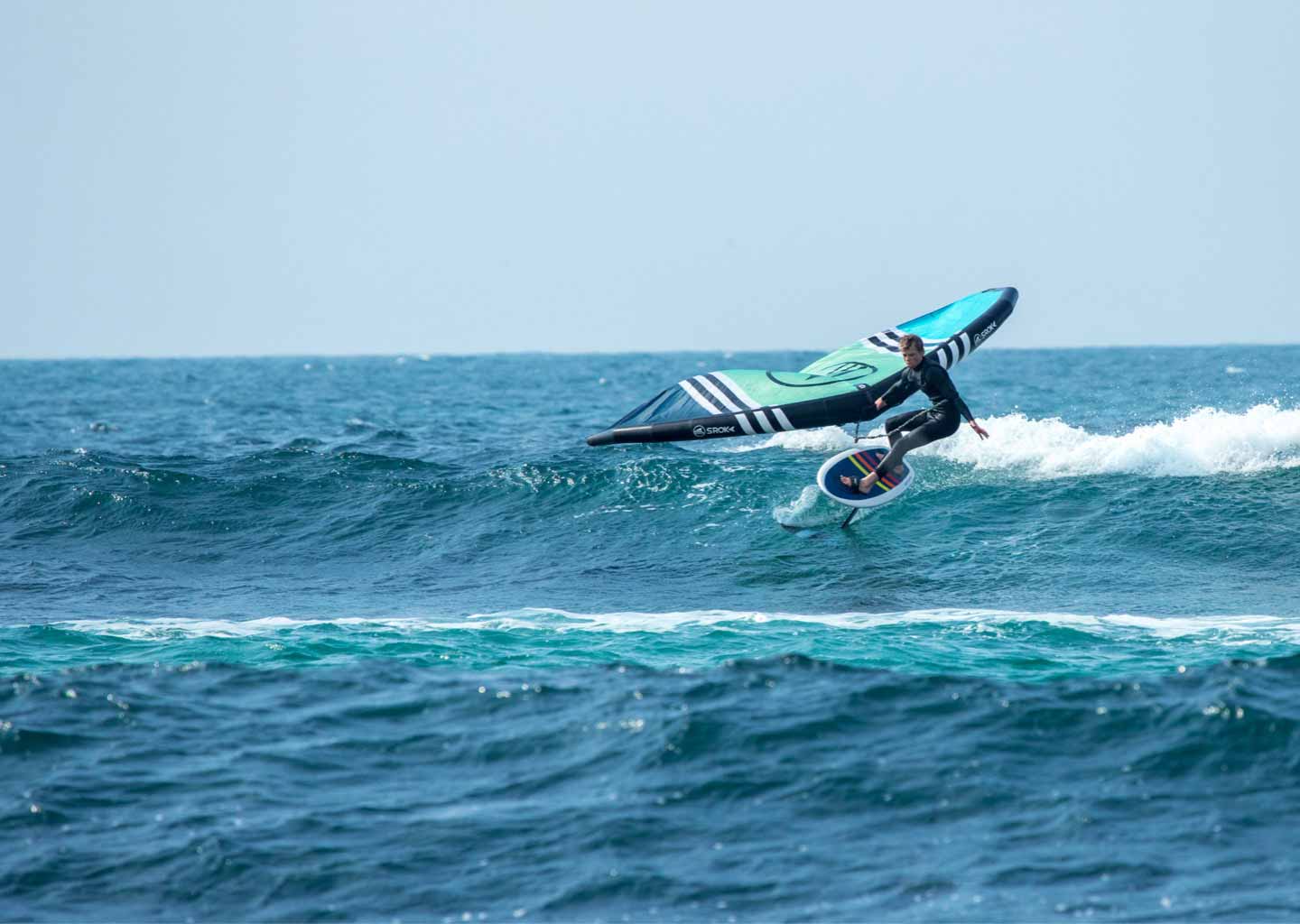
5) Adaptez-vous à l’endroit où vous allez naviguer
Les spots varient en termes de vent, de courant et de taille des vagues. Si vous naviguez sur un plan d’eau intérieur, vous aurez moins besoin de stabilité sur la planche. En revanche, si vous êtes en plan d’eau agité, une planche plus stable sera nécessaire.
Donc, les conditions dans lesquelles vous allez naviguer influenceront le choix du matériel que vous allez choisir. Si vous voulez plus de renseignements, contactez-nous, nous serons ravis de vous répondre.
6) Budget
Le prix du matériel peut varier considérablement. Trouvez un équilibre entre qualité et budget. Il n’y a pas de miracle. Un prix excessivement bas n’est pas un gage de qualité. Il faut donc bien regarder la concurrence pour trouver le meilleur choix pour vous et votre niveau. La plupart du temps, ce matériel bon marché ne sera pas évolutif dans le temps, et vous ne pourrez pas changer, par exemple, l’ailette avant afin de continuer à progresser avec votre pack. Il faut donc parfois investir un peu plus afin de garder une grande évolution possible dans le temps en fonction de votre niveau.

7) Évolutivité
Optez pour un matériel évolutif qui vous accompagnera dans votre progression. Certaines marques n’ont pas de compatibilité entre les foils en carbone et en aluminium, par exemple, ou le choix d’ailettes avant est très restreint. Ainsi, cela ne vous permettra pas d’évoluer correctement en fonction de vos envies. Lorsque l’on débute un nouveau sport, il est difficile de se projeter dans le temps pour savoir vers quelle discipline on veut se diriger.
Renseignez vous directement via la marque ou un revendeur spécialisé.
Comparaison des différents types de pack wing foil disponibles sur le marché
| Quel pack rigide wing foil choisir pour un pack de qualité? |
|
|
|
|---|---|---|---|
| Notes |
19/20 |
16/20 |
17/20 |
| Marque |
SROKA |
F-one |
AFS |
| Prix pack |
2250 € |
2469 € |
2499 € |
| Dimensions de la planche |
5’4 x 26’5 – 94L 5’7 x 28’5 – 105L 6’0 x 29’5 – 120L 6’3 x 30’7 – 137L |
5’1x 29 – 110 L ou 6’2 x31- 130 L |
5’10 x28-110 L 6’2 x27-115 L |
| Type de matériaux pour la planche et construction |
Sandwich Fibre avec renfort carbone et boitier traversant |
Technologie ASC: monolytique fibre de verre + top sheat |
PVC sandwich glass sur certaines zones |
| Taille du foil (en cm2) |
De 1250 à 2000 cm2 |
2200 cm2 |
1500 ou 1800 cm2 |
| Type de matériaux pour le foil et construction |
Mât et fuselage en aluminium et ailes en carbone. |
Mât et fuselage en aluminium et Ailes en fibre de verre. |
Carbone basique moussé. |
| Voile et taille |
Wing V4. Toutes tailles possible |
Wing Origin 2024 de 4m2 à 5’5m2 |
D-Lite 5m ou 6 m2 |
| Poignée rigide ou souple |
Rigide |
Souple |
Souple |
| Fenêtre de vision sur la wing pour la sécurité |
Oui |
Non |
Non |
| Pour qui ? |
Débutant à débrouillé |
Débutant |
Débutant à débrouillé |
| Adapté à |
Lac – mer |
Lac – mer |
Lac – mer |
| Particuliarités |
Ultra solide – rigide et très stable – excellent rapport qualité prix / excellente glisse. Evolutif du débutant à l’expert. Tout est compatible. Tout est compris dans le pack. Toutes les vis sont M8 inox A4 donc très rigide. |
Manque de rigidité sur les ailes arrière du foil. Profil des ailettes grossier dû à la technologie de construction. Manque de rigidité sur la planche. Très peu de compatibilité. Full pack. Toutes les vis sont en M6 (fragile). |
Mat carbone un peu flex en comparaison avec un bon Mât aluminum. Planche rigide mais un peu fragile. Choix d’option un peu plus limité. Pas de compatibilité en fonction des modèles de foils. Tous les accessoires ne sont pas fournis. Les vis sont en M8 et M6 donc besoin de deux outils pour fixer le foil. |
| Où le trouver |
Quelle marque choisir pour un pack wing foil rigide de qualité ?
En conclusion des packs wing foil rigide
Nous avons détaillé trois packs de wing foil rigides. Comme vous avez pu le constater, il existe de nombreuses différences de conception entre ces packs. Certaines marques sont moins évolutives que d’autres.
- Prenons l’exemple de la marque SROKA. Que vous soyez débutant ou expert, vous pourrez rendre votre foil évolutif en fonction de vos envies et de votre progression. Tout a été pensé pour simplifier l’expérience de l’utilisateur. Le pack SROKA est complet, avec une attention particulière portée à chaque détail. Par exemple, l’utilisation de vis M8 permet d’utiliser un seul outil pour faciliter la pratique. La construction de la planche a été repensée pour garantir durabilité, solidité et rigidité. Les boîtiers traversent des blocs de PVC du pont à la carène, renforçant ainsi la rigidité. Les rails sont renforcés en carbone, et la carène et le pont sont fabriqués en sandwich PVC fibre de verre avec renfort en carbone, offrant une planche nerveuse et rigide. En ce qui concerne le foil, toutes les ailettes sont compatibles, que vous utilisiez un foil en aluminium ou en carbone. Vous pouvez donc garder et faire évoluer votre équipement.
- Cependant, ces avantages ne s’appliquent pas aux packs AFS. Les packs AFS présentent des différences, telles que des tailles de vis variées, une incompatibilité entre certains foils de la marque et une construction moins aboutie pour les planches et les ailes de wing (absence de poignées rigides et de fenêtres). En tant que débutant, il est essentiel d’avoir une bonne visibilité autour de vous, et les fenêtres apportent un réel avantage en termes de sécurité.
- Enfin, chez F-one, nous n’avons pas apprécié la construction des ailes avant de foil. Cette construction est lourde et peu élégante. De plus, la compatibilité entre les différentes ailettes n’est pas proposée. Si vous souhaitez utiliser des ailes plus petites de la marque, vous devrez acheter un nouveau fuselage.
Voici le classement final des packs rigides : le Pack Wing foil Rigide Sky Rider + S-Foil Classique + Wing V4 est en première position, suivi du pack AFS en deuxième position, et le pack Fone arrive en troisième position.
| Quel pack gonflable wing foil choisir pour un pack de qualité ? |
|
|
|
|
|---|---|---|---|---|
| Notes |
19/20 |
18/20 |
13/20 |
16/20 |
| Marque |
SROKA Pack V1 |
SROKA Pack V2 |
Pack wing foil North nova + talaia |
Pack Fone |
| Prix pack |
1499 € |
2050 € |
1399 € |
2587,65 € |
| Dimensions de la planche |
5’3 x 29′ – 120L et 15 cm d’épaisseur 6’0 x 28′ – 144L et 15 cm d’épaisseur 6’4 x 29 – 155L et 15 cm d’épaisseur |
5’3 x 29′ – 115L et 12 cm d’épaisseur 6’0 x 28′ – 144L et 12 cm d’épaisseur 6’4 x 29 – 155L et 12 cm d’épaisseur |
5’5 -110 L 5’10 – 130 L 6’3 – 150 L |
5’4- 90L 7’11- 185L |
| Type de matériaux pour la planche et construction |
Double couche PVC pont carène et 3 couches sur le rails, plaques carbone pour fixer son foil. Insert de straps que sur l’avant |
Double couche PVC pont carène et 3 couches sur le rails, plaques carbone pour fixer son foil. Insert de straps avant arrière |
Simple couche de pvc sur le pont et railles. Plaque carbone. Impossibilité de mettre des straps. |
Double couches pvc mais plaque de carbone réduite au minimum donc rigidité moindre. |
| Taille du foil (en cm2) |
1750 cm2 |
De 1250 à 2000 cm2 |
1700 ou 1900 cm2 foil Ensis |
1480 ou 1680 cm2 |
| Type de matériaux pour le foil et construction |
Mât et fuselage en aluminium et ailes en carbone. |
Mât et fuselage en aluminium et ailes en carbone. |
Mât et fuselage en aluminium et fibre de verre/carbone. |
Mât et fuselage en aluminium et ailes en fibre de verre. |
| Voile et taille |
Wing V4. Toutes tailles possibles |
Wing V4. Toutes tailles possibles |
D-Lite 5m ou 6 m2 |
Strike V3 de 3 m2 à 5 m2 |
| Poignée rigide ou souple |
Rigide |
Rigide |
Souple |
Souple |
| Fenêtre de vision sur la wing pour la sécurité |
Oui |
Oui |
Oui |
Non |
| Pour qui ? |
Débutant à débrouillé |
Débutant à débrouillé |
Débutant |
Débutant |
| Adapté à |
Lac – mer |
Lac – mer |
Lac – mer |
Lac ou plan d’eau plat |
| Particuliarités |
Ultra rigide et solide très stable – excellent rapport qualité prix / excellente glisse. Evolutif du débutant à l’expert. Tout est compatible sur toute la gamme. Mat en 18’5 mm d’épaisseur donc très rigide. SROKA Tout est compris dans le pack. Toutes les vis sont M8 inox A4 donc très rigide (planche en 15 cm d’épaisseur et sans possibilité de mettre des straps à l’arrière. |
Ultra rigide et solide très stable – excellent rapport qualité prix / excellente glisse. Evolutif du débutant à l’expert. Tout est compatible sur toute la gamme SROKA Tout est compris dans le pack. Mât en 18’5 mm d’épaisseur donc très rigide. Toutes les vis sont M8 inox A4 donc très rigide (planche en 12 cm d’épaisseur donc plus stable et possibilité de mettre des straps à l’avant et l’arrière. |
C’est un pack reconstitué avec plusieurs marque. Donc la comptabilité totale n’existe pas. Vis de M6 sur le foil avec une connexion conique donc potentialité de jeux. Peu d’évolution dans le temps. Pack pas cher mais pas évolutif dans le temps. il faudra changer le foil pour progresser. Planche simple peau donc manque de rigidité et pas de straps possible. |
C’est un pack complet Fone. Ce que nous avons aimé, le volume de la planche et l’option avec et sans aileron. Le foil en ASC fait le job mais manque de compatibilité avec la gamme. Mât un peu souple 16 mm d’épaisseur. Vis de M6 en inox. Planche très bien pour débuter mais un peu grande par la suite. |
| Où le trouver |
Quelle marque choisir pour pack wing foil gonflable de qualité ?
Un pack wing foil gonflable est très bien pour débuter et vous permettre de progresser, surtout si vous avez des contraintes d’espace ou si vous prévoyez de voyager fréquemment. Voici les critères à prendre en compte pour choisir le pack qui vous convient :
- Construction des planches : Optez-vous pour une simple peau (moins rigide, mais avec la possibilité d’inverser le rocker dans l’eau) ? Comment est plaque de fixation sur la carène (courte ou longue) ? Y a-t-il un insert de strass ou un renfort sur les rails ?
- Construction des foils : Le foil est-il en aluminium ? L’épaisseur du mat influe sur la rigidité. Quelle est la taille des vis ? Comment l’ailette avant est-elle emboîtée ? Peut-on faire évoluer le foil dans le temps sans tout changer ?
- Wings : Les wings ont-elles des fenêtres pour optimiser la vision et la sécurité ? Préférez-vous des poignées rigides (pour plus de réactivité) ou souples ?
- Compatibilité des éléments : Les différents éléments sont-ils compatibles entre eux ? Ajustement des éléments : Utilisez-vous des vis de M8 ou de 6 ? Comment l’ailette avant est-elle emboîtée ? Les éléments sont-ils interchangeables dans le temps pour évoluer ?
- Marque du pack : Est-ce un pack d’une seule marque ?
- Prix :Le prix est un critère, mais attention : un produit très peu cher peut entraîner des compromis dans la construction pour réduire les coûts. Une planche fabriquée en simple couche sera moins chère à produire, mais sa rigidité globale sera moindre, ce qui peut ralentir votre progression
En prenant en compte tous ces critères, nous avons établi une notation pour les 4 packs de wing foil gonflables :
-
- Pack wing foil SROKA V1 :Meilleur rapport qualité-prix.Possibilité de faire évoluer le produit. Choix limité (voile en 5 m et foil en 1750).
- Pack wing foil gonflable SROKA V2 :Choix complet (toutes les tailles d’ailes avant et de foil). Adaptation parfaite à votre gabarit ou lieu de navigation.
- Pack F-one : Bonne qualité malgré une taille de planche un peu grande et une construction de foil spécifique. Pack homogène et cohérent pour les débutants.
- Pack multi-marques : Manque d’évolution dans le temps (vous devrez racheter un foil complet). Bonne qualité de l’aile, mais attention aux compromis.
En conclusion, le pack SROKA V1 offre le meilleur compromis qualité-prix, tandis que le pack multi-marques présente des limitations en termes d’évolution.
Choisir le bon pack wing dépend de votre programme et de vos besoins spécifiques. Voici quelques conseils pour vous guider :
Si vous n’avez pas de problème de glisse, nous vous conseillons un pack dure: Il vous apportera plus de rigidité, de stabilité, et de nervosité. Cela facilitera votre progression et vous pourrez plus facilement évoluer dans le temps.
Critères à Prendre en Compte :
-
- Votre gabarit : Le choix de la planche et de la taille du foil et de l’aile va dépendre de votre poids. Plus vous serez lourd et plus il faudra maximiser les volumes et inversement.
- Un pack mono marque sera toujours mieux pour évoluer rapidement dans le sport. Si vous mixer les produits, il se peut qu’il y ait des incompatibilité de produit.
- Qualité du Produit Recherché : Déterminez si vous préférez un premier prix, un bon rapport qualité-prix ou un modèle haut de gamme. Méfiez vous des premiers prix, le prix est alléchant mais il y aura forcément un compromis qui sera fait pour diminuer le prix du pack. Diminution de la rigidité, solidité, ou comptabilité…. les options pour réduire les couts sont infinis. Mais cela sera toujours au détriment de votre marge de progression et de la possibilité de faire évoluer. Donc poser vous a question suivante: Etes vous prêt à acheter un second pack 1 an après avoir acheter le premier pack pour évoluer?
- Un pack rigide ou gonflable? Cela va être déterminer en premier lieu par le gain de place et votre capacité à voyager avec votre pack. Un pack rigide sera moins facile à transporter mais plus réactif. Un pack gonflable sera parfait pour ceux qui recherche un minium d’encombrement ou de pouvoir voyager facilement.
Attention au Choix : Si vous choisissez un pack wing foil inadapté, vous risquez d’avoir des difficultés à tenir debout ou à évoluer rapidement. En revanche, un choix judicieux vous permettra de profiter pleinement de votre expérience sur l’eau.
Si vous avez encore des questions à ce sujet, ou pour toute autre demande, n’hésitez pas à nous contacter !


