


For some time now, the practice of wingfoiling has been opening up to increasingly interesting speed horizons; little by little, the sport is becoming faster and faster, and wingfoilers are starting to catch up in terms of speed.
But how do you accelerate on a wing foil? It's not enough to be passive and wait for it to happen by itself; there are many parameters that come into play and will help you accelerate.
Speed in wingfoiling!
Embark on a cruise to your best speed records on the water and discover the ultimate pleasure of full-speed sailing.
The right technique for accelerating
What heading for speed?
In sailing, most boards are faster when sailing downwind, and wingfoiling is no exception to this common characteristic, but there is a small subtlety.
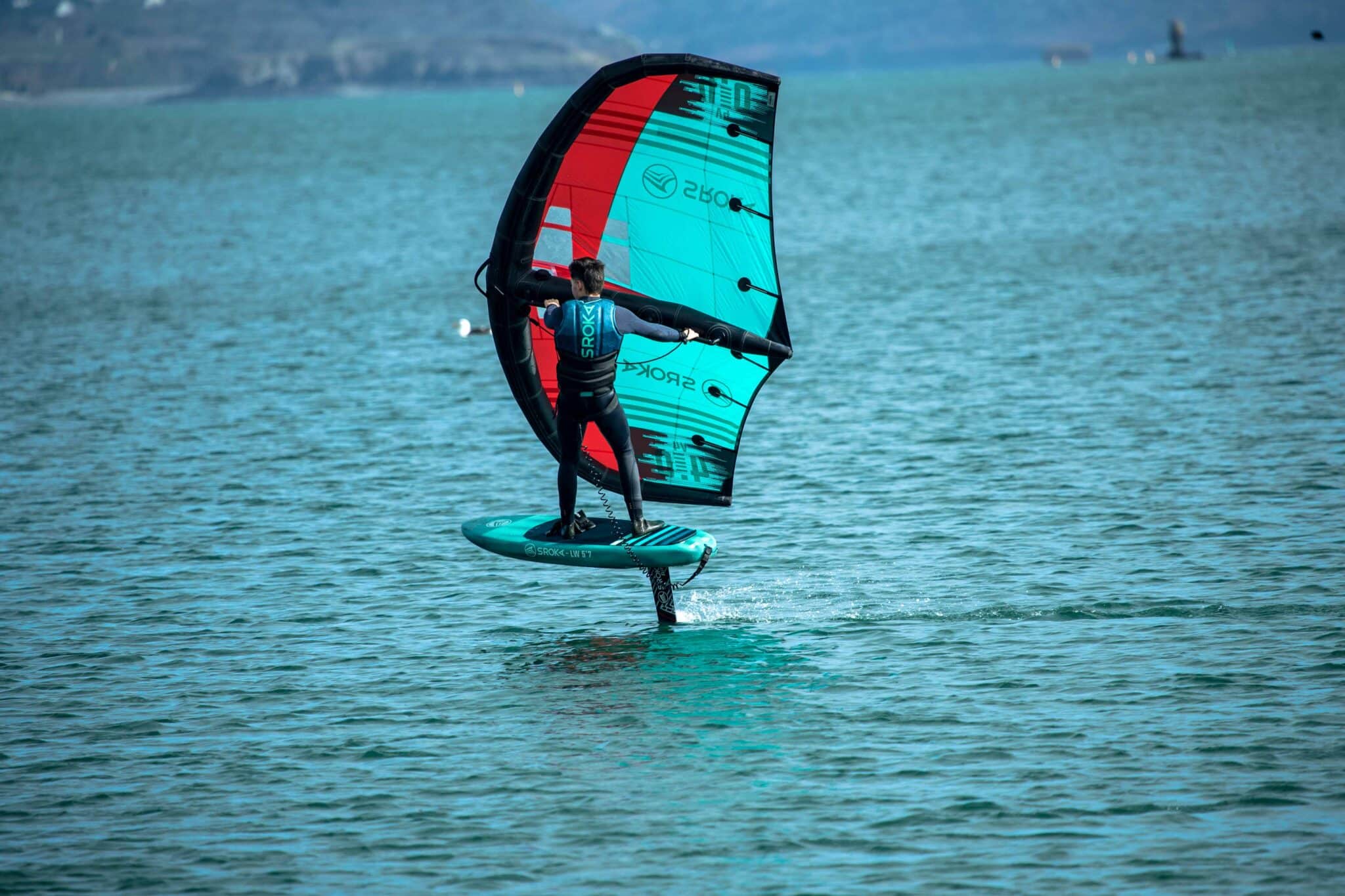
To go as fast as possible, start by accelerating beam reach to load the wing and the foil, then bear away sharply to go broad reach; the energy accumulated beam reach will catapult you downwind at full speed, and the broad reach will make you accelerate even more.
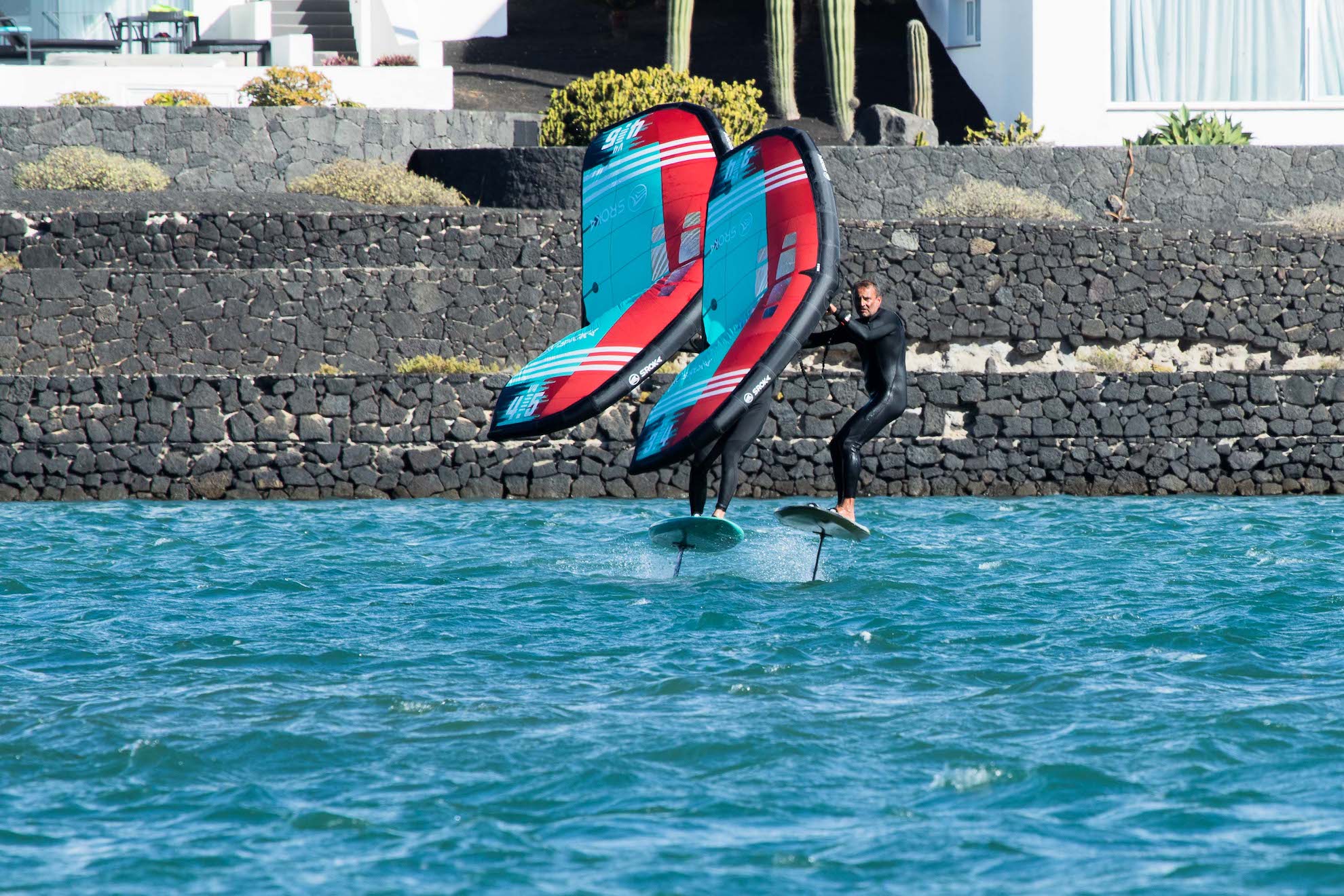
To go fast on a foil, you need to counter-heel, similar to kitefoils; counter-heeling is a kind of balance between the wing pulling on one side and the entire foil and rider leaning in the opposite direction. This allows you to push into the foil, pull on the wing, and thus unleash the speed of your setup.
The placement of the wing is also important; the closer it is to horizontal, the more it pulls forward, thus making you accelerate.
Harness lines have, for some time now, become more common and established themselves as essential for freeride, freerace, and race practice. Their use can be confusing at first; to use them effectively, you will need to find the right position. A kind of balance where you sit like in windsurfing, without pushing too hard to maintain the foil's speed without saturating the wing.
The right gear to accelerate in wingfoiling
Your wing foil gear plays a crucial role in your wing speed. The wing challenge proves it every year. To maximize your chances of accelerating, you will need to play on as many fronts as possible.
The wing
The wing is the first important element; a stiff wing that drags little air will give you better propulsion sensations. There are many innovative materials and concepts. For its part, the SROKA brand is working on a race wing made of Dyneema, with the thinnest leading edge on the market to reduce drag.
The board
Wing foil boards are essential for takeoff, allowing you to use small foils in light winds. Their aerodynamics are also very important for speed and stability.
The foil
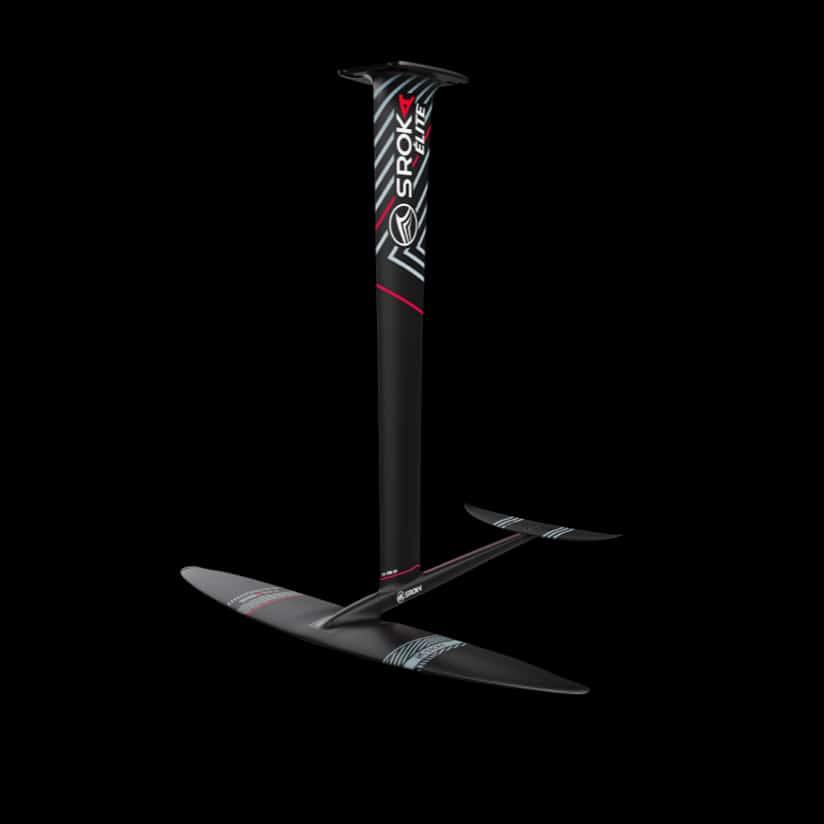
Finally, the important element is the foil; it plays a huge role in the speed of your entire setup. Many parameters then come into play, such as the surface area of the front wing, the stabilizer, their thickness, their profiles, the mast thickness, its stiffness, its chord... To put it simply, a thin, long mast with a small chord and stiff will be ideal. Combine it with a small wing, like 500 cm2, a small stab, and you get a real racing machine.
Settings that will make you accelerate
Settings represent a significant part of wing gear performance; although they are less complicated than those in windsurfing, they are nonetheless extremely important.
Wing settings
To begin with, the wing doesn't have any specific adjustments; you simply need to ensure you have a stiff, properly inflated wing. You can eventually slightly lower the pressure when the wind is very strong.
The important adjustment is that of the harness lines; their balanced placement provides significant comfort for performance.
Board settings
Board settings are paramount; the objective, once again, is to be comfortable, so adjust your straps to avoid injuries and to hold the board firmly without getting cramps in your feet. Regarding their positions, we will discuss that in a moment.
Foil settings
Let's now address foil settings, which are absolutely essential if you want to perform.
The stabilizer adjustment is a fine and precise adjustment. It affects your feeling on the foil; the slightest degree can play a role and make you feel the foil differently. Depending on its mounting on the fuselage, the following advice will be reversed. In Sroka's case, our stabs are attached from the top of the fuselage. A positive shim raises the rear of the stabilizer and thus provides more lift; conversely, a negative shim raises the front of the stab and thus reduces lift.
Placement in the box is also important; moving your foil back reduces pressure under the front foot and vice versa.
What settings to go fast?
When the foil accelerates, the lift under the front foot will increase; to counteract this effect, you move the foil back in the box. This results in a "rear-footed" foil at low speeds but very balanced at high speeds.
However, depending on profiles, sizes, and individual preferences, a very backward foil can sometimes be an unpleasant experience, which is why we adjust the stab.
This adjustment allows the foil to be moved as far back as possible, which increases the distance between the stab and the rider's front foot, thus providing stability and control. By giving the stabilizer a positive angle again, comfort is restored.
Strap position also plays a role in this precise balance; moving the back foot back increases comfort at low speeds and boosts acceleration out of maneuvers, and an advanced front strap allows for more pressure on the foil as it accelerates, as well as further extending the distance between the stab and the front foot.
A speed enthusiast could then move everything back fully, increase their stance (distance between feet), and set the stab to 0° to make it glide as much as possible.
The psychological aspect of wingfoiling
Speed on a foil is very frightening during the first attempts; although a degree of acclimatization makes the exercise easier over time, it will always be a little scary to rush at 30 knots in swell, chop, and among competitors in a race.
This leads to a point where technique no longer progresses without a significant amount of psychology to manage one's fear. Some call it turning off your brain, but it's important to stay focused to avoid falling. It's more about controlling your emotions and your ability to put fear aside.
Conclusion
Wingfoiling is a rapidly evolving sport, with increasingly impressive speed performance. To achieve these high speeds, several elements come into play:
- Navigation technique is paramount, especially in seeking to maximize the lift effect of the foil and the wing. Adopting the correct "counter-heel" position is essential.
- The choice of equipment is crucial, from the stiff and aerodynamic wing to the thin and gliding board, and the foil optimized for performance (shape, size, stiffness, etc.).
- Settings, although simpler than in windsurfing, play a decisive role, particularly for the positioning of the foil and harness lines.
- Finally, the psychological aspect should not be neglected. The speeds achieved can be impressive and require overcoming one's fear to fully exploit the equipment's potential.
By mastering these different aspects, you will be able to push the limits of speed further and further in this rapidly progressing sport.
If you still have questions on this topic, or for any other request, do not hesitate to contact us!