


How to choose your SROKA carbon Foil?
The carbon mast is an essential element of a carbon foil, influencing the stability, control, maneuverability, and speed of your wingfoil. These different characteristics are determined by the thickness, chord of the mast, hydrodynamic profile of the mast, the amount of carbon, and the quality of the carbon fibers.
Therefore, choosing your carbon foil wisely will determine the overall performance of your foil. Based on this observation, SROKA offers two types of carbon masts: 14mm and 16mm. What are the differences between these two carbon masts, and how do you choose the carbon foil that best suits you?
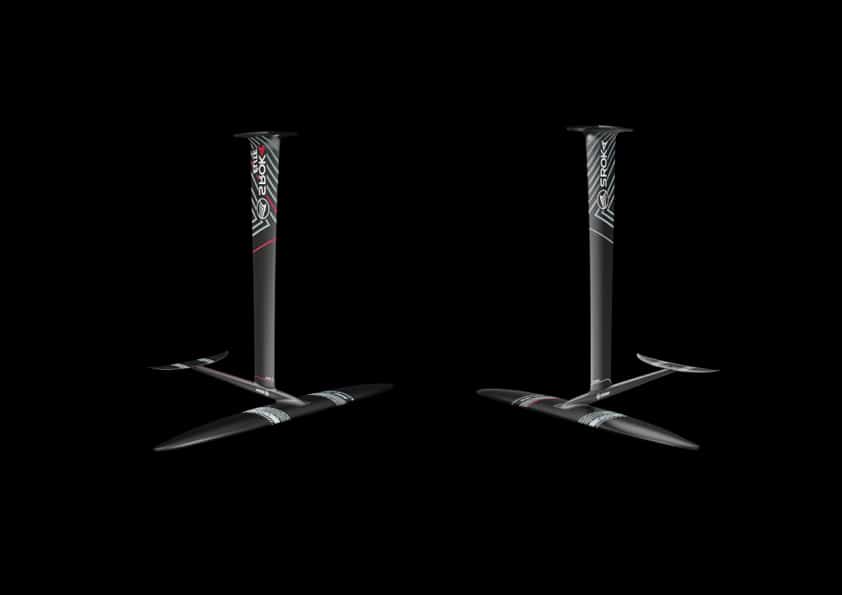
What criteria are we looking for in a carbon Foil mast?
The rigidity of a mast is determined by different parameters such as its thickness, its chord (distance between the leading edge and the trailing edge), the hydrodynamic profile, and the quantity and quality of carbon applied in the mast.
- To go fast and have incredible glide, you need a very thin mast with very little chord.
- To have a stiff mast, you need a thick mast, with a lot of chord, and a lot of carbon.
- To have a light mast, you need to use less carbon.
However, if you invest in a very expensive carbon mast, it's to gain a real performance advantage. So why pay the price of a carbon foil to get the same performance as an aluminum mast? It makes no sense!
Therefore, if you are interested in a carbon foil, you might as well invest in an excellent carbon mast with the best compromise between glide, stiffness, lightness, and control.
Two opposing views clash.
Option 1
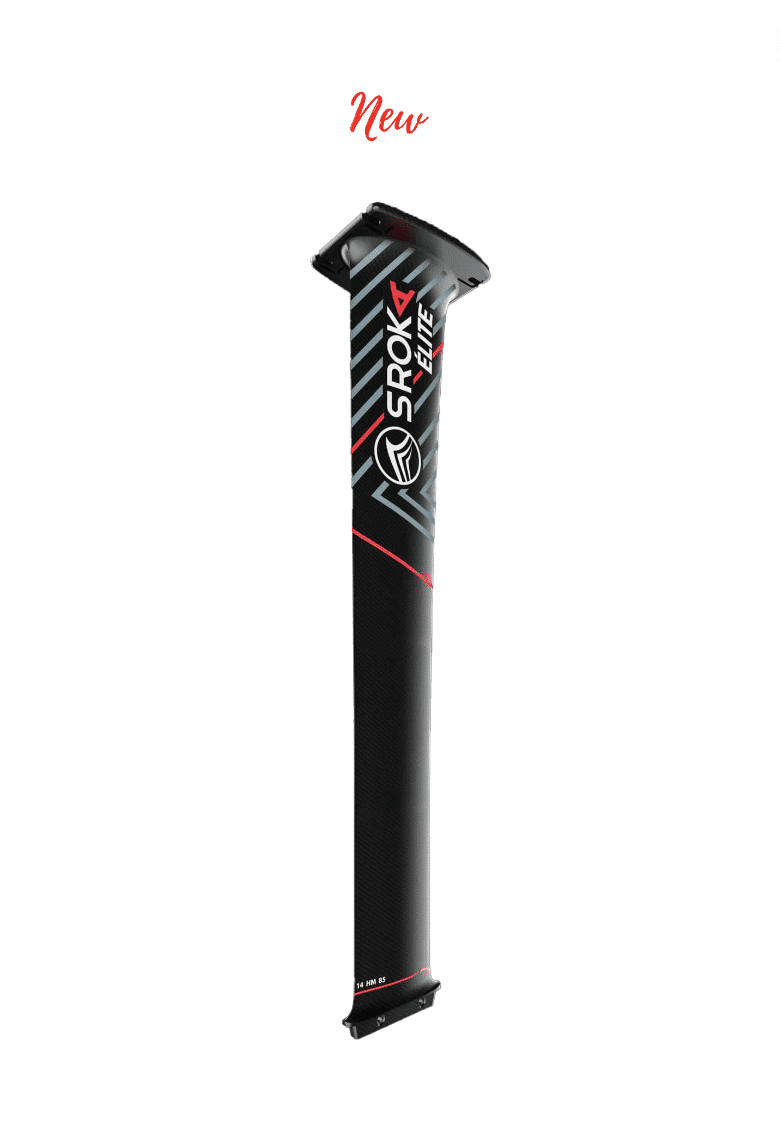
To maintain a stiff mast at a slightly more attractive price, we increase the mast chord and/or its thickness, and decrease the amount of carbon and/or the quality of carbon in the mast. In our case, we chose to increase the thickness to 16mm and reduce the quantity of M40J high-modulus fiber. This compromise allowed us to be as stiff as the Elite 14mm carbon mast, but with only 60% M40J (high-modulus carbon).
Option 2
To seek maximum performance, it is necessary to reduce the chord as much as possible, reduce the thickness as much as possible, and to do this, it is necessary to increase the quantity of carbon (140 layers of carbon in our 14mm Elite mast) and increase the quality of carbon fibers by using high modulus carbon. (Therefore, the mast is 100% high modulus M40 J).
The consequences of a thicker mast:
- less speed
- less glide
- possibly less stiffness (depending on the quality of the fibers used in the mast)
- less maneuverability (due to the increased chord)
- less overall performance.
- The only gain will be a lighter foil weight
- a more attractive price
The consequences of a thinner and stiffer mast:
- more glide and speed
- more glide
- more foil responsiveness
- more control
- more solidity
- can be used for racing, freestyle, waves or cruising.
- more maneuverability, especially in turns
- a slightly heavier mast weight and higher price
In summary
The 14mm Elite range mast is one of the most performing on the market thanks to its 100% M40J high-modulus construction and its 140 layers of carbon. It combines increased performance, optimal solidity, and remarkable finesse. Investing in this quality mast guarantees lasting satisfaction, without having to change it to follow marketing trends. Buying a well-built 2000-euro mast will be more profitable than buying two 1700-euro masts that promise more stiffness than the previous model.
If, conversely, absolute performance is not your goal, the 16mm carbon mast with 60% high modulus will do just fine. It will provide stiffness, solidity, and durability with a little less glide and speed compared to the 14mm Elite carbon mast.
For whom and for what use?
14mm Carbon Mast
The 14mm carbon mast is ideal for experienced riders who are looking for maximum performance and speed, control, and maneuverability. More specifically, the 14mm carbon mast is suitable for all foil disciplines, but it particularly stands out in surfing, jumping, pumping, winging, and downwinding where glide and solidity are the most important elements. It is made with 100% high modulus M40J carbon. It therefore offers greater rigidity than the 16mm, both in flex and torsion. It is therefore recommended for freestyle, freesurf, pumping, racing, and freeride.
16mm Carbon Mast
It is ideal for riders looking for versatility and ease of use. The 16mm carbon mast is constructed with 60% high modulus M40J and is therefore suitable for freeride, freesurf, surffoil, pumping, supfoil... You will feel a clear difference compared to the S-foil Alu, in terms of glide, take-off and precision, at a more affordable price. In comparison, you will gain 15% less drag than with the S-foil Alu.
In summary, SROKA's two carbon masts are quality products that guarantee you a new wingfoil experience. The choice between the 14mm and 16mm depends on your style and your preferences.
If you prioritize glide and speed, opt for the Elite 14mm.
If you prefer lightness and versatility, choose the 16mm.
Whatever your choice, you won't be disappointed by the sensations your SROKA carbon mast will provide.
How to choose your fuselage?
Aluminum Fuselage: Enjoy Carbon Glide at a Low Price
"Are you dreaming of carbon mast glide but have a limited budget? Opt for our sturdy and reliable aluminum fuselage. It's the ideal choice to discover carbon foils without breaking the bank.
Our aluminum fuselage is versatile: it adapts to our carbon masts and all our SROKA wings and stabilizers. It has the same shape as the Elite Carbon fuselage and even offers better glide than the S-foil aluminum fuselage, thanks to a 10% reduction in drag at the mast/fuselage junction. It is suitable for all skill levels.
In short, the aluminum fuselage allows you to:
- Glide with the fluidity of carbon masts, without exceeding your budget.
- Enjoy robust and durable construction for versatile use.
- Combine our carbon masts, wings, and SROKA stabilizers as you wish.
- Benefit from an improved profile for optimal performance, suitable for all skill levels."
Elite Carbon Fuselage: The Excellence of Carbon Performance
However, if you are a seasoned glide enthusiast, seeking maximum performance, intense sensations, and lightness, our Elite Carbon fuselage is the ideal choice. Featuring high-end quality (built with 100% high modulus for the Elite range), it is designed for experienced riders who demand exceptional responsiveness and maneuverability.
The Elite Carbon fuselage, compatible with our carbon masts as well as all our SROKA wings and stabilizers, stands out for its rigidity and lightness, which reduces inertia in movements. Offering an unprecedented glide experience, it weighs only 700 grams, making it a lightweight and dynamic option.
Choosing the Elite Carbon fuselage means opting for:
- Peak performance thanks to the responsiveness and maneuverability offered by carbon.
- A lighter and stiffer construction for exceptional glide sensations.
- Full compatibility with our carbon masts, wings, and SROKA stabilizers.
- An option that does not require rinsing after each session.
Ultimately, whether you choose the aluminum fuselage for its value for money or the Elite Carbon fuselage for its performance, you benefit from the same exceptional gliding sensation in both cases.
Make your choice according to your needs, your skill level and your desires, and make the most of your gliding experience with SROKA.
How to choose your foil's front wing
The shape of a front wing is characterized by its length (span), its chord (the distance between the leading edge and the trailing edge), its thickness, and its profile. The ratio of the span to the chord gives a measurement called aspect ratio. (At SROKA, we call this range HA for High Aspect ratio).
Generally, the higher the aspect ratio, the larger the wing's span and the smaller its chord. Conversely, the more generous the chord and the less important the span, the lower the aspect ratio.
It is necessary to distinguish between low aspect ratio and medium aspect ratio. The aspect ratio influences the foil's turning radius, its ease of early take-off, its control in strong winds, and its gliding ability.
For more information, check out this article.
At SROKA, we have not developed a wing with a low Aspect Ratio. All our beginner ranges have an aspect ratio AR.6, which is a medium aspect ratio.
Its moderate span provides good glide, with excellent performance, maneuverability in surfing, and ease for beginners. It's the perfect compromise for easy progression.
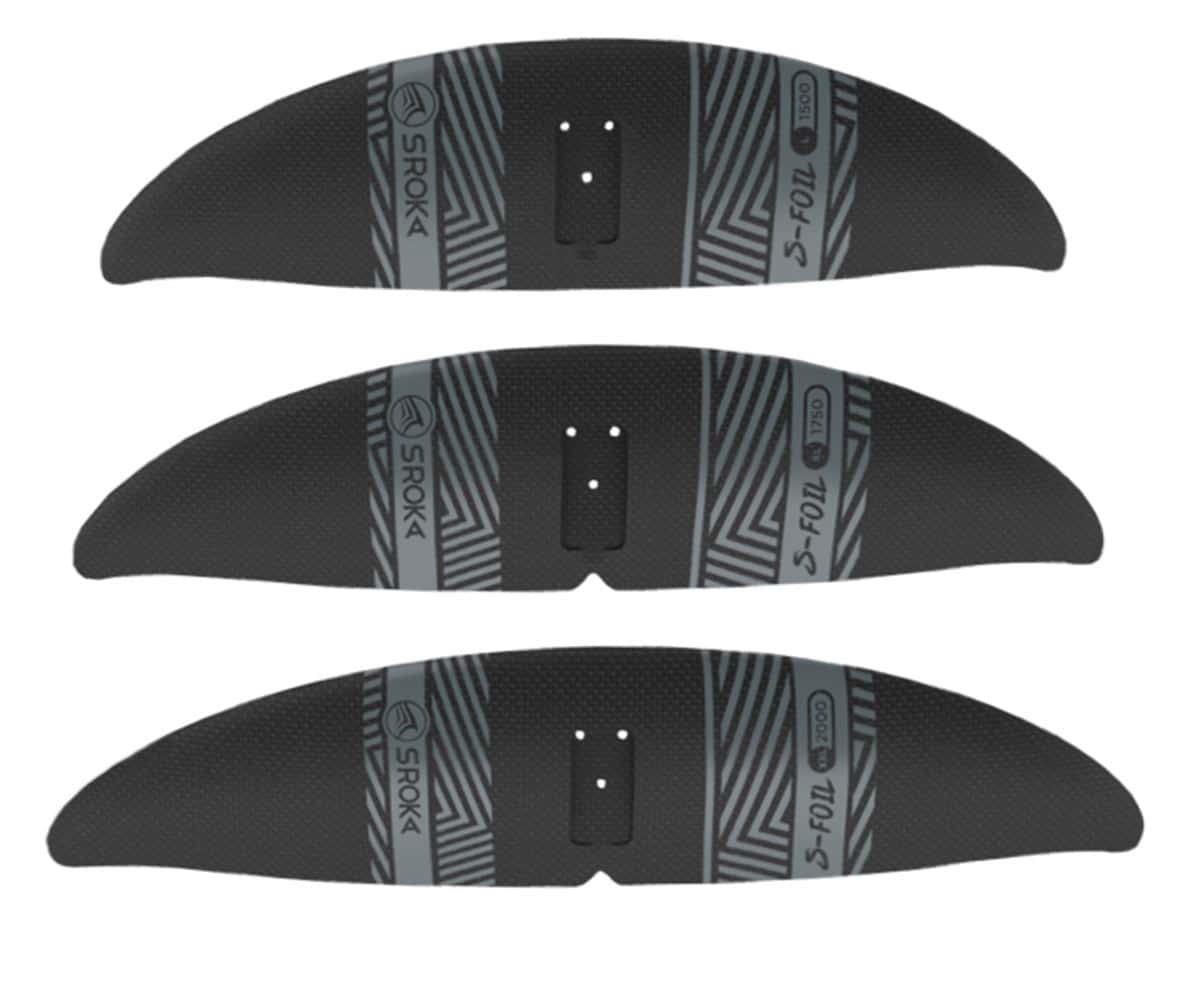
The Classic range for beginners comes in three sizes: 2000 cm², 1750 cm², and 1500 cm².
The Control range also has a medium aspect ratio, but with faster profiles and thinner thicknesses, which will guarantee more speed, glide, and foil reactivity. This range is for people who want an easy-to-control foil at all speeds. It is the perfect range for waves, freeride, or anyone not seeking absolute top speed.
It's the perfect balance between maneuverability, control, and speed.
This range starts with the 1250 cm², 950 cm², and soon we will have the 820 and 680 cm² Control.
The HA range is defined by a high aspect ratio. The aspect ratio varies depending on the wing size. The 2000HA will have an AR of 9.8, allowing you to glide with minimal effort, and the 670 cm² will have an AR of 7.3 to reduce drag and accelerate more strongly.
The smaller the sizes you go down to, the more powerful the front wings will be and the faster they will go, while maintaining exceptional stability and accessibility.
How to choose your stabilizer
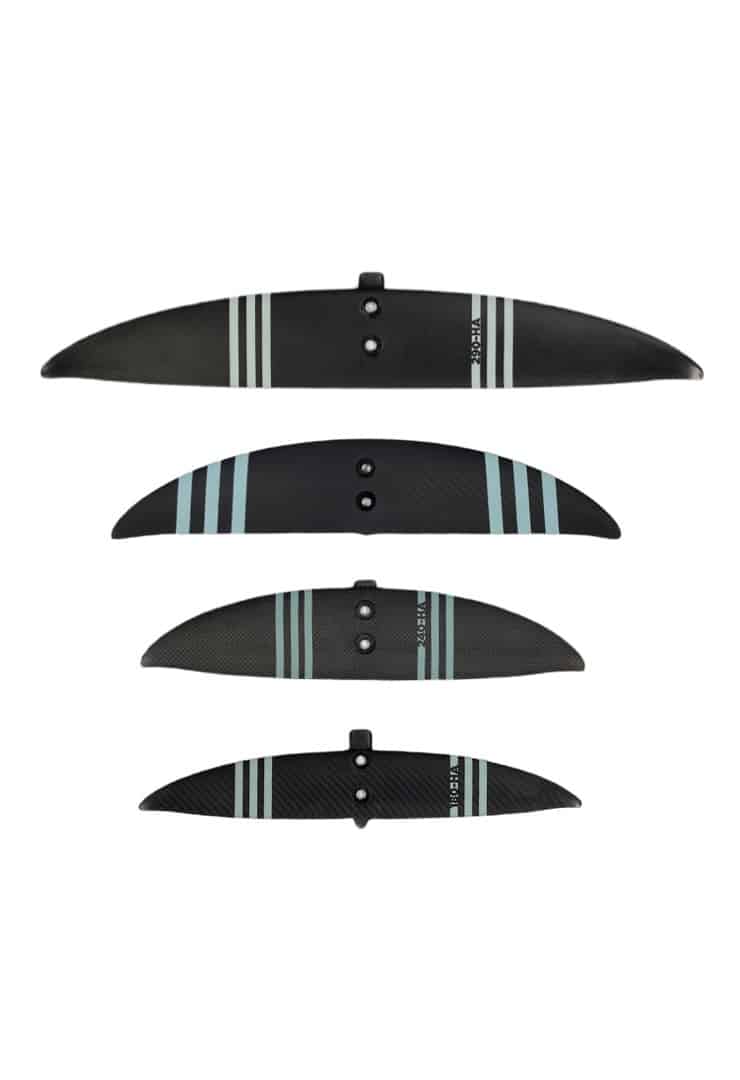
The stabilizer, also called the rear winglet, is a key element for stabilizing the foil. The larger the stabilizer, the more stable the foil will be, but this also means there will be more drag and therefore you will go slower. On the other hand, a smaller stabilizer will stabilize the setup less but will offer much more glide, as there will be less drag and it can also allow you to go faster. At Sroka, there are four types of stabilizers available: the 300cm², the easiest in the range, perfect for beginners or riders with large front wings; the 290 HA which will provide more stability especially in pumping but will be less easy for beginners to use; the 240 cm², a compromise between stability and speed, adaptable with all front wings, ideal for light wind and for people seeking comfort and speed in navigation; and the 180 cm², a speed weapon, with its ultra-thin profile, it will allow you to exceed your speed limits.
We have a small range of stabilizers because it is important to remember that using adjustment shims (to change the stabilizer angle) will allow you to adapt it even better to your riding style and your size. This also reduces the number of stabilizers needed and thus meets all needs. For more information on adjusting stabilizers with angle shims, you can click on this link.
We also have a range of aluminum foils. All our front wings are compatible with both ranges.
The choice between a carbon foil and an aluminum foil will be determined by the price and performance level. An aluminum mast will be thicker and create more drag but will be very stiff. A carbon mast from the Elite range will be 30% thinner, so there will be 30% less drag. It will provide a bit more maneuverability, more speed, and more glide. It is a high-performance mast that will allow you to reach speeds of 30 knots.
For more information on the difference between the two ranges, please refer to this article.