

What equipment to choose to improve performance in wing foiling?
Wing foiling is a water sport that has been gaining popularity in recent years. But how to increase your performance in wing foiling? It's important to choose the right equipment. In this article, we will give you some tips on how to choose the right wing foil equipment to improve your performance.
Performance can be defined as the ability to go faster, jump higher, or take off earlier. However, it's important to note that equipment isn't everything. If your technique isn't sufficient, you can buy all the necessary high-performance equipment, but the end result won't be there. Furthermore, performance requires a thorough knowledge of your equipment. If you change your equipment too often or have too much of it, it's impossible to master everything well and be fully effective. Therefore, technique is the first prerequisite for performance.
How to perform to go fast in Wingfoiling.
To go fast, it is important to push your own speed limits and accept being in a situation where the slightest mistake in foot pressure will lead to a guaranteed fall that you will remember. To do this, you need to be balanced on the water, stable in different axes, and preferably overpowered. Indeed, going fast without much power in the wing is impossible. To reduce foil drag, it is recommended to decrease the size of the front wing, the stabilizer, and the drag of the mast and fuselage. Drag is proportional to the surface area you have underwater. So, the larger your wing, the slower you will be able to go. It is therefore important to reduce the surface area of the front wing and the stabilizer.
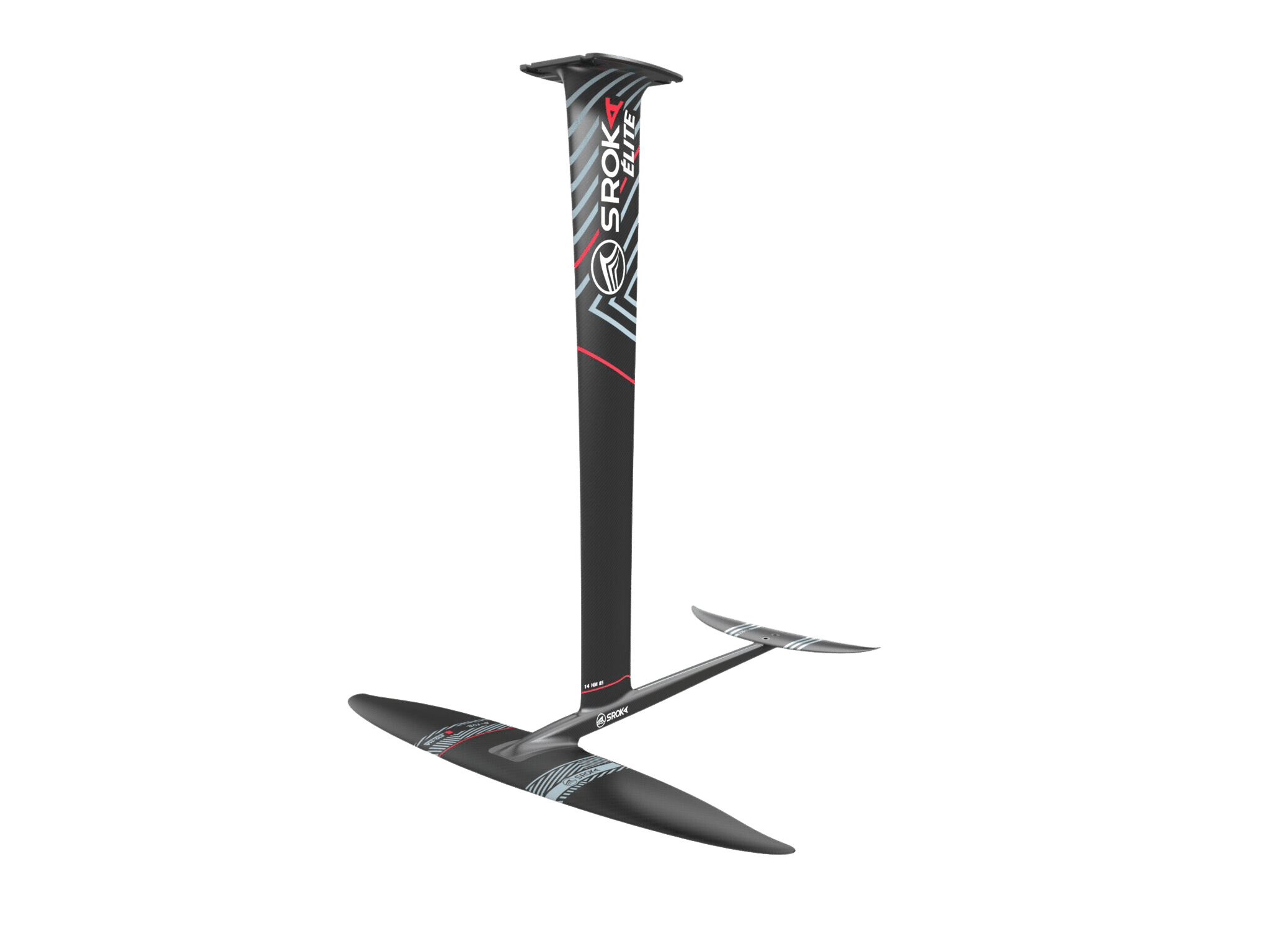
The Foil, fundamental for performance in Wing foiling.
The foil is a key element for reaching high speeds. There are two types of foils: aluminum foil and carbon foil. With an aluminum foil, you can reach speeds of 25-26 knots, or nearly 46 km/h on the water. A quick reminder, there is 800 times more drag in water than in air.
However, if you want to go faster, you will need to switch to a thin and rigid carbon foil to exceed this speed of 25-26 knots. The SROKA Elite 14mm carbon mast has been designed to allow you to go as fast as possible with minimal drag. An aluminum mast will necessarily have to be thicker to be stiff. Consequently, drag will increase. If you wish to exceed an average of 26 knots over 500m, we recommend switching to an 810 S HA or 670 S HA wing. It will allow you to push your limits and will be your perfect ally with the Elite 14mm carbon mast.
Tips: To go fast, it is important to have slightly more pressure on the front leg to be comfortable and stable at high speeds. Indeed, if you are balanced on the water with equal pressure on both feet, it will be difficult to be balanced at high speeds. The faster you go, the more you will press on the front leg.
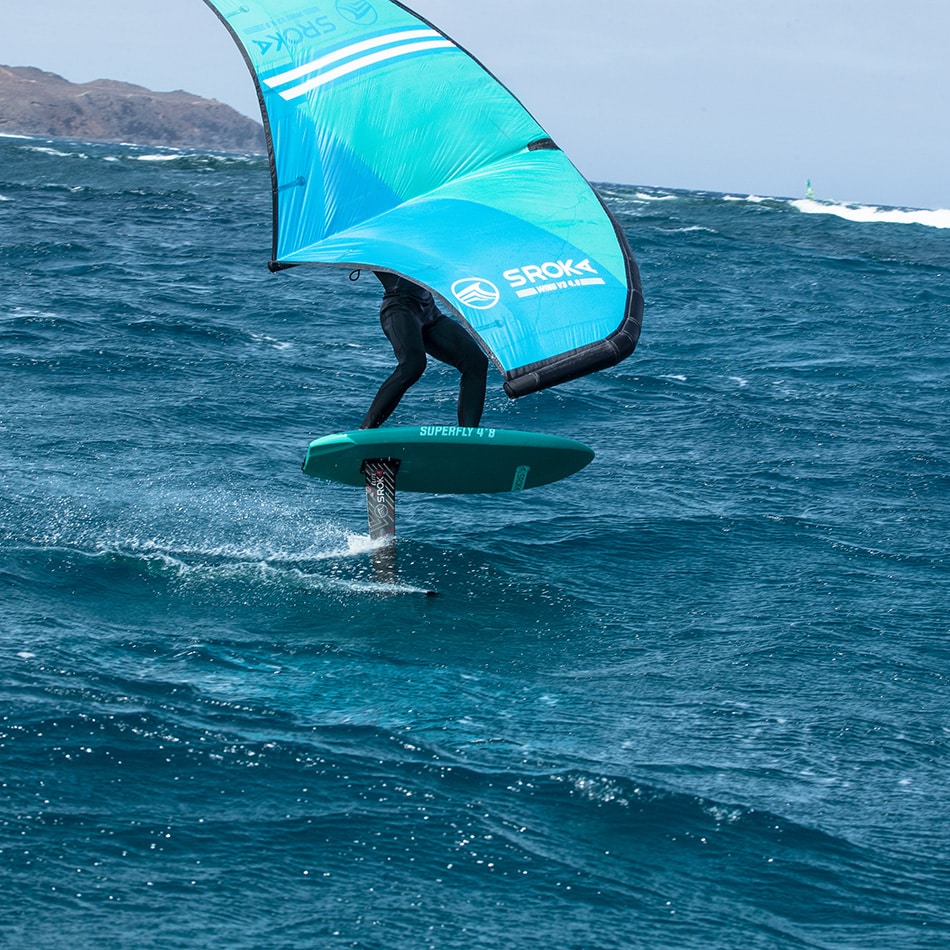
The board, another factor in Wingfoiling performance.
The board is also a key element for pushing speed limits. The larger the board, the more drag it will generate in the air and may cause lateral movements on the foil, leading to a loss of stability. To go fast, it is recommended to use a thinner and smaller board. The construction of the board inevitably leads to a gain in performance. It is therefore preferable to favor carbon boards, and if possible, full carbon sandwich boards to obtain maximum rigidity and thus reactivity from your board, and consequently, performance.
Tips: To increase your speed and have better control of your board with the foil, you can use footstraps. Footstraps allow you to better feel your foil and better control your board, especially at high speeds. They should be adjusted rather tightly.
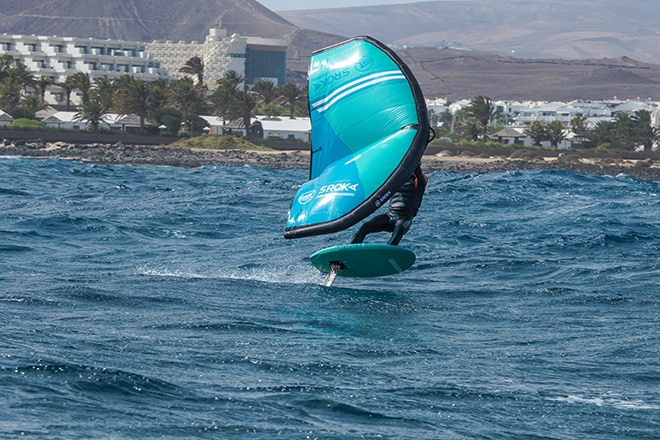
The Wing, one of the keys to performance.
Finally, to break records, it is recommended to be overpowered with the wing and choose the smallest foil for maximum glide and minimal drag. You won't be able to push your own limits by staying in your comfort zone.
A wing with a small leading edge will allow you to go faster. This is why a wing under 5m will allow you to go faster. The wing also needs to have a taut canopy to generate more power.
It's important to note that going fast requires learning and getting used to speed. So, you'll need to take the time to tame the speed. You'll also need to learn how to properly adjust your foil to go fast. We recommend rather set-back positions in the US rails.
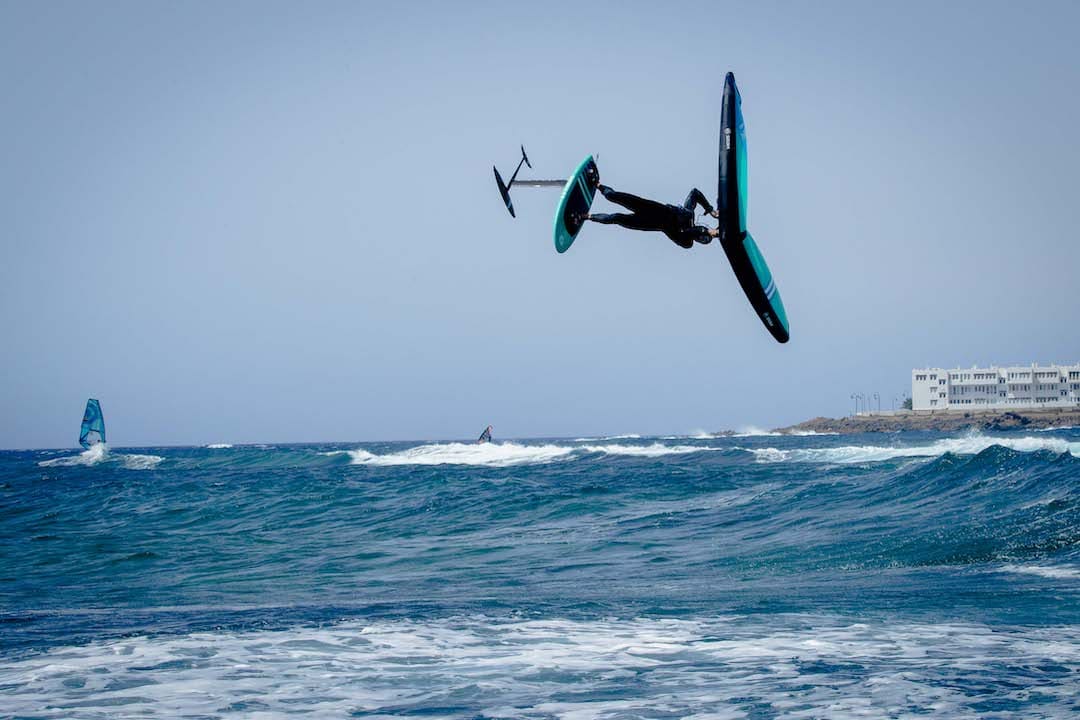
How to perform to jump high in Wingfoil?
To jump high:
It is important to gain a lot of speed and convert horizontal speed into vertical speed to go high. To do this, you need to choose wings with "pop" and the ability to turn quickly, especially to give a big impulse. It is therefore recommended not to choose front wings with too pronounced aspect ratios, as this will limit your ability to get a good impulse.
The weight of the board and foil assembly is fundamental if you want to perform rotations. You can jump with an aluminum foil and a large board, but the lighter the assembly, the easier it will be to turn in the air. For this reason, the carbon foil will be the most suitable for jumping high. It will provide rigidity, responsiveness, and speed to the impulse.
For jumping, it is recommended to choose a board smaller than 5'0 to facilitate rotations. Of course, a board constructed with a full carbon sandwich will be more durable over time, especially during landing jumps.
How to perform to take off earlier in Wingfoil?
To take off early, it's important to reduce the board's drag while maintaining enough volume to glide and fly as quickly as possible. For this, a slightly longer and more tapered board is a good option. However, you will lose some lateral stability. If the water is choppy, it is recommended to opt for a board with a bit of width.
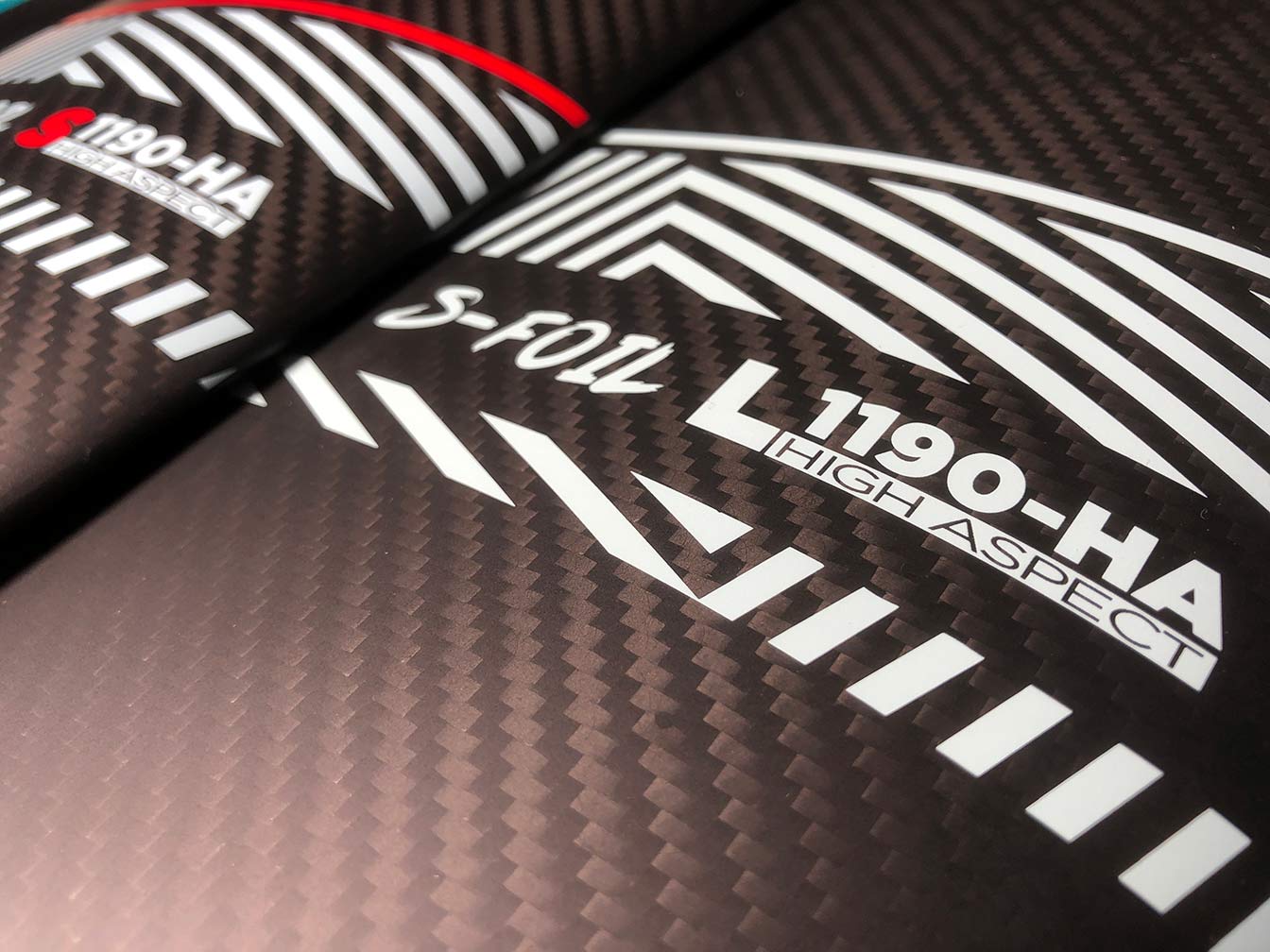
To take off early, it is recommended to opt for a high aspect ratio front foil wing which will give you excellent glide with a very early start. The choice of a thin and narrow carbon foil will give more glide and less drag. You can further optimize the take-off in very light wind conditions.
It is recommended to favor a powerful wing to have maximum power at low revs.
Wing Tips: Regarding the wing, it is important not to overinflate the leading edge of the wing. Indeed, a slightly under-inflated leading edge will make it easier to pump and allow for a spring effect in the wing's power. At SROKA, if the recommendation is 7 psi, it is recommended to put 6.5 psi in light wind.
Foil Tip: To take off early, it is recommended to favor a slightly larger stabilizer to help you at low speeds to take off very early and to use a high aspect ratio front foil wing.
In Summary
To perform in Wingfoil, you need to reduce your foil's drag, gain weight and rigidity on the entire wing foil board and foil setup, and optimize your equipment settings to be more precise and sharp in your use of the material. For example, if you have a rigid, very thin carbon foil with an inflatable board, you won't be able to go fast. The inflatable board will deform. It is therefore recommended to increase rigidity, lightness, and to "engage your brain" to go faster or to harness maximum power to jump.
If you are looking for high-performance wingfoil equipment, check out the Elite carbon foil with the Superfly board range, which will allow you to perform on the water.
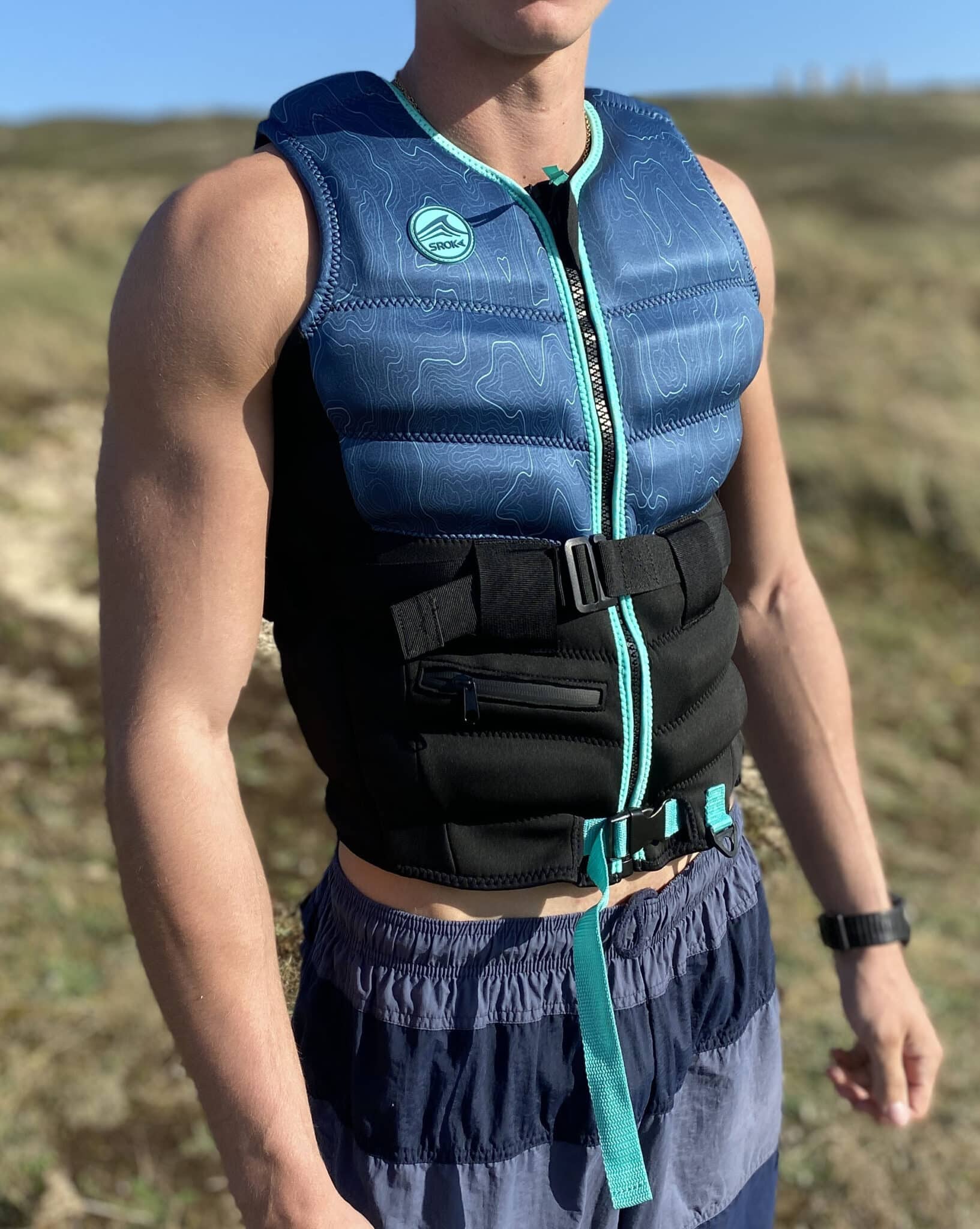
For your safety, we have developed an Impact Pro vest to absorb shocks in case of a fall. It has been reinforced to help you absorb maximum impact if you fall into the water.
Push your limits with the ELite 14 HM85 Carbon Mast and Superfly: high-end Wing Foil boards!
Optimize your performance by choosing the right equipment to go fast, jump high, or take off very early.
 The Magazine