


To ensure you can fully enjoy your paddleboarding experience safely and confidently, we will reveal different techniques and tips for getting back on your paddleboard after a fall, avoiding falls, and improving your stability on the board.
I. Know the necessary equipment
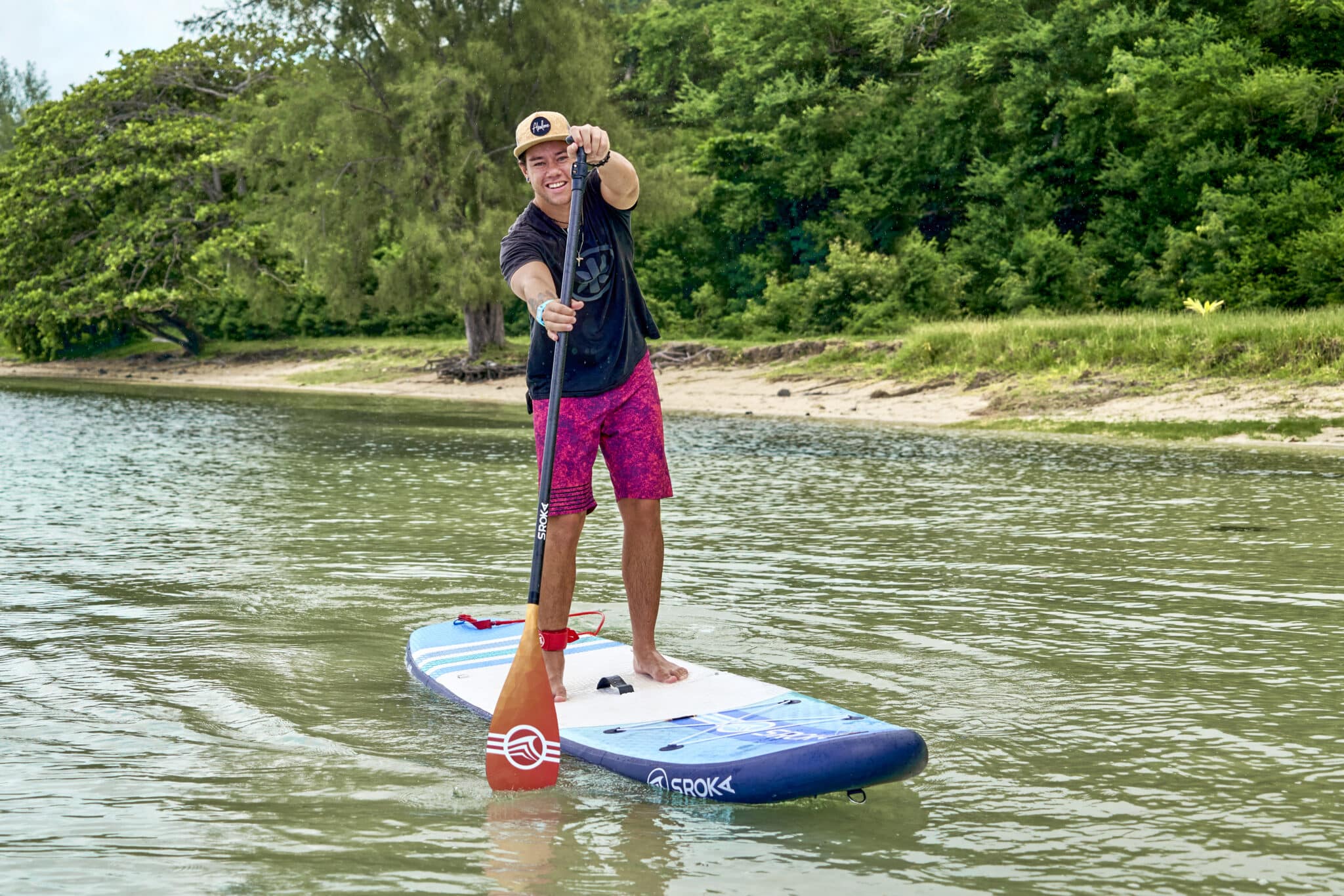
First, before discussing techniques for getting back on a paddleboard, it's important to know the necessary equipment for safe paddleboarding. The basic equipment for this water sport includes the board, paddle, and leash.
The paddleboard must be suited to your skill level, weight, and intended use. There are several types of paddleboards, including inflatable and rigid boards. Inflatable boards are practical because they are lightweight, easy to transport and store, while choosing a rigid model will provide an incomparable gliding sensation and increased performance.
The paddle must also be suited to your intended use. It should be the right size, have an ergonomic handle, and a suitable blade. Carbon paddles are lighter but more expensive, while aluminum ones are heavier, more affordable, and more resistant to impacts.
It's important to choose the right equipment to practice paddleboarding safely. Quality equipment adapted to your level and practice will allow you to practice in good conditions. It is therefore advisable to seek advice from professionals and not hesitate to invest in quality equipment. Moreover, quality equipment will last longer.
Finally, it is essential to properly maintain your equipment; inflatable boards should be deflated and stored in their carrying bag. If they are not used for a long period, such as during winter, they must be thoroughly dried before storage.
II. Different techniques for getting back on a paddleboard
Falling off your paddleboard is common, especially for beginners. That's why it's important to know the different techniques for getting back on your board safely.
There are several reasons why beginners often fall off their paddleboard. One of them is that the body of water can be choppy, with waves that can unbalance the paddleboard. Additionally, choosing a paddleboard that is ill-suited to one's level or is inexpensive can also lead to frequent falls, as low-cost paddleboards often have a reduced width to cut down on costs.
Here are the main techniques for getting back on a paddleboard after a fall:
- The support board technique: This technique involves positioning yourself next to the board, perpendicular to it. Then, place your hands on the board, on the opposite side of the rail, and then hoist yourself onto the board by pulling with your arms. This technique allows you to get on the board efficiently while minimizing the risk of falling. Slide your legs onto the board, keeping your body supported by the water. Once your legs are on the board, simply get on your knees, then stand up on the board.
- If you can touch the bottom, an effective technique for getting onto the board is to push hard with your legs while already having your arms on the board. Then, simply lean on your arms to bring your knees onto the board, before standing up. In shallow water, another option is to proceed in the same way, but by directly placing your feet on the board instead of your knees.
- In extreme cases, if you cannot get back on the board, it is advisable to ask a friend for help to lift you and get you onto the board or to hold the board while you get back on it. It is important to stay close to the shore, where you can touch the bottom, to ensure you can return if you cannot get back on the board.
It's important to choose the technique that best suits your level. If in doubt, don't hesitate to ask for help from a professional or an experienced friend.
Also, discover our complete step-by-step guide for turning on a paddleboard
III. Tips to avoid falls
Falling off your paddleboard can be a fun experience, but it can also be very dangerous and lead to injuries. Indeed, when the water is not very deep, it is possible to twist an ankle or hit a rock. Here are our tips to avoid falls on your paddleboard:
- Paddleboard posture: to avoid falls, it's important to be properly positioned on the board. The ideal posture is to keep your feet parallel, shoulder-width apart and perpendicular to the board, with knees slightly bent and back straight.
- The importance of properly positioning your body: one of the keys to maintaining balance on your paddleboard is to properly position your body. It is advisable to keep your body weight above your feet, close to the center of the board, avoiding leaning excessively to one side or the other. This will allow you to better control the paddleboard and prevent falls.
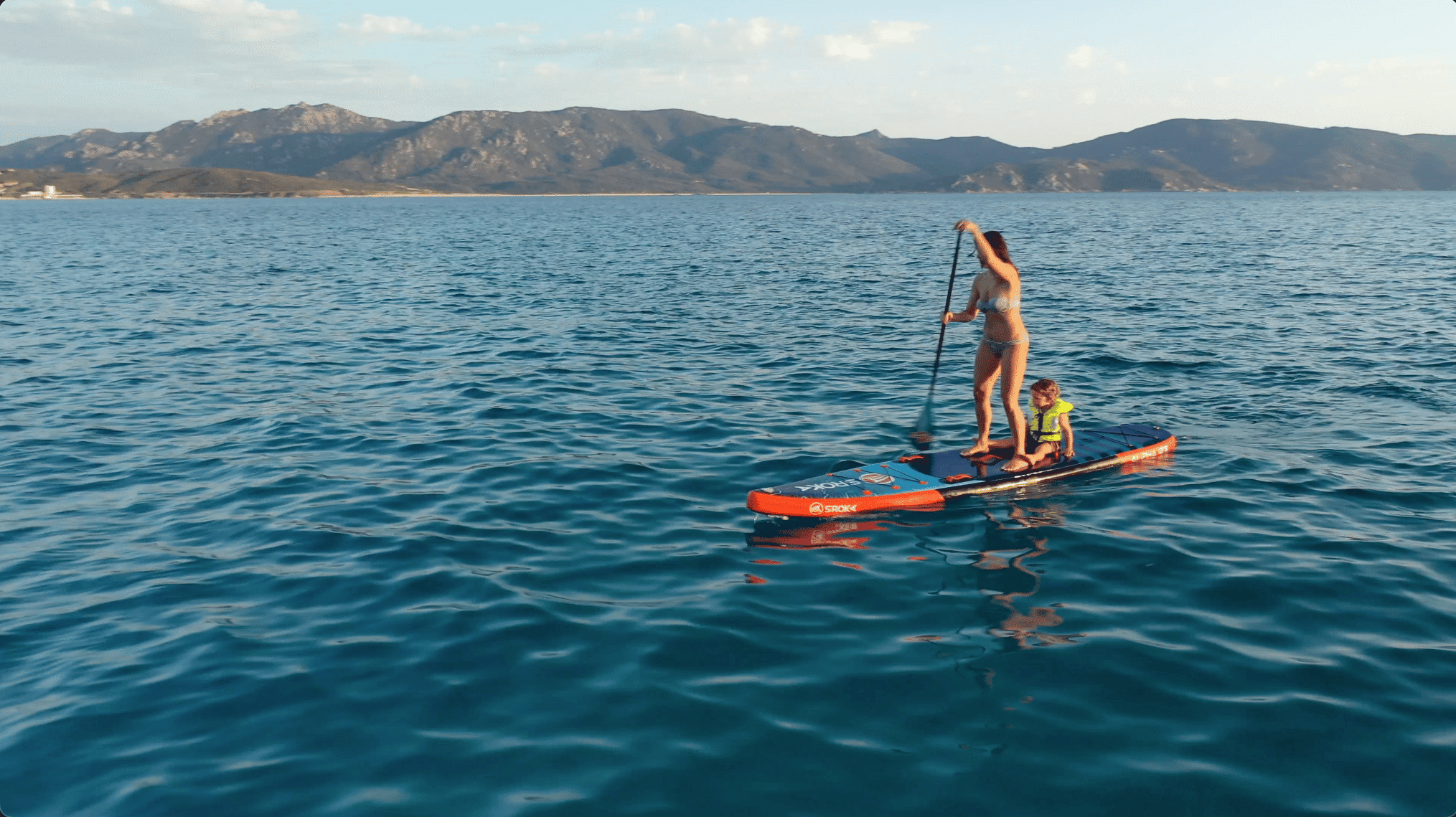
- To progress in paddleboarding, it is recommended to choose the calmest possible body of water and preferably without wind, to facilitate adaptation and progression. Indeed, the choppier the water, the more difficult it will be to maintain an upright and balanced position. It is also advisable to wear clothing appropriate for the weather conditions, to feel comfortable in the water. For those less comfortable in the water, it may be helpful to wear a buoyancy aid.
In summary
By following our advice, you can reduce the risk of falling off your paddleboard and enjoy your practice safely.
Falling off your paddleboard can happen at any time. It is therefore important to know how to get back on your board safely to avoid injuries.
With a little practice and patience, you will quickly master the techniques for getting back on your board and fully enjoy this water activity.
If you still have questions about this, or for any other request, do not hesitate to contact us!