


Stand up paddleboarding is a very popular outdoor activity that involves moving on water using a board and a paddle. If you want practical, versatile, and evolving equipment, you can opt for an inflatable paddleboard. Inflatable stand-up paddleboards are easy to transport and store, but it's important to know how to position yourself correctly on them to get the most out of them.
In this article, we'll give you some tips on how to position yourself correctly on an inflatable paddleboard. By following these tips, you should be able to paddle safely and fully enjoy this activity!
How to position yourself well on an inflatable paddleboard, here are a few steps to follow:
- Position yourself well on your knees: To start inflatable paddleboarding, you can begin by kneeling. Your center of gravity will be lower, and you'll have more balance. Position your knees one after the other, right in the middle of your paddleboard. For optimal balance, spread your knees about shoulder-width apart. Take your paddle in hand and start paddling as soon as you feel comfortable.
- Once standing, adopt the right posture: When you feel comfortable, you can leave the kneeling position and stand up. To do this, position your feet well and slightly bend your knees to have maximum balance.
- Position your feet correctly: To be well-positioned on your inflatable paddleboard, your feet should be placed in the middle of your board. They should be about shoulder-width apart for maximum balance.
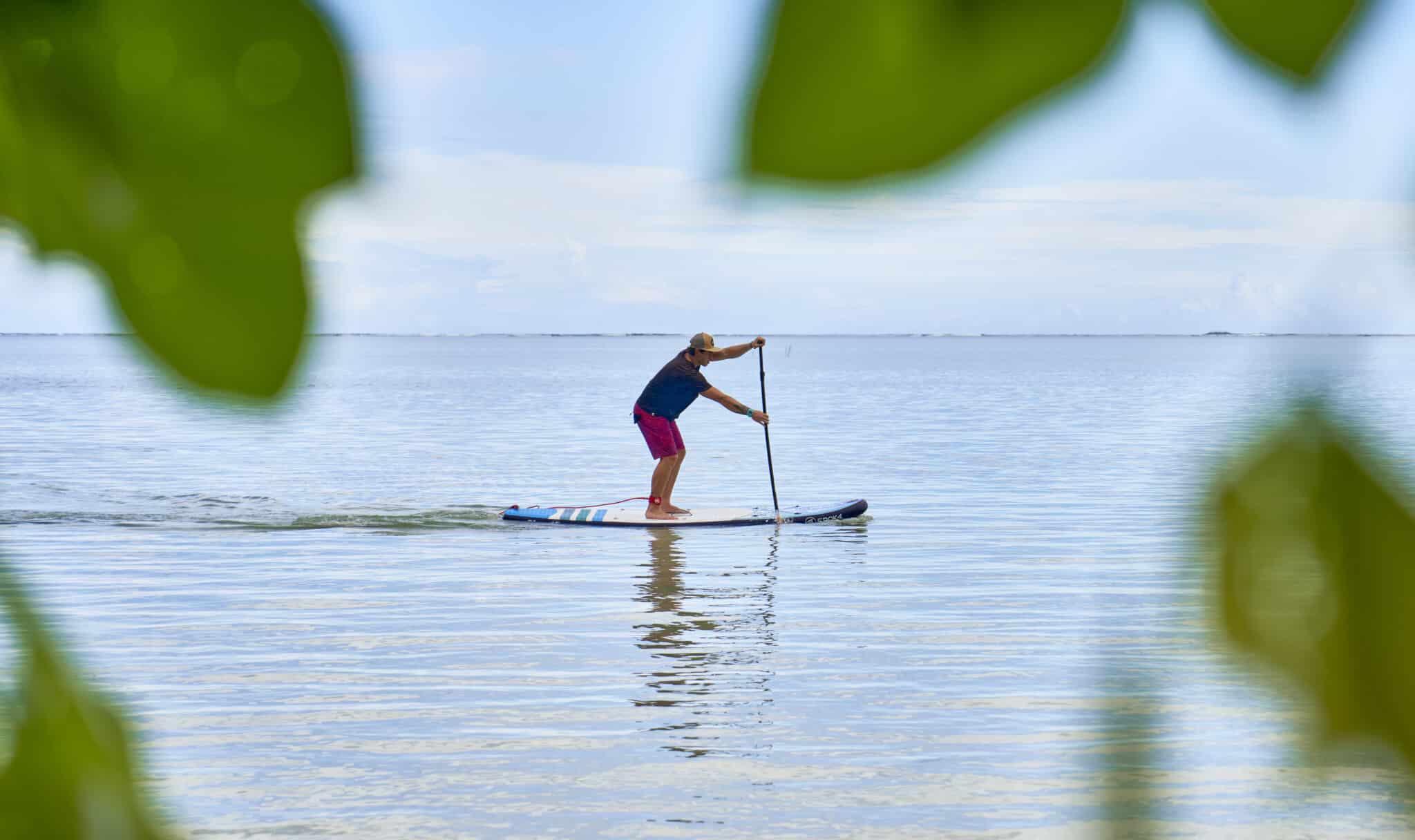
- Hold your paddle correctly: The correct hand position is to place one hand on the top of your paddle and the second hand roughly in the middle of the paddle (as shown in the photo above). To move forward, your paddle must be in the correct direction, meaning the "hollow" side of the blade should be oriented towards the back of the paddleboard.
How to find your balance and fall well in stand up paddleboarding?
Here are some tips to find your balance and fall well while stand up paddleboarding:
- Start by mastering the basics of stand-up paddleboarding, such as position and paddling. The more knowledge and practice you have, the more comfortable you'll be on your board.
- Pay attention to your position on the board to maintain balance at all times. Your feet should be equidistant from each side of your board, and your weight should be centered for maximum balance.
- If you feel unstable, take a break and take the time to rebalance before starting to paddle again. If you feel like you're losing your balance, try to crouch slightly to get closer to the water's surface and regain your stability.
- In case of a fall, don't panic. Stay calm and get close to your paddleboard to float. You can try to get back on your paddleboard by placing your hands on the edges of the board, pushing yourself up, and using your legs to climb back on.
Our tips for not falling off an inflatable paddleboard
To fully enjoy the pleasure that inflatable paddleboarding offers, it is important to know how to avoid falling. We have noted some tips that will help you maintain your balance as best as possible to avoid falling off your board.
- Make sure your paddleboard is properly inflated and stable before you start. A paddleboard that is not sufficiently inflated or has leaks can be unstable, and you risk falling more easily.
- Choose an inflatable stand-up paddleboard that is suitable for your level and weight. A board that is too small or unstable can be more difficult to control. Find our tips for choosing your inflatable paddleboard.
- Pay attention to the weather conditions before going stand up paddleboarding. High waves or strong wind can make your outing more difficult and increase the risk of falls.
- Always wear a buoyancy aid and even a life jacket if you want more safety. This will help you stay on the water's surface in case of a fall.
If you still have questions on this subject, or for any other request, do not hesitate to contact us!