


Paddleboarding, this nautical and aquatic activity that combines balance, strength, and communion with nature. Paddle around in the middle of nature, silently discovering what surrounds you. It is increasingly popular. Whether you are a beginner or a seasoned enthusiast, it is essential to choose the right attire to fully enjoy this moment of sporting escape. In this article, we will explore the different seasons and the appropriate equipment for paddling in complete serenity.
How to dress for paddleboarding, regardless of the season?
If your attire is not suitable, you can quickly get cold and potentially put yourself in danger if conditions change rapidly.
Adapting your attire seems fundamental for stand up paddleboarding, whatever the weather. Even in winter, paddleboarding will bring you great pleasure, far from the hustle and bustle of our "full-speed" lives.

How to dress for winter paddleboarding?
1. Tips for staying warm and safe:
First, winter is a season with few people on the water, which can be problematic if you experience hypothermia or equipment issues. Therefore, choosing your equipment is fundamental. In cold winter water, it's impossible to stay in the water without a wetsuit for long.
Don't go alone if possible. Sharing these moments in nature with others while paddleboarding is always better. More importantly, in case of a problem, it allows you to have someone next to you to help. So, to ensure maximum safety, paddle with others. Otherwise, we encourage you to inform at least one loved one and provide your planned route, as well as a departure and arrival time.
Use a buoyancy aid: wear a life jacket or a flotation device for your safety in winter. On the one hand, it will keep you warm, but it will also allow you to float better in case of a problem. You can check out our pro impact vest which can also be used for paddleboarding.
Use a board leash. This is fundamental. Attach your board with a leash to your foot to avoid losing it if you fall.
2. Choosing what to wear for winter paddleboarding.
Even more so for this season, choosing the right attire is fundamental. You can get cold very quickly.
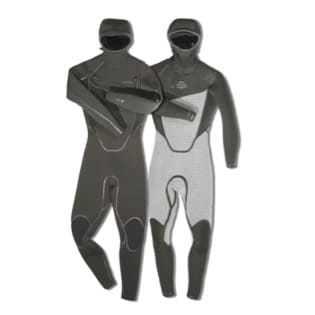
There are several options for neoprene wetsuits or other types such as dry suits.
Firstly, you can use a more or less thick neoprene wetsuit. The thicker it is, the warmer you'll be. However, you'll have difficulty moving properly. So you'll use a lot of energy.
The purpose of this wetsuit is to limit energy and heat loss and maintain your body at the right temperature. To do this, when you fall, the wetsuit will trap a thin layer of water that will help warm your body. It should be noted that these wetsuits are less effective out of the water than when you are in the water.
The second option is the hybrid solution: neoprene pants or a long john with a breathable top or a windbreaker.
This solution is a good alternative because, on the one hand, neoprene pants or a long john are generally quite thin and therefore do not hinder movement. A long john is a sleeveless wetsuit allowing great mobility and flexibility of the upper body and good thermal protection of the lower body.
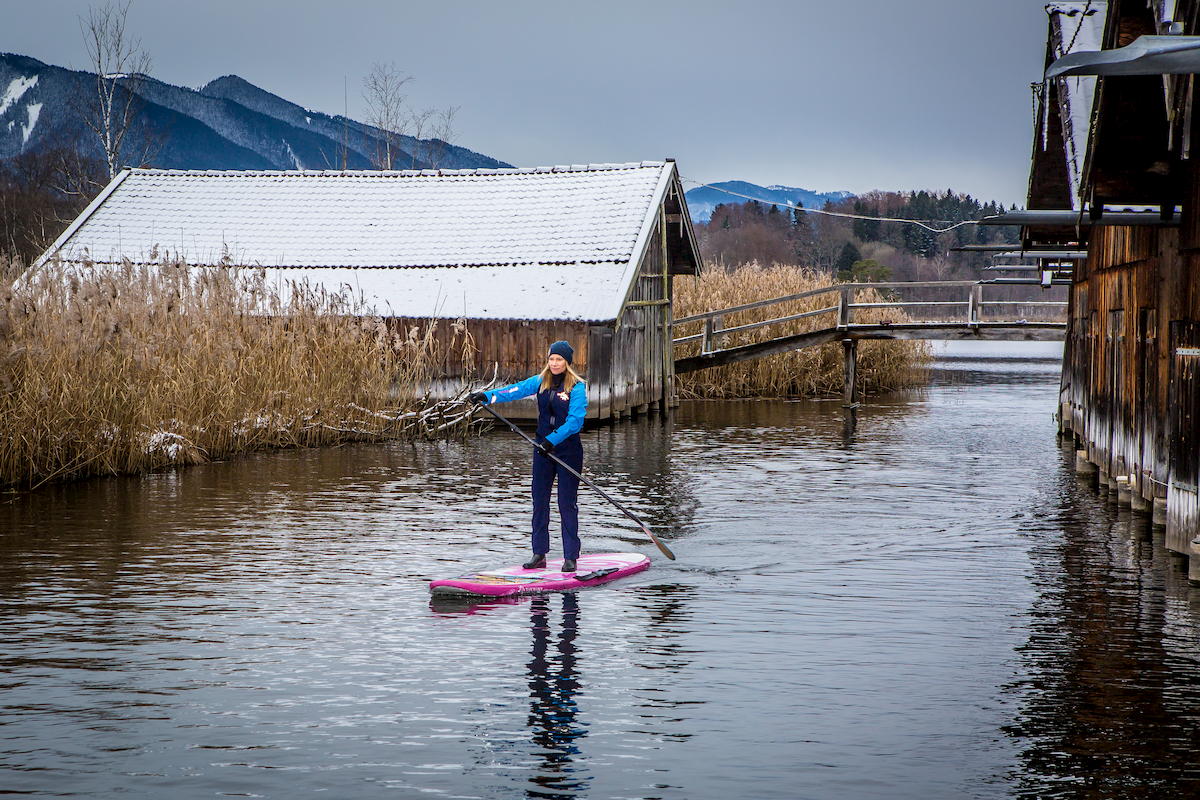
Combine it with an upper part that cuts the wind and possibly base layers under the windbreaker, and you'll never be cold. Opt for a breathable top that allows perspiration to escape. You can choose fleece tops, for example. However, don't forget to take a change of clothes in case you fall. (A small waterproof bag can be used for spare clothes).
This design offers paddlers and water sports enthusiasts, such as paddleboarders, greater freedom of movement in the upper body. It promotes more natural gestures and facilitates the execution of various actions, such as paddling, turning, or adjusting position on the board. The long john is more suitable for slightly milder weather conditions.
The last option is to choose a dry suit. This solution is very interesting because it combines total warmth (since air cannot enter) and freedom of movement thanks to its thinness. It keeps you dry even if you fall into the water. Thanks to their impermeability, these suits prevent water from entering, and you stay comfortably protected from moisture and cold. These suits generally include a hood, so even in rain or strong winds, you won't lose heat.
Remember, 30% of our body heat escapes through our extremities: head, feet, and hands.
This option remains the best for winter paddleboarding; it allows you to maintain a good level of mobility for maximum performance while preserving your body heat.
But that's not all. As we mentioned earlier: feet, hands, and head are where we lose the most energy and heat. So remember to equip yourself with neoprene booties and gloves and/or a hat.
In summary of how to dress for winter paddleboarding.
To paddle peacefully and warmly in the middle of winter, prioritize warm equipment covering your extremities. By layering different items, for example with dry suits, even in sub-zero temperatures, you will never be cold. Don't forget your safety equipment: leash, life jacket or buoyancy aid, and possibly a hot drink to warm up within reach.
How to dress for Paddleboarding in Spring or mid-season?
Whether you are a novice or a seasoned enthusiast, it is essential to choose the right attire to fully enjoy this mid-season experience. Temperatures are starting to rise, as is the water temperature, but not enough to go in a swimsuit. So you need to opt for a lighter wetsuit than in winter, but one that is sufficient to avoid catching a cold.
If you're getting back into paddleboarding after a winter break, you'll need some time to adapt. Anticipate potential falls due to the break over winter.
1. Tips for staying warm and safe:
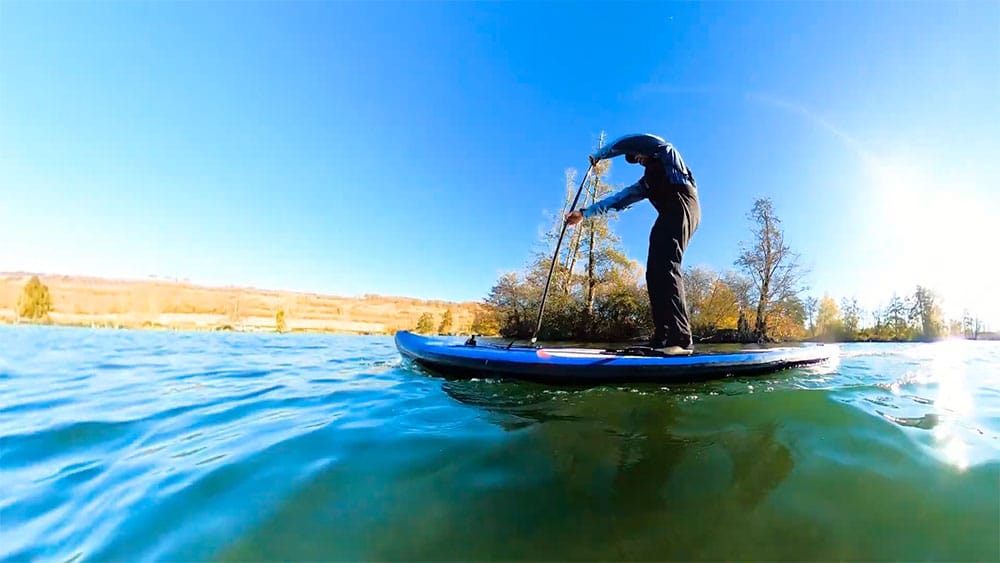
You can use a dry suit as seen previously, removing the insulating layers underneath the suit. This will allow you to stay dry even if you fall into the water, and also provide a windbreaker effect from the dry suit with increased mobility. Thus, the investment in a dry suit for winter can be used for mid-season or rainy weather.
The second option is to go for a full wetsuit (thinner) or a long John to maintain maximum mobility in the upper body and avoid expending too much energy. The windbreaker will protect the upper part from the wind.
Finally, for the bravest (or if you are in a warmer region), opt for the shorty. Ideal for summer or mid-season if the water is relatively warm. It provides good thermal insulation for the body and maximum freedom of movement for the arms.
This season, if you want to feel the board with more precision, you can remove your booties; as a general rule, it's entirely possible to do so. Since your paddleboard has a net for attaching accessories, you can take them with you if you need them.

2. Advice
Don't forget to hydrate yourself; it's very important when engaging in prolonged effort. In a waterproof bag attached to the net, put some water and food and treat yourself to a small break in the middle of the ocean, far from everything and contemplating this beautiful nature.
For some, it's a return, so prioritize a gentle resumption by gradually increasing distances. This will allow your body to adapt to a more significant effort over the sessions.
Spring is a fantastic season; nature awakens, take advantage of it to walk around and discover new routes.
Don't forget to hydrate yourself; it's very important when engaging in prolonged effort. In a waterproof bag attached to the net, put some water and food and treat yourself to a small break in the middle of the ocean, far from everything and contemplating this beautiful nature.
For some, it's a return, so prioritize a gentle resumption by gradually increasing distances. This will allow your body to adapt to a more significant effort over the sessions.
Spring is a fantastic season; nature awakens, take advantage of it to walk around and discover new routes.
Summary of what to wear mid-season
Paddleboarding mid-season is finding yourself in the heart of nature in transition. Trees are budding, birds are singing, and the waters are calm. You glide silently on the mirror of a lake or the course of a river, connected to the awakening ecosystem around you. It's a communion with land and water, a moment of outdoor meditation. Neither too hot nor too cold, mid-season offers ideal conditions for paddleboarding. You can wear a lighter wetsuit and enjoy the sun without sweating excessively. The sun's rays caress your skin, and the gentle breeze refreshes you. It's a perfect balance of comfort and adventure. Moreover, mid-season, beaches and bodies of water are less crowded. You have the space to yourself, away from the summer hustle and bustle.
Put on your wetsuit, grab your paddle, and go discover these precious moments in the heart of nature.
How to dress for Summer Paddleboarding
The summer season is a magical time for paddleboarding. If you're too hot on the sand, grab your paddle and go for a dip away from the crowds. Embark on an adventure with your paddleboard for the day, with water and a picnic, and enjoy a day in nature with your family.

Choosing what to wear for summer paddleboarding.
Depending on where you are on holiday. You might need a shorty wetsuit. Otherwise, it's very simple: a buoyancy aid if you need one, a UV-protective top, and boardshorts.
Of course, if you are at the tip of Brittany with a cool breeze even in summer, a shorty or windbreaker, or even a light full wetsuit, may be useful. In case you fall into the water, the insulating wetsuit will provide protection.
In summer, the sun is higher in the sky, so reflection is more significant. Sunglasses and sunscreen will protect you from UV rays.
If it's really hot, opt for a hat or cap to keep your head shaded and avoid sunstroke.
Conclusion
In summer, beaches and bodies of water are often crowded. Paddleboarding allows you to get away from the crowds and find peaceful spots. Paddling early in the morning or late in the day offers you absolute tranquility. You can explore hidden coves, isolated lakes, and calm rivers away from the summer hustle and bustle. In this season, water is your ally to cool down. Dip your paddle into the fresh water and let the droplets splash you. The sea breeze caresses you as you glide across the water's surface. It's a natural way to stay cool while exercising.
It's a sensory experience that allows you to start or end the day well. Put on your swimsuit and jump on your paddleboard.
If you still have questions on this topic, or for any other request, do not hesitate to contact us!