


"Light wind" in Wingfoil refers to a light to moderate wind force. That is, roughly 5 to 12 knots (about 9 to 22 km/h). This type of condition can be insufficient for most water sports, but not for Wing foil. How to navigate in light wind in Wing foil? This requires learning and optimal equipment choices.
In this article, we will discuss different techniques and equipment choices to help you get flying even earlier. Navigating in light wind in wingfoil is a unique experience, and while the practice wasn't necessarily well-suited for it in its early days, today, wingfoiling can start from 5 knots and you can ride beyond 45 knots. Developments in boards, foils, and wings have played a role, but so have advancements in techniques.
Technical aspects for wingfoiling in light wind
Let's address the aspect that depends on you, because beyond the equipment, wingfoiling in light wind implies a certain technical level and some important concepts.
Either you pump only with the wing, or you pump only with the foil and the board, or you learn to synchronize the pumping of the wing with the foil to be more efficient. When trying to answer the question of how to wingfoil in light wind, you need to address the question of the foil pumping technique.
1. Wing Pumping
The wing is the engine of your practice; it's what propels you forward, so it seems obvious that handling it well is also crucial.
Effective pumping with a wing first depends on the wing you are using; a more or less rigid wing will require a more or less long pumping frequency. Let your wing breathe! It's completely useless to "thrash" your wing by shaking it in all directions. Slowly move it away from you and pull it dynamically, pressing the handles slightly downwards to bring it back up at the end of the movement. Wingfoiling in light wind therefore requires a wing with a taut canopy, which will facilitate pumping.
2. Foil Pumping
Foil pumping requires practice; no one achieves it without trying, so dive in and you'll quickly grasp the principle. As when you have speed, the general idea is to oscillate the foil between the front and back feet to give it speed. You then make a "porpoising" movement to bounce the board on the water until there is enough speed to take off.
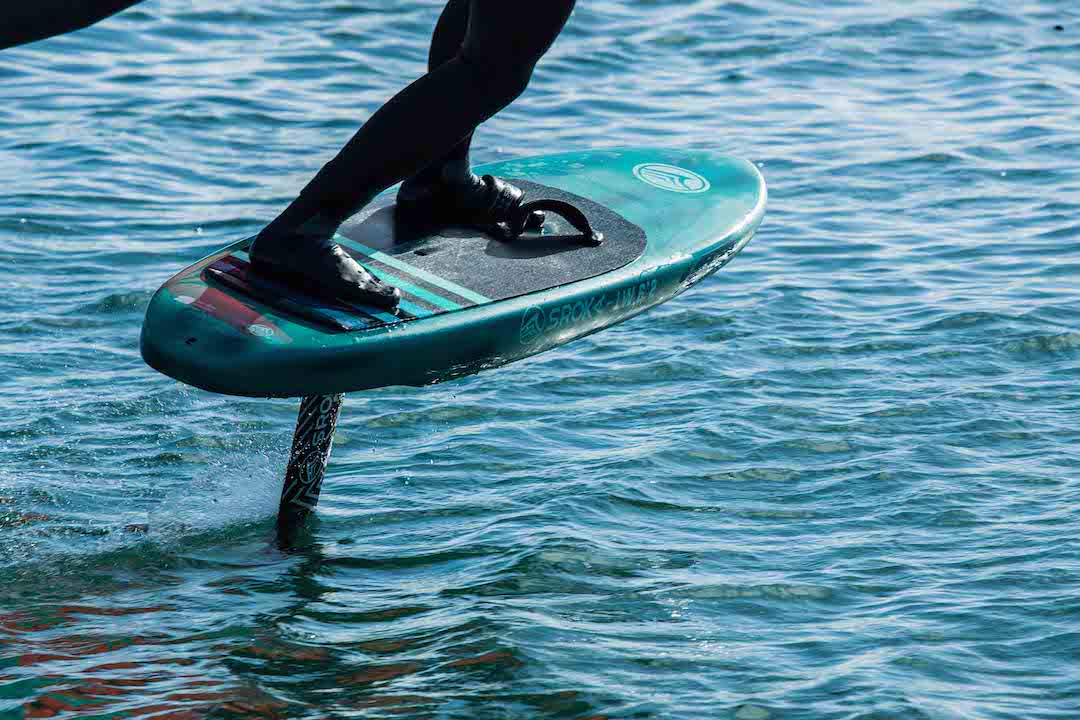
3. Synchronizing wing and foil pumping.
To take off early, you need to successfully synchronize the pumping of both the wing and the foil. If they are out of sync, you will cancel out their effects; by synchronizing them, you will achieve twice the efficiency. Stay as balanced as possible on the board. As you can see in the video, the rider is unbalanced at one point.
To try and synchronize the two movements well, we advise you to practice on flat water. When you pull on your wing, you should push your board and therefore the foil forward to allow you to gain more horizontal speed.
4. Position on the board
The position on the board is slightly different depending on the type of board you have, but generally, put your weight forward to make the board accelerate on the water to facilitate its take-off. Some boards glide much better, so you need to let the board accelerate. Sometimes, you have to push the board forward with your feet to help it gain speed. This difference is observed depending on the boards used. The thinner and longer the board, the easier it will gain speed.
Equipment for wingfoiling in light wind
Equipment obviously plays a significant part in your glide and performance in light wind. Wingfoiling in light wind will be determined by choosing the right equipment.
1. The Wing
Using the right wing will increase your chances of flying before everyone else. Opt for a wing with a thin but rigid leading edge, like our new Elite wing in Dyneema. The leading edge generates drag on the wing. The thicker the leading edge, the more drag it will generate, and therefore the less efficient it will be. A thin leading edge significantly reduces drag, allowing for earlier take-off and greater speed.
Regarding size, you will need to do your own tests to determine the surface area that suits you. Some prefer a large wing because it generates a lot of power, while others play with the foil, keeping a small (or medium) wing and taking a larger foil. The effective solution for wingfoiling in light wind seems to be, as much as possible, to reduce the size of the foil under the water because there is 800 times more drag in water than in air. In the latter case, they can therefore afford to pump with a smaller wing that will give them more range of motion and with greater foil power. Generally, smaller riders (under 1m60) should avoid wings larger than 5m2.
If you're riding on lakes, prioritize a large wing that will allow you to take off very early.
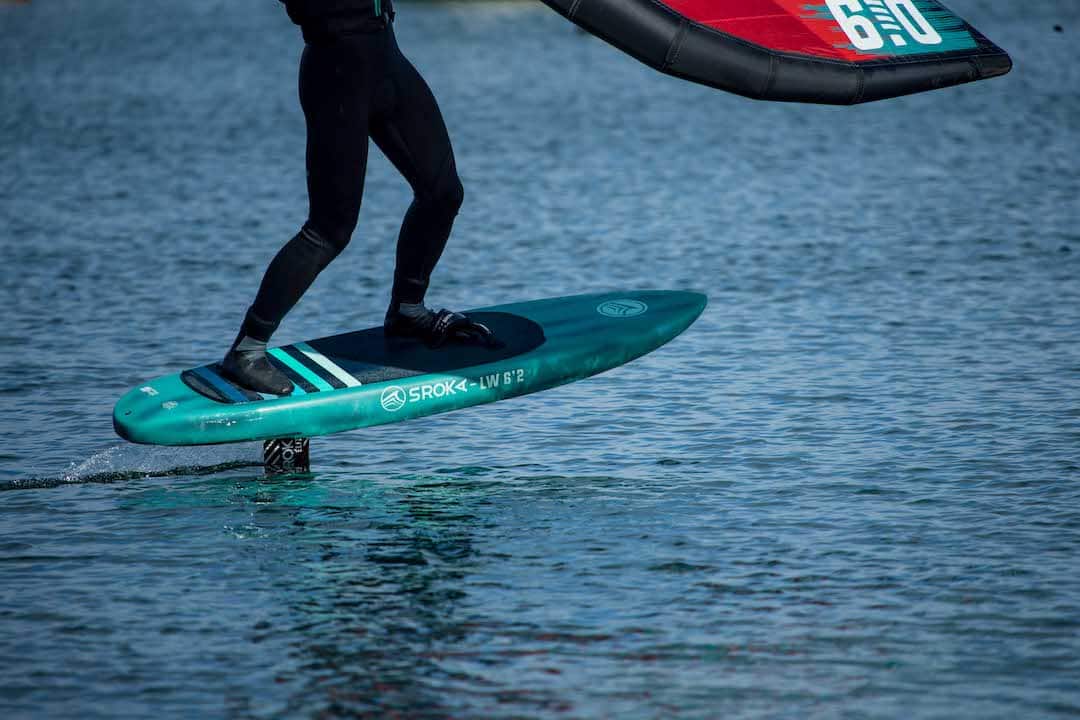
2. A specific board for light wind wingfoiling
The board is the element that can either totally hinder or completely free you when wingfoiling in light wind. Opt for a long and narrow board that will allow you to glide immensely during takeoff. This will enable you to fly effortlessly in ridiculously light winds. Our new DW and LW ranges are compelling examples of the utility of a long and narrow board, providing easy access to light wind conditions while remaining very high-performing.
However, this range is not recommended for beginners. Therefore, you will need to have an intermediate/advanced skill level to use them.
Using straps will allow you to pull the board upwards to improve its pumping, especially in very light wind.
3. The foil
The board is the element that can either totally cause problems or completely free you. Choose a long and narrow board that will allow you to glide at takeoff and thus fly effortlessly in ridiculously light winds. Our new DW and LW ranges are compelling examples of the utility of a long and narrow board, providing easy access to light wind while remaining high-performing.
However, this range is not recommended for beginners. Therefore, you will need to have an intermediate/advanced level to use them.
Using straps will allow you to pull the board upwards to improve its pumping, especially in very light wind.
The foil is the element that comes into play just before takeoff; once the board and wing have generated speed, it enters the scene and enables takeoff. A high-aspect-ratio foil allows for a smooth takeoff and tolerates low speeds very well, depending on a more or less thick profile. A properly adapted foil will above all prevent even the slightest error from causing you to crash once airborne.
To summarize equipment choices
- Choose a foil with a good wingspan for early take-off.
- Take a thin, long and narrow board like SROKA's LW range
- If you want to ride in light wind conditions, opt for a 6m wing or larger to ensure you take off very early.
Learning to wing foil in light wind: Observing the body of water
1. Currents and waves
Using the current and/or waves will potentially allow you to take off earlier, provided, of course, that they are present.
2. Gusts
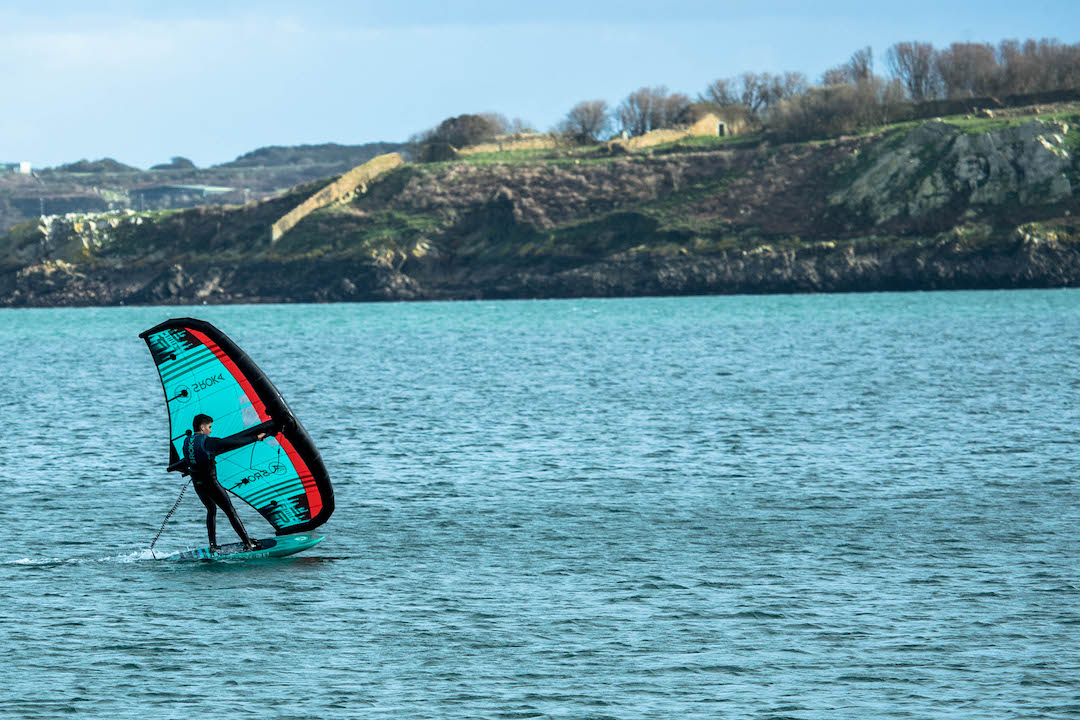
Observing the water surface is a skill that needs to be learned; practice spotting gusts on the water! To help you, the stronger the gust, the duller and darker the water surface will appear. Use these gusts to take off and learn to anticipate them. By synchronizing the arrival of the gust with your pumping, you will take off earlier.
Once in the air
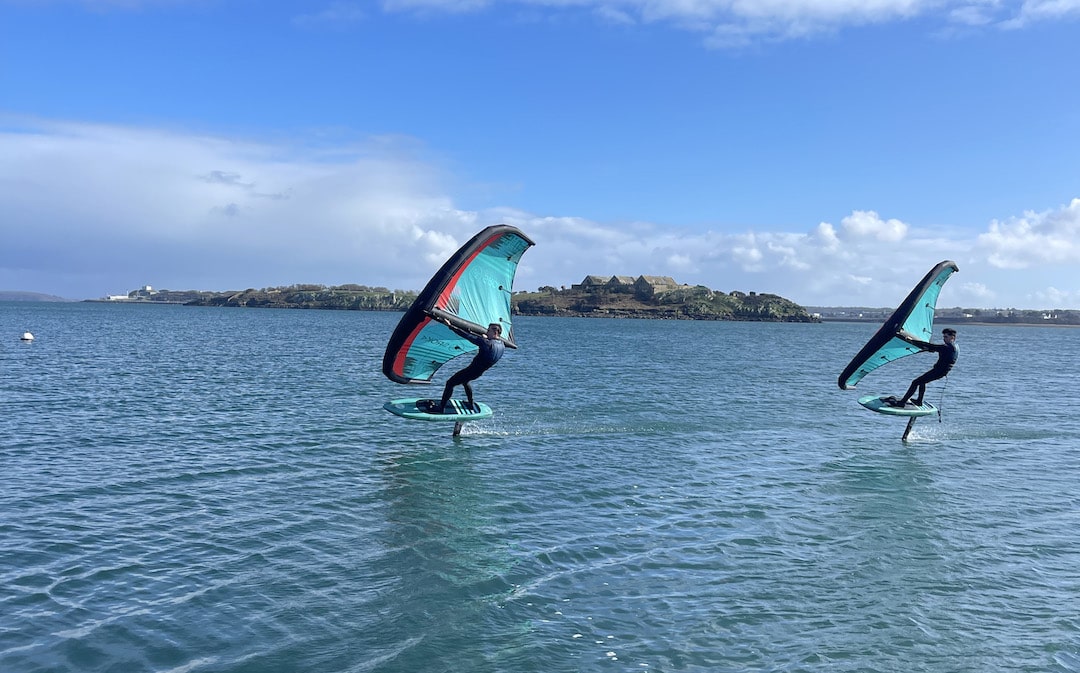
Takeoff is the difficult and technical part of light wind riding, but once airborne, make sure not to make silly mistakes that would force you to start over. Ensure you are stable, have control of your foil, and are capable of performing the maneuvers necessary for your practice.
In conclusion, light wind winging is accessible to all riders with a "jibe" level. Make sure to choose the right equipment that will allow you to optimize the low range, namely: a relatively large wing, a foil with a significant aspect ratio, and a thin, long board to increase glide. And don't forget that you'll need to practice and master the board/wing pumping technique as much as possible to make your sessions a success and be "the one who flies in nothing" and annoys everyone else in the process.
If you still have questions on this subject, or for any other request, do not hesitate to contact us!