


Choosing a mid-length board for wing foiling is a crucial step for riders who want to combine light wind range, maneuverability, and performance. We often hear it on the beach, but which board should you choose for light wind sailing? The main advantage of this type of light wind board is to optimize light wind conditions and thus multiply your sessions in light wind.
Among the many models available on the market, SROKA's Light Wind (LW) range stands out for its innovative design and versatility. In this article, we will give you all the information to consider to choose your new mid-length board. This complete guide will give you all the information to make the right choice.
Mid-length Board Construction
1.1 Materials:
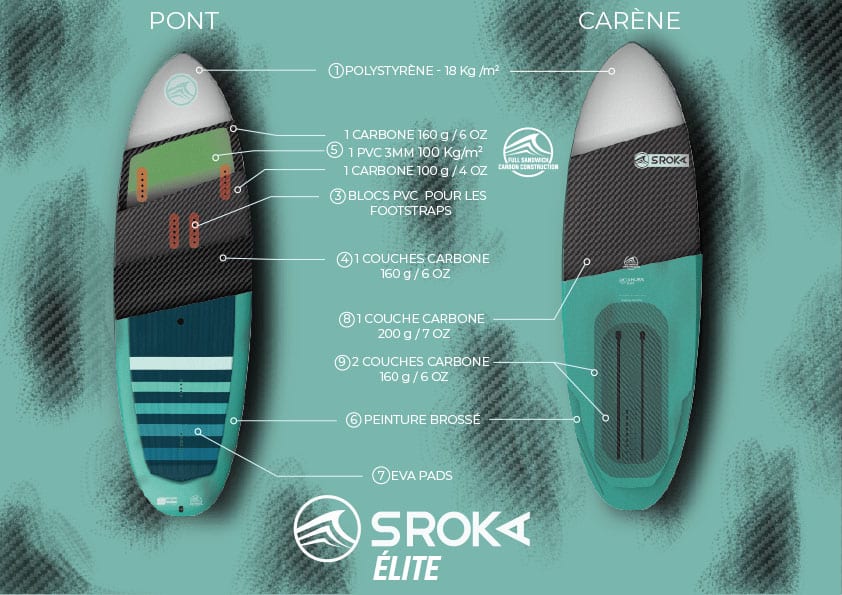
Choose well-built boards. It's not enough to just put a known brand logo on it for your board to perform well. The materials used, and therefore its construction, are one of the fundamental criteria for having a board that lasts over time with excellent performance. PVC carbon sandwich boards will provide maximum stiffness, strength, responsiveness, and reactivity. We use a full carbon sandwich construction on our mid-length models. This is not the case for all brands. Look carefully at how the boards of the brand you want to buy are constructed.
1.2 Reinforcements:
Strategically placed reinforcements in stressed areas (foil box, deck, rails, straps) increase the stiffness and longevity of the board. Indeed, if, for example, your US rails are glued into PVC blocks running from the deck to the hull, the reactivity of your board and therefore its responsiveness will be better. The larger the board, the more torsion and deformation there can be, leading to a loss of reactivity or maneuverability. This is why we have added a layer of carbon to the rails to further stiffen the boards and also to increase longevity.
1.3 Overall weight:
There's no illusion to be made. To have a very light board, you have to remove material from the inside. To gain strength, you have to add more materials (carbon or PVC reinforcement) which will add weight. Don't be fooled. The lighter the board, the less responsive it will be, and the less stiff and strong it will be. It's just a matter of compromise. We have chosen to reinforce the boards to gain responsiveness and maneuverability, even if it means a few hundred grams more. Being the most rigid and strong over time is a priority for us. A mid-length board is an investment and it should last a long time and help you ride better.
The shape of the light wind board
2.1 Volume:
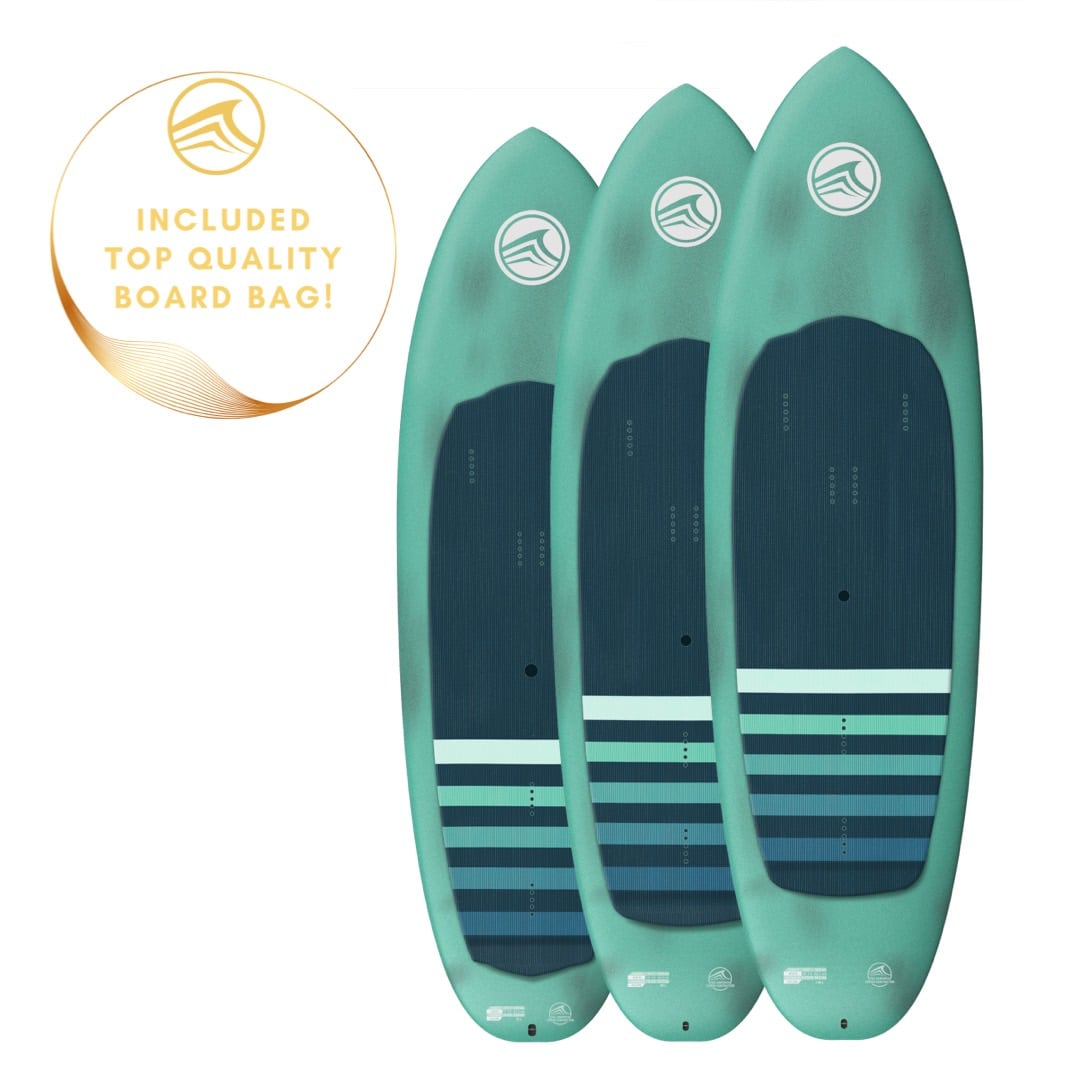
Volume is the ratio between length X width x thickness. It must be sufficient (to be determined according to your weight and level) to facilitate planing, especially in light wind conditions. We have 3 mid-length models: the LW 5'7 x 20 at 75 L, the LW 6'2 x 21 at 90 L, and the LW 6'6 x 22 at 105 L. The 6'6 will easily allow riders around 100 kg to sail. Conversely, the 75 L (LW 5'7) will be perfect for all people under 75 kg.
2.2 The shape:
A parallel (straight) outline promotes stability and glide and therefore planing. If the outline is too round, you will automatically lose stability.
2.3 Length / width:
The length of a mid-length wing foil board is a key element in customizing the riding experience. A longer board offers a feeling of stability and fluidity, ideal for long sessions in very light wind. A shorter board, on the other hand, provides more direct and reactive sensations, perfect for riders who like dynamic maneuvers and more radical surfing or carving sensations. Mid-length boards are designed to offer a compromise between performance and maneuverability, allowing riders to progress quickly and ride in light wind while having maximum fun on the water.
2.4 Stiffness:
A board that is too flexible can be difficult to control and will lead to a loss of stability and control in flight. The stiffer the board, the easier it will be to control, regardless of the conditions. This is, in our opinion, one of the important keys to the success of a mid-length board.
2.5 Hull shape:
A double concave hull improves directional stability and facilitates planing. Conversely, a round hull will be more slippery, but have you ever seen a stable barrel? So this type of hull is to be completely avoided if you want maximum stability. And since these boards are quite narrow, if the hull is round, instability will increase. We recommend relatively flat hulls with a double concave towards the front. At SROKA, we have taken the time to really work on the hulls of the LWs to find the best compromise between performance and stability.
2.6 Volume distribution:
The way volume is distributed on a larger wing foil board significantly influences the sensations felt while riding. A board with more volume at the front can give the impression of having a foil that dives a bit. For this, you will probably need to reposition your foil a little or at least move it forward. The position of the rails is fundamental for a very good balance in flight. A board with more homogeneous volume (more centered under the foil and in the center of the board) will offer a feeling of lightness, freedom, and maneuverability. So don't hesitate to test different foil positions on the board to find your correct adjustment to be most comfortable.
Choosing the right mid-length board will depend on your riding style.
Your wing foiling practice will greatly influence the choice of your mid-length board.
- Freeride and waves: To have fun on moderate-sized waves and carve fluidly, a slightly more compact mid-length board will be ideal. This shape offers better control and greater maneuverability in turns.
- Pure freeride and cruising: If you are primarily looking to enjoy long, relaxed riding sessions, a mid-length board with a little more volume and a softer rocker line will give you a better glide in very light wind, providing ease and stability.
- Technical progression: For those who want to progress quickly and try new tricks, a more compact mid-length board is ideal. It must offer a good balance between stability and maneuverability, allowing you to refine your pumping technique, attempt small jumps, and perfect your jibes or carve on larger swell lines.
Which mid-length board to choose based on your skill level?
Let's take the example of a rider weighing 75 kg - 80 kg.
- If you are a beginner and prioritize stability and comfort, opt for a downwind board that will be wider and longer, it will provide more stability to start. For example, the DW 7'2 x 22.
- If you are a skilled rider looking for a board to sail in very light wind. Then a slightly more voluminous Light Wind board will provide comfort and ease. For example, an LW 6'6.
- If you are an experienced rider looking for strong sensations and radical maneuvers, a more compact mid-length wing foil board is for you. Opt for the 5'7 LW.
- If you want a versatile board, which offers an interesting compromise between stability and maneuverability. Opt for the LW 6'2.
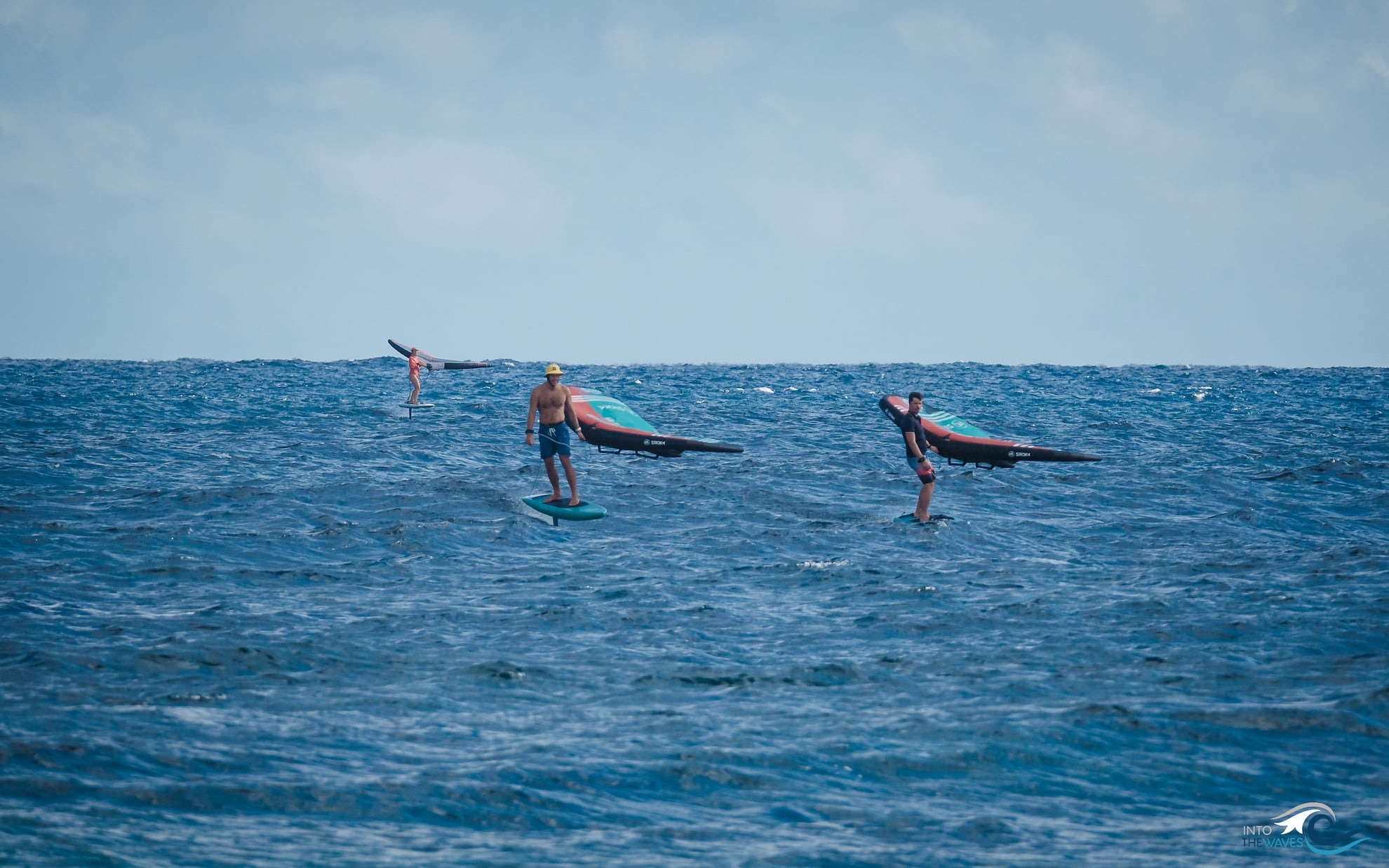
Why choose a SROKA LW board?
SROKA's Light Wind boards were designed to meet the needs of wingfoilers looking for performance in light wind conditions. Here are the main advantages of this range:
- Versatility: LW boards are equally at home in light wind swell and on flat water, offering great versatility.
- Stability: Thanks to their generous volume and well-designed shape, mid-length boards offer excellent longitudinal stability, facilitating take-off in light wind conditions and making progression easier.
- Comfort: This type of board provides great comfort in flight when the boards are very stiff. And the stiffer these boards are, the better your performance will be.

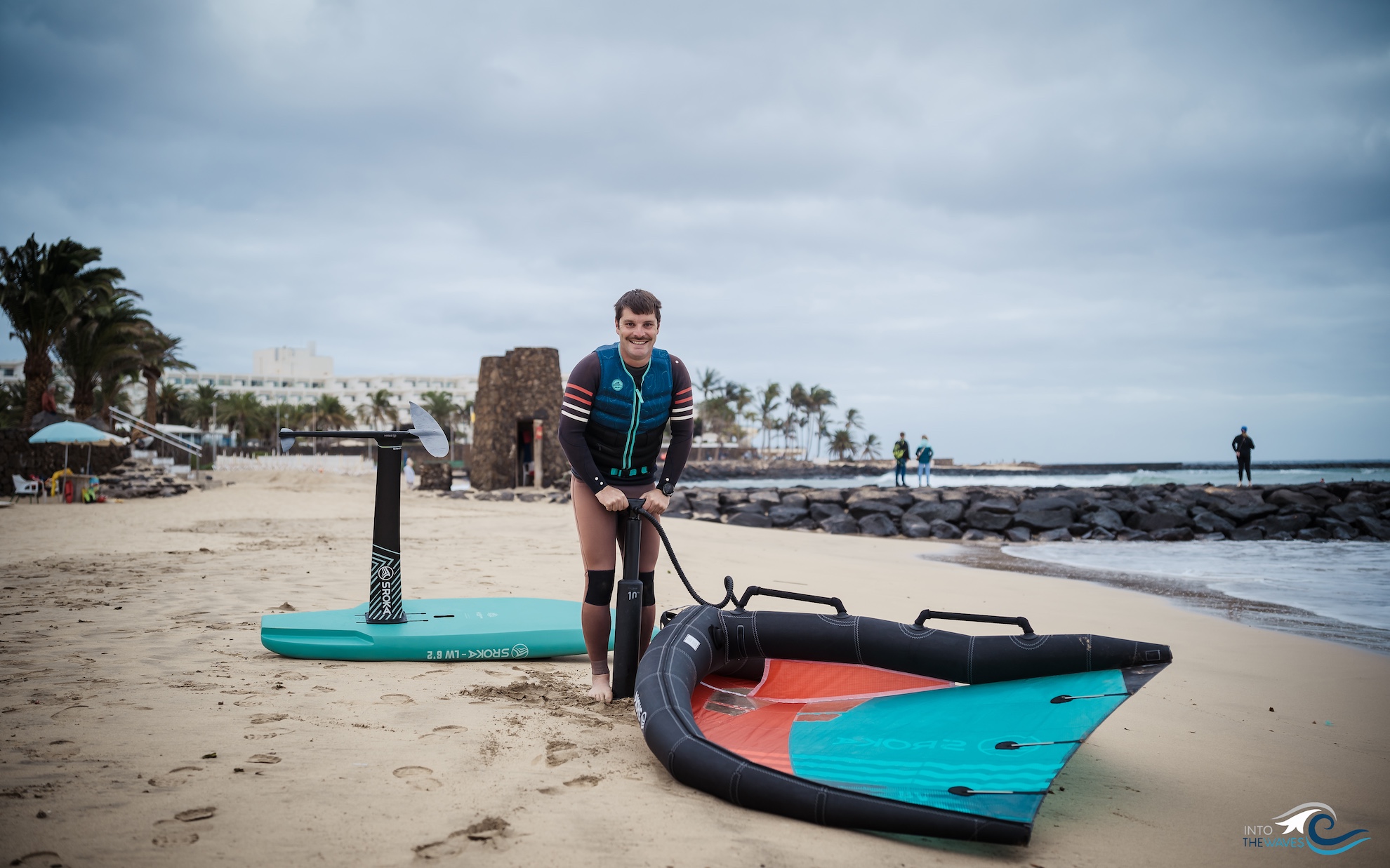
- Performance: LW boards are quick to start and responsive, allowing you to fully enjoy the sensations of wing foiling in light wind. With an LW 6'6 and a 5m wing with a 1100 cm2 UHA foil, you can expect to sail in 7-8 knots of wind.
- Durability: High-quality materials and strategic reinforcements on the board guarantee a long lifespan. Moreover, at SROKA, all boards in the Elite range come with board bags to protect your board well.
In conclusion, to answer the question: which mid-length board to choose for wingfoiling? You need to reflect a minimum on your riding style, your level, and what you want to do.
The Light Wind range from SROKA represents a wise choice for wingfoilers looking for a versatile and high-performance board to have more than just one all-around board. Thanks to their thoughtful and evolving design and the quality of their materials, these boards will allow you to progress quickly and have fun on the water quickly.
To choose the LW board that suits you best, do not hesitate to consult the advice of our experts and to test different models or contact us.