


To start Wing Foiling well, the equipment is not the only parameter to take into account. It is also necessary to know the spot and the conditions to start Wing Foiling. Mastering and knowing the marine conditions, the weather or the body of water according to your equipment will ensure optimal progression (and save you many falls!). We give you all our advice here to choose the right place and time to sail. Before you start, it is important to understand how a foil works, or even to know the basics of WingFoil.
Click on the previous links to have all the keys before your session.
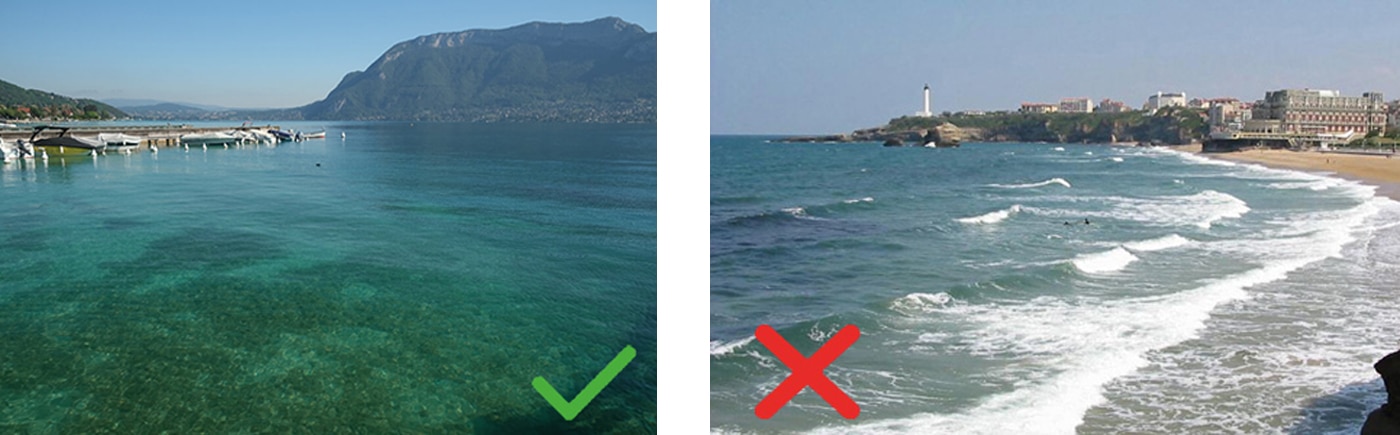
What are the ideal spots and conditions to start Wing Foiling?
The body of water
It should be flat and sheltered from the swell. The most interesting spots to start Wing Foiling are lakes, but if you live on the coast, a spot at the back of a bay or harbor can be adequate. In addition, a closed area is safer, especially if you go too far from the shore, it will always be possible to reach the other side and return by land. At sea, the wind can quickly change, intensify or drop. Not being too far from the coast when starting out is essential.
In all cases, this body of water must be calm and clear. Beware of seaweed that could get caught in the foil, as well as any floating objects (buoys, etc.) present. Prefer a place where there are few practitioners to better concentrate on your progression, and less on what is happening around you.
Don't forget to have enough depth under your board (we sometimes tend to forget that we have a foil!). We recommend a depth of at least 30 cm more than the size of your mast. In other words, if you have an 80 cm mast, the bottom must be at least 1m10.
Stay in an accessible area (less than 500 m), in case you can't get back on your board. Finally, pay attention to current effects caused by tides or swell.
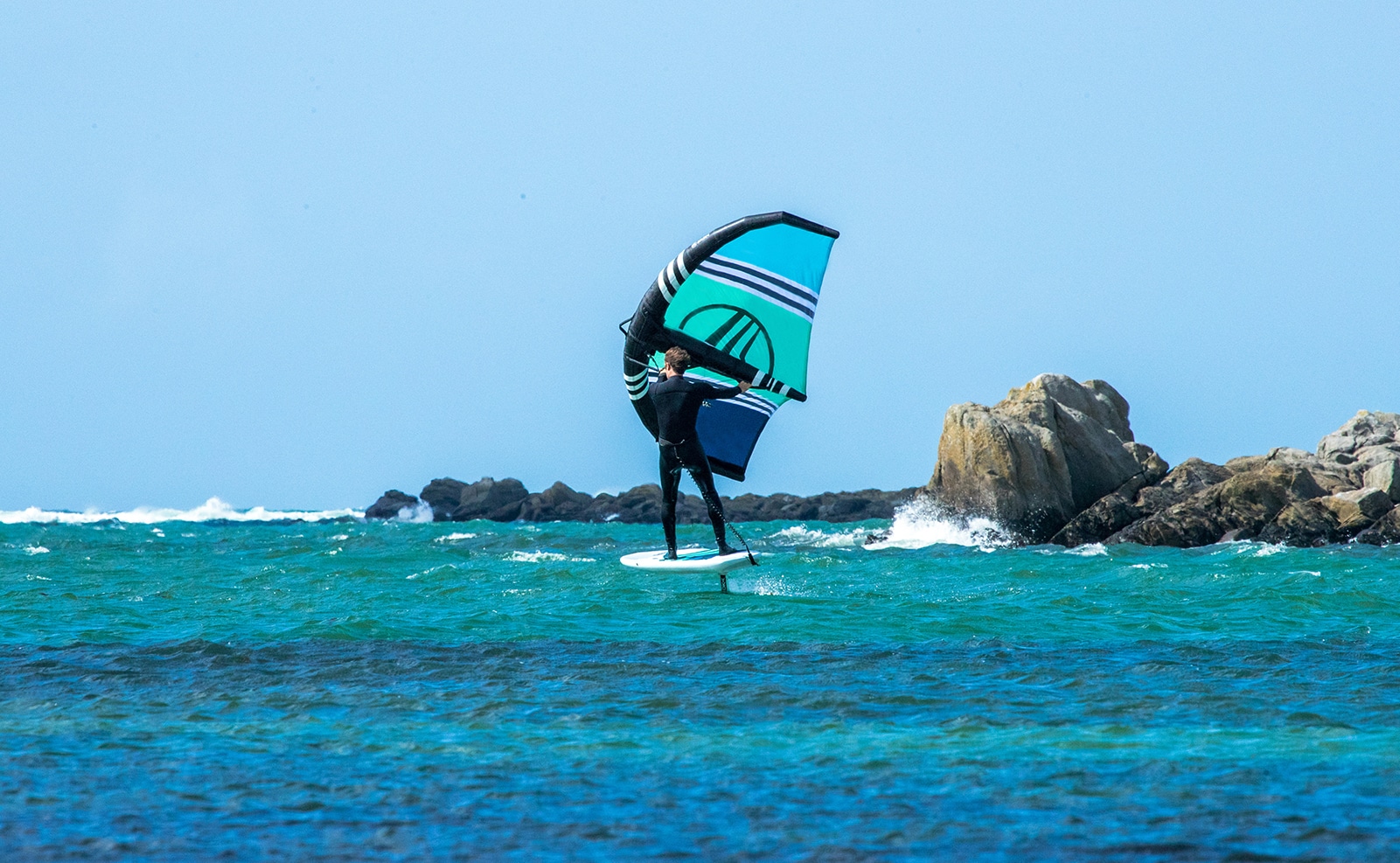
The most adequate wind conditions for starting are around 15 knots (to allow you to pick up some speed and get the foil airborne). The wind should ideally be steady.
Avoid (or even forget) going out with offshore wind, which could carry you out to sea. Indeed, it will be difficult for you to go upwind at first, and even more so to return when you are far from the shore.
Onshore winds are not the easiest either: they push you towards the beach, and risk making you quickly hit the sand with your foil. In addition, onshore wind pushes the water more strongly and creates swell, which can further unbalance you.
WIND CONDITIONS
It will therefore be more difficult for you to get on the board (due to the waves) and you will be very quickly pushed back towards the beach (due to the onshore wind). Consequently, this will reduce your practice time as you will quickly find yourself close to the shore.
The ideal is therefore a crosswind (sideshore). If you are sailing at sea, it should ideally be calm with little chop.
We recommend that you do not venture into spots that have been studied and scouted beforehand. As marine weather is changeable and unpredictable, it is essential to stay relatively close to the coast to be able to return easily and quickly if the wind changes, strengthens or completely drops.
SEASONALITY
Depending on your location, avoid starting during periods of high traffic (generally summer), when spots are overcrowded. Stay away from swimming areas and other water sports enthusiasts. One of the advantages of this sport is that it allows you to quickly get out to sea by swimming on your board. Make sure there is no one downwind of you when you are sailing. (to do this, raise the wing above your head to observe the body of water).

Safety Rules
Wing Foiling is a sliding sport that presents risks, just like Kitesurfing, Windsurfing or other foil disciplines. Therefore, here are some safety rules to keep in mind:
- Equip yourself with protection: board leash and wing leash (mandatory), buoyancy vest or impact vest (mandatory beyond the 300m zone), helmet (highly recommended).
- Avoid going out alone during your session, and do not go out at nightfall in winter.
- Always notify someone of your outing and your schedule.
- Be patient and do not venture into big waves until you have the skill level.
- Sometimes, it is better to give up than to accumulate errors that will turn into big problems later on.