


Learning stand-up paddleboarding is not rocket science, all beginners go through it. By following these few tips, learning to paddleboard will be a breeze for you!

The ideal spot to learn stand up paddleboarding
For your first time in the water, choose a calm body of water with easy access. Starting from a beach will be simpler for getting on your paddleboard. Once you've found your balance, you can try launching from a pontoon or a slipway.
Which SUP for beginners?
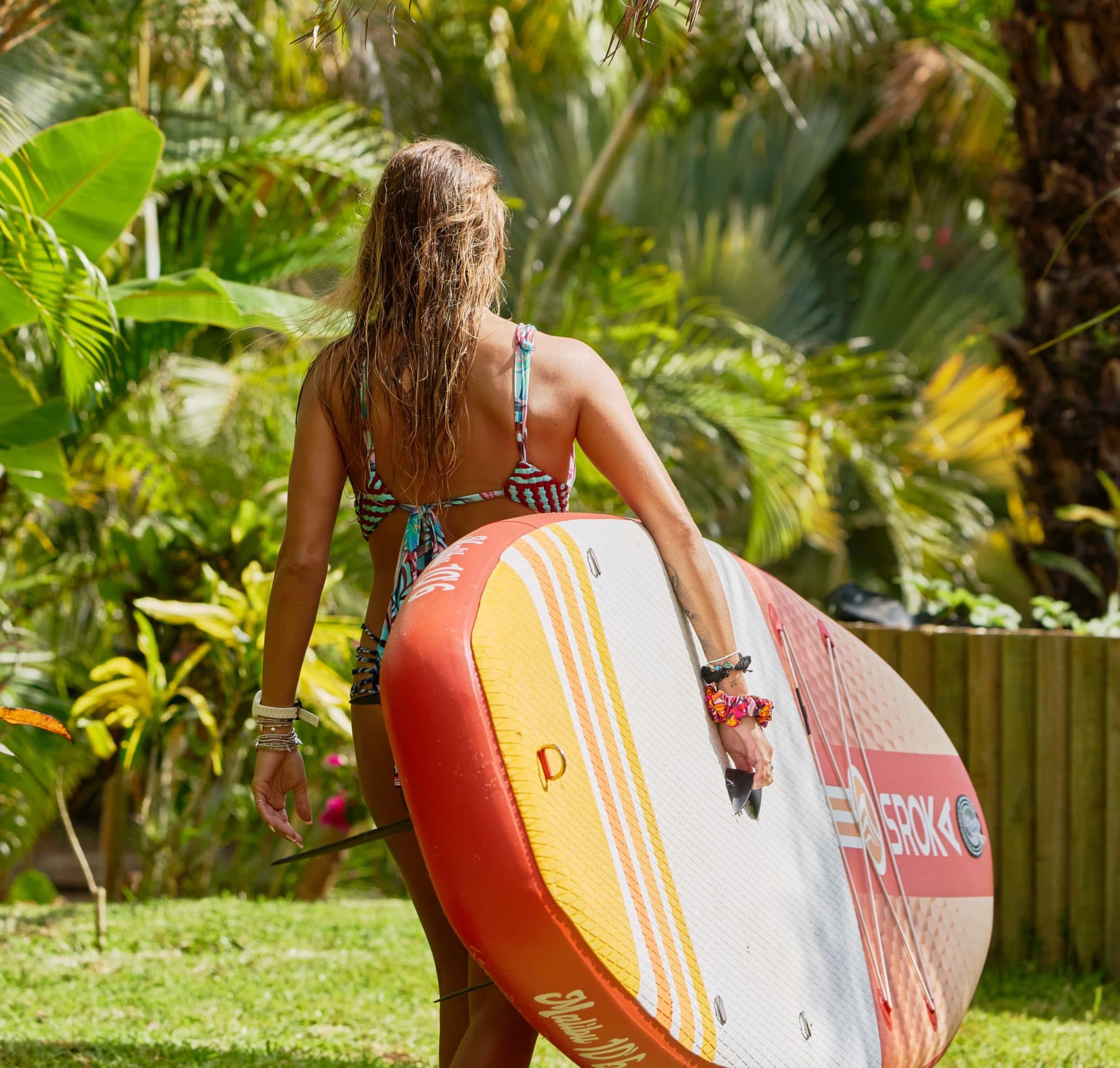
To learn stand-up paddleboarding, it's best to opt for a wide paddleboard with a round nose. This will provide maximum stability during your sessions. Thinner boards with pointed noses are more for speed and performance.
The first paddleboarding session
1 – Adjusting your paddle correctly
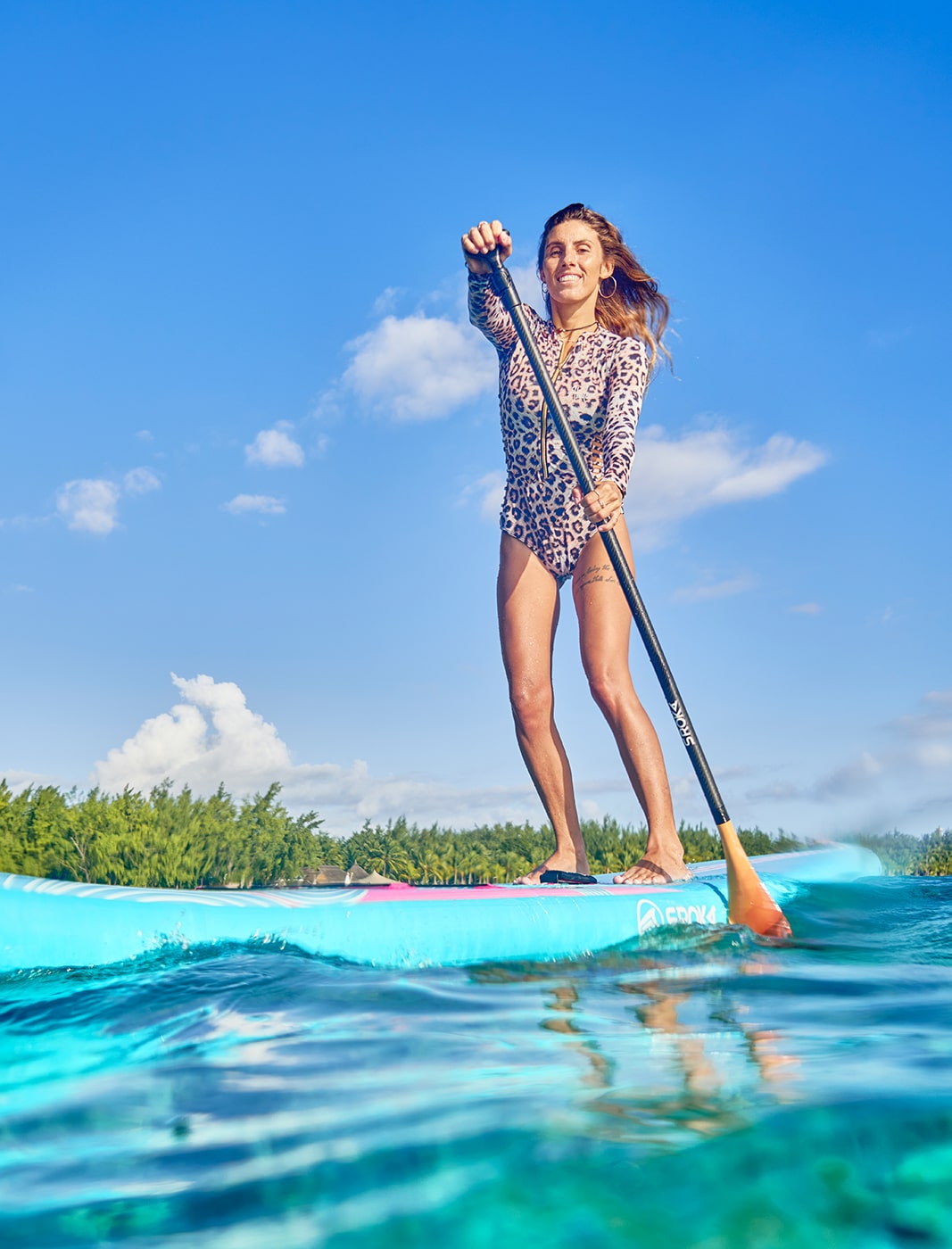
To be comfortable and achieve the best possible performance, it's important to adjust the size of your paddle. To do this, simply open the adjustment system, then position your paddle vertically in front of you. Extend your arm upwards and adjust the paddle's height so that the handle is at wrist level (about 15 cm above your head). Finally, all you have to do is close the adjustment system.
2 – Start on your knees
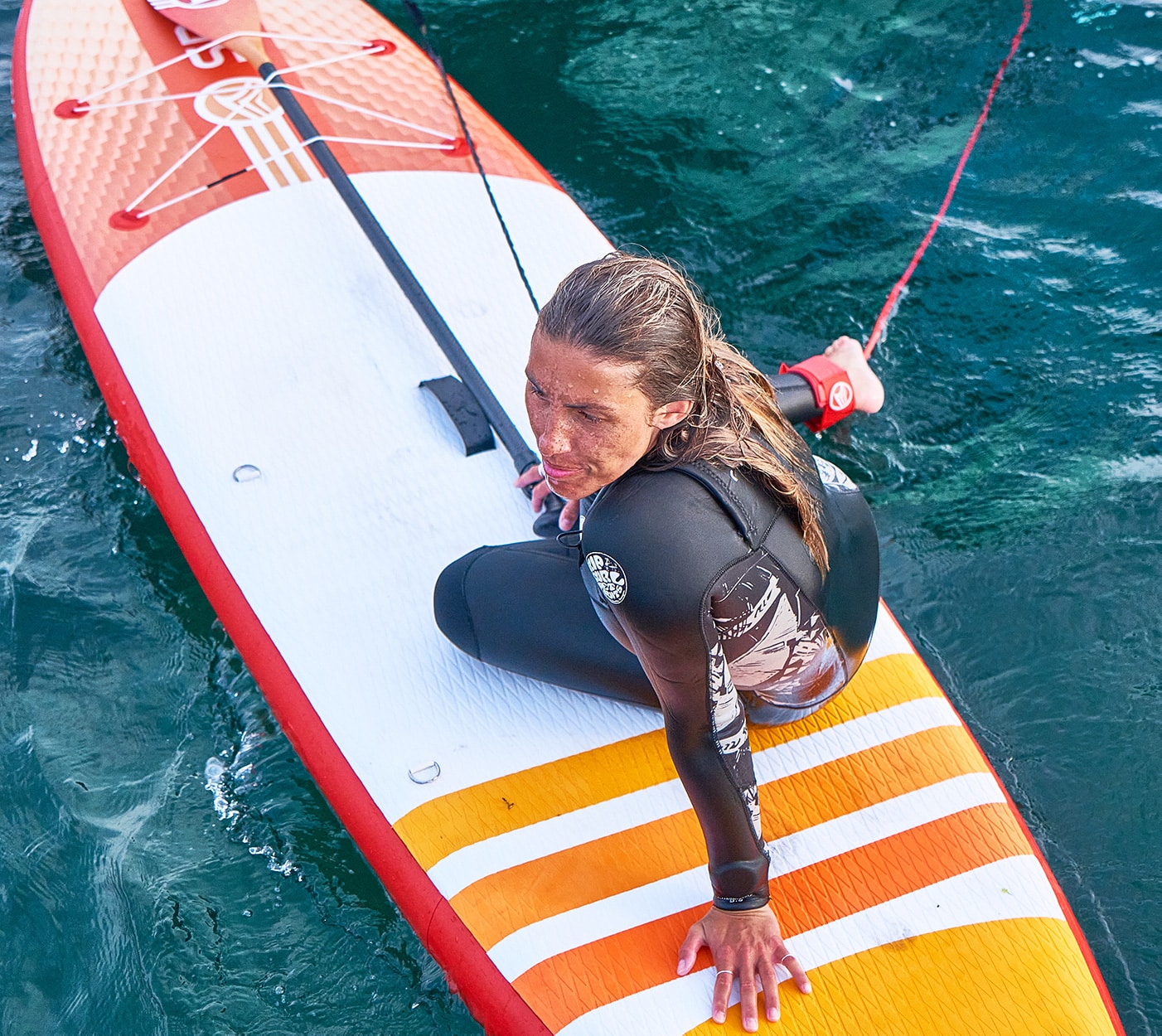
In shallow water, start by kneeling on your paddleboard to get used to the balance. Place your paddle perpendicularly on your board while you get down on your knees. Once you're kneeling, hold the paddle to help with your balance. Once you feel comfortable, you can start paddling. This way, the motion and balance will gradually become second nature.
3 – Don't be afraid to fall
Don't be afraid to fall; it's okay to tumble into the water. Plus, with an inflatable paddleboard, you're very unlikely to get hurt.
To avoid injury when falling, if you feel off balance, avoid diving forward or backward. The best approach is to let yourself fall sideways into the water, holding your paddle forward so you don't fall onto it.
How to paddle in stand-up paddleboarding?
This question may seem simple, but when you first learn paddleboarding, it's not innate.
1 – Hand positioning
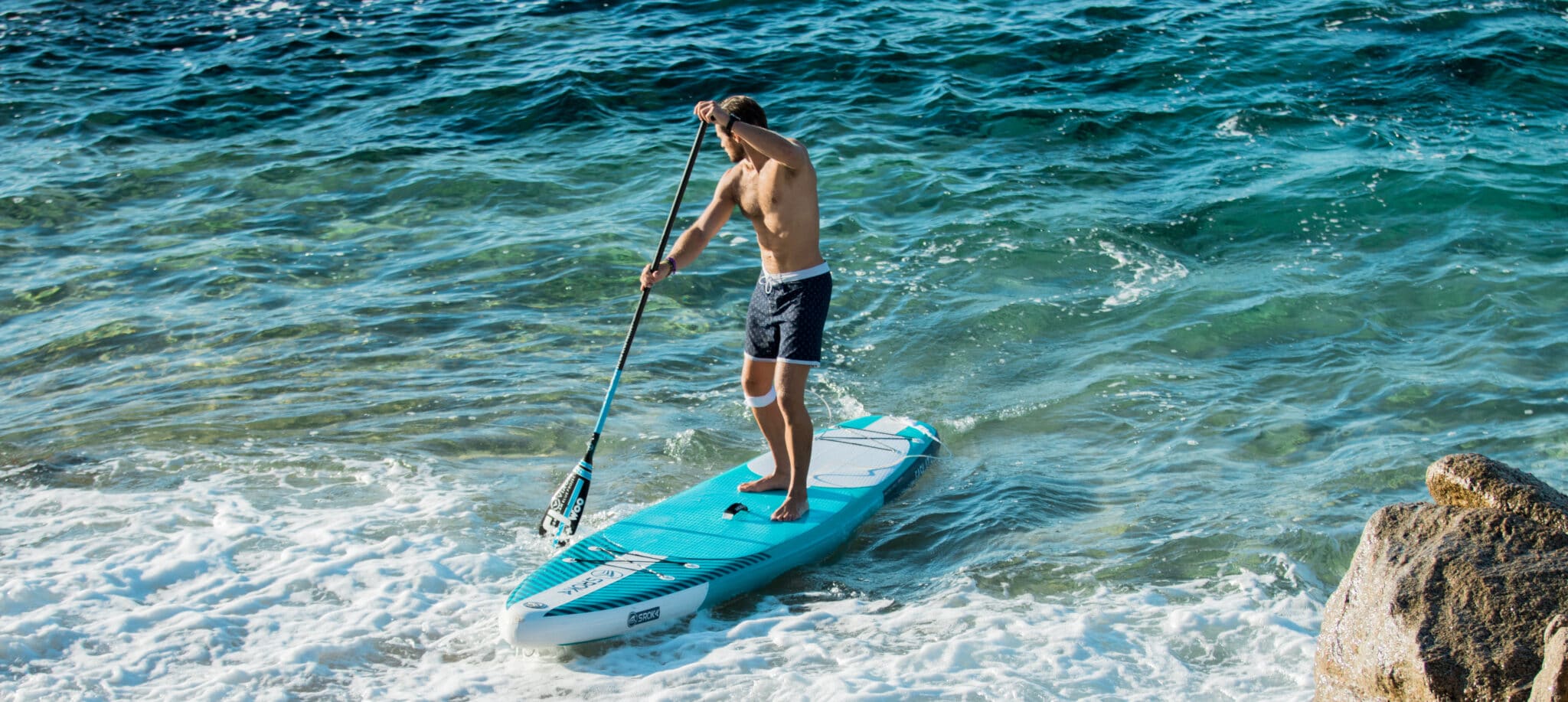
Position one hand on the handle at the top of the paddle and the other closer to the middle of the paddle, as shown in the photo. When you paddle on the other side, simply reverse the position of your hands.
Be careful to hold the paddle in the correct direction to move forward. For this, the "hollow" side of your paddle blade should be facing you, i.e., oriented towards the back of the board.
2 – Moving forward
To make your board move forward, you need to take 2 or 3 strokes on one side, then 2 or 3 on the other. Reach far forward with your paddle and bring it back towards your feet by pulling with your lower hand. To move forward effectively, you need to submerge the entire blade in the water.
3 – Turning
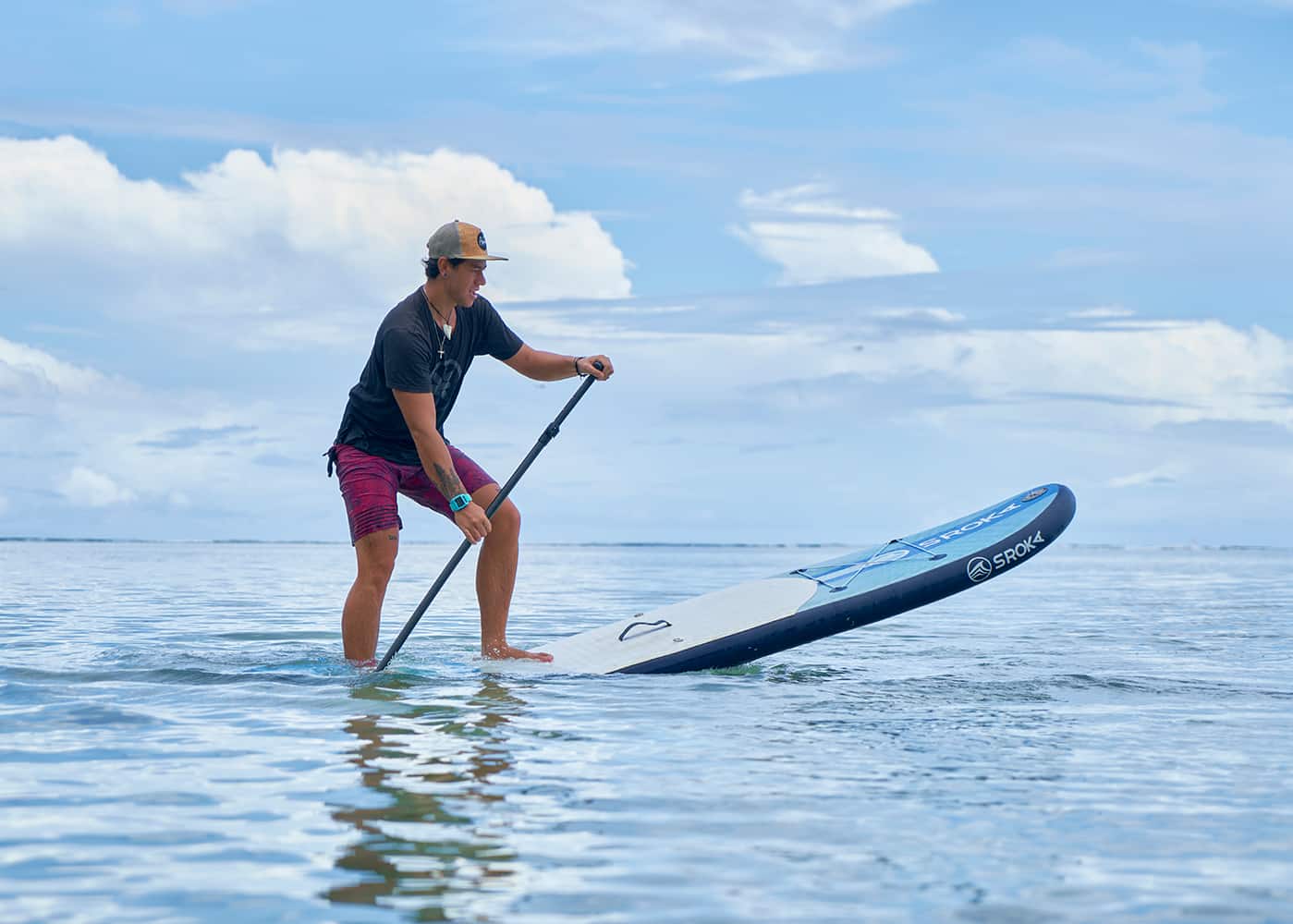
To turn on a paddleboard, you need to draw an arc with your paddle on the side opposite to where you want to go. Repeat the maneuver until you are heading in the desired direction.
To turn quickly or make a U-turn on a stand-up paddleboard, move back on the board and make the same paddle movement while pushing down on the back of the board. This way, the back of the paddleboard will sink slightly, acting as a pivot point for a quick turn.
Discover our full article on how to turn on a stand-up paddleboard.
Have fun!
The most important thing is to have fun. No need to chase performance at all costs! That will come quickly with time and experience. Once the basics are mastered, the possibilities will be endless!
If you still have questions on this topic, or for any other request, feel free to contact us!