


To be effective in Wing Foiling in light wind, you need to adapt your equipment to glide better and get going earlier. This involves choosing the appropriate board and foil to optimize glide as much as possible. We will therefore detail all the information you need to know to correctly choose the right board for light and even ultra-light wing foiling.
The type of board for light wind Wing Foiling
To get going early, you need to opt for a long, narrow board. Indeed, the wider the board, the more drag it will generate. To reduce drag, you need to increase the length of the board and decrease its width.
If we take the example of paddleboards. The longer and thinner the paddleboard, the better it will glide; conversely, the shorter and wider the paddleboard, the more it will turn but the less it will glide.
Based on this premise, if you want to get going very early, you need to choose the right board: long and narrow.
But why?
Drag in water is 800 times greater than in air. It is proportional to the board's frontal contact surface in the water. So, the wider the board, the greater the friction zone with the water. Schematically, a wide and shorter board will glide less well than a long and narrow board.
Drag is also proportional to the square of the speed. So, the more you want to accelerate, the more a wide board will increase its drag and consequently have difficulty accelerating.
In our range, we have two types of boards that could allow you to ride in very light wind (between 5 and 10 knots).
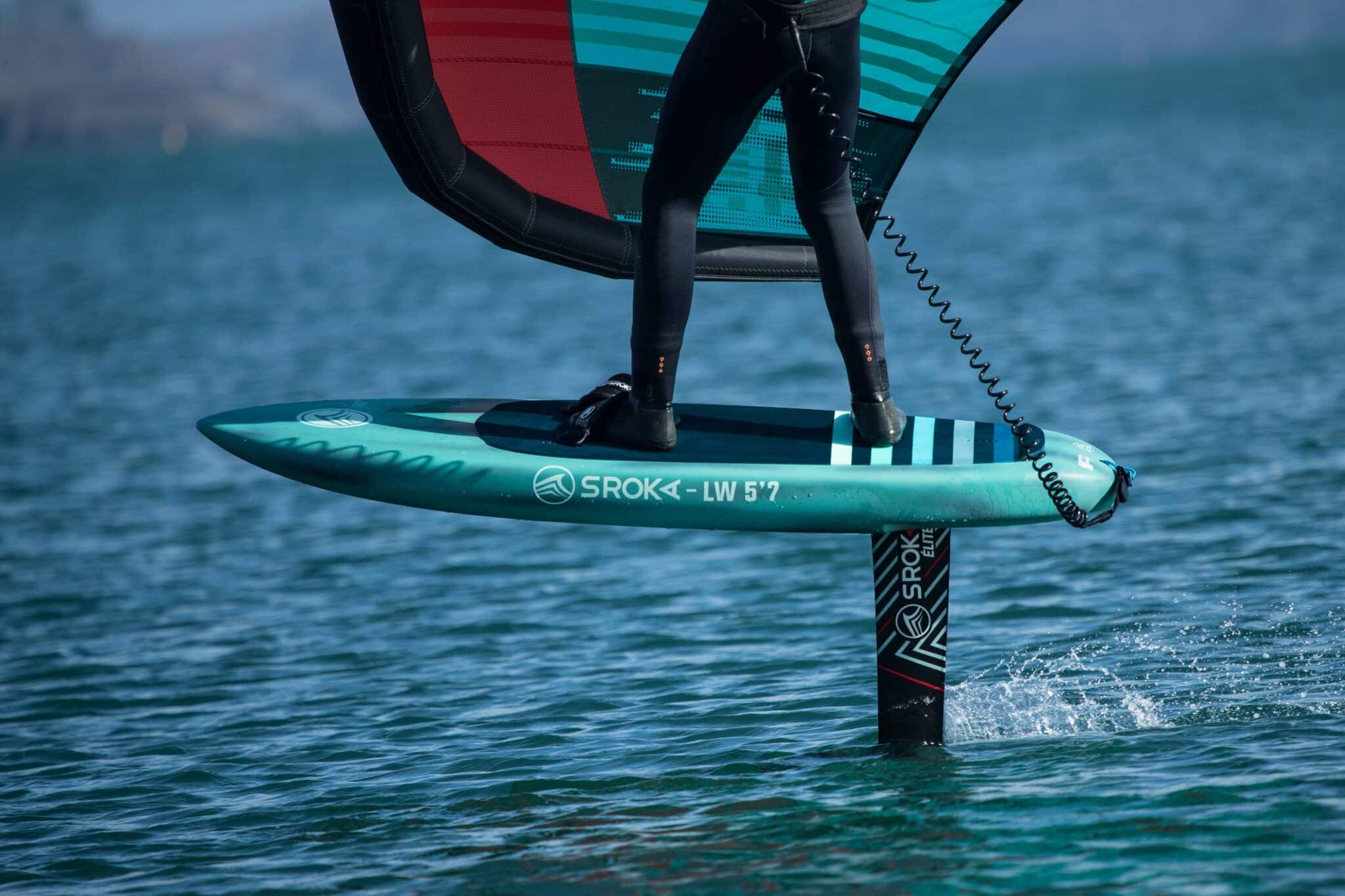
First, the LW "light wind" range is specifically designed for riding in very light wind. The LW will also excel in stronger winds for race or long-distance freeride and light wind surf wing.

The 3 board sizes in the LW range
- 5’7x 20 x75 L
- 6’2 x21x 90 L
- 6’6 x 22 x105 L
To optimize your light wind wing foil sessions, choose a board with at least 10 L more volume than your weight.
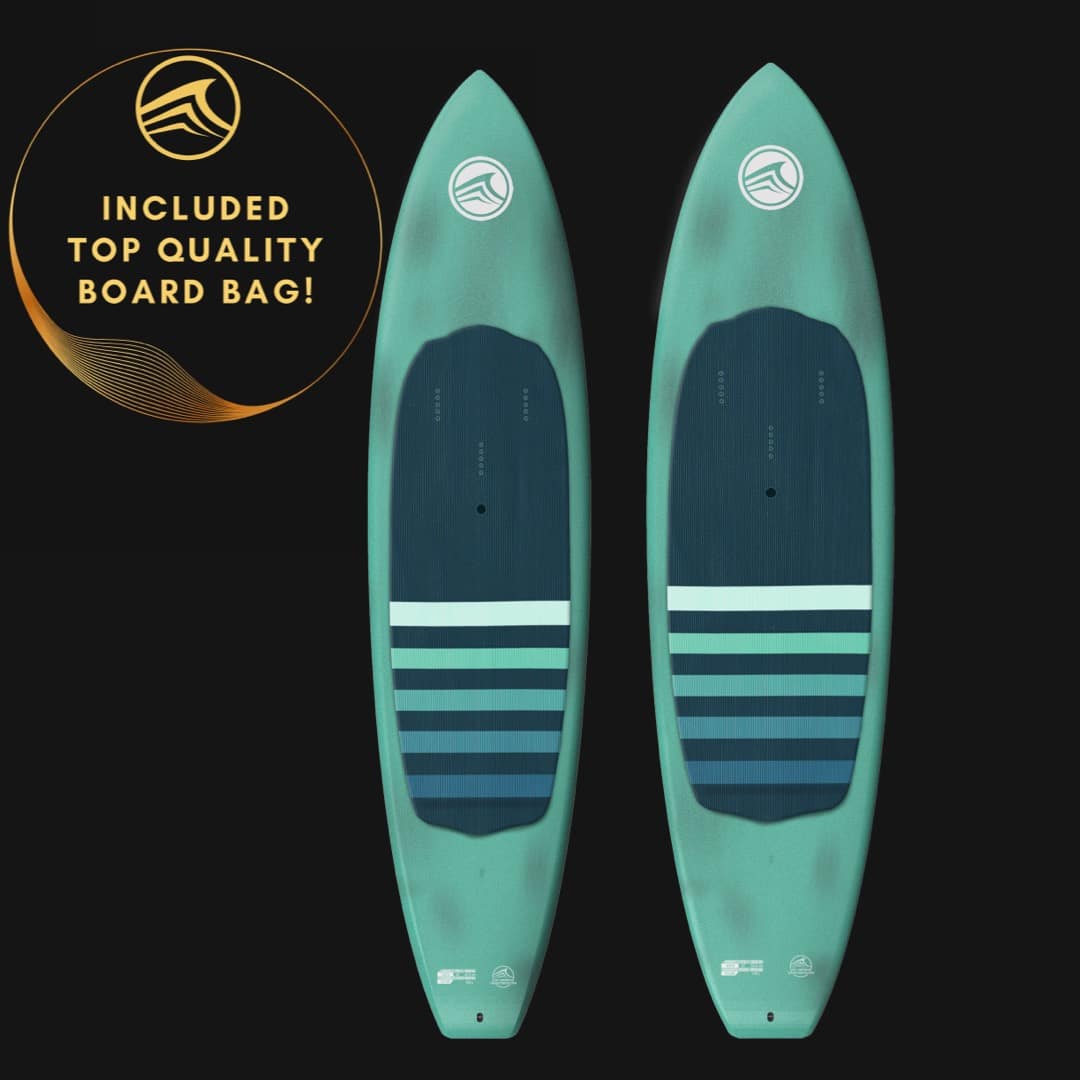
Secondly, there is the DW range, which will be even longer and allow you to get going in even lighter winds. But it will be more designed for downwind and light wind conditions.
There are two board sizes for light wind Wing foiling and downwinding with a paddle or a wing.
- 7’2W x22 x 130 L
- 7’2x20x 110 L
Personally, to choose the right type of board, I would use this methodology:
- If you only want to do light wind, wing downwind, and a bit of light condition wave wing foiling or prone foiling, I would opt for the LW range.
- If you want to do light wind, wing and/or SUP foil downwind (with a paddle), or if you want to do SUP foil in waves, I would opt for the DW range.
Of course, start with a slightly more generous foil initially to facilitate learning. If your technique is excellent, you can then choose smaller front wings to maximize glide and speed sensations.
How to wing foil in light wind?
Some Starting Technique:
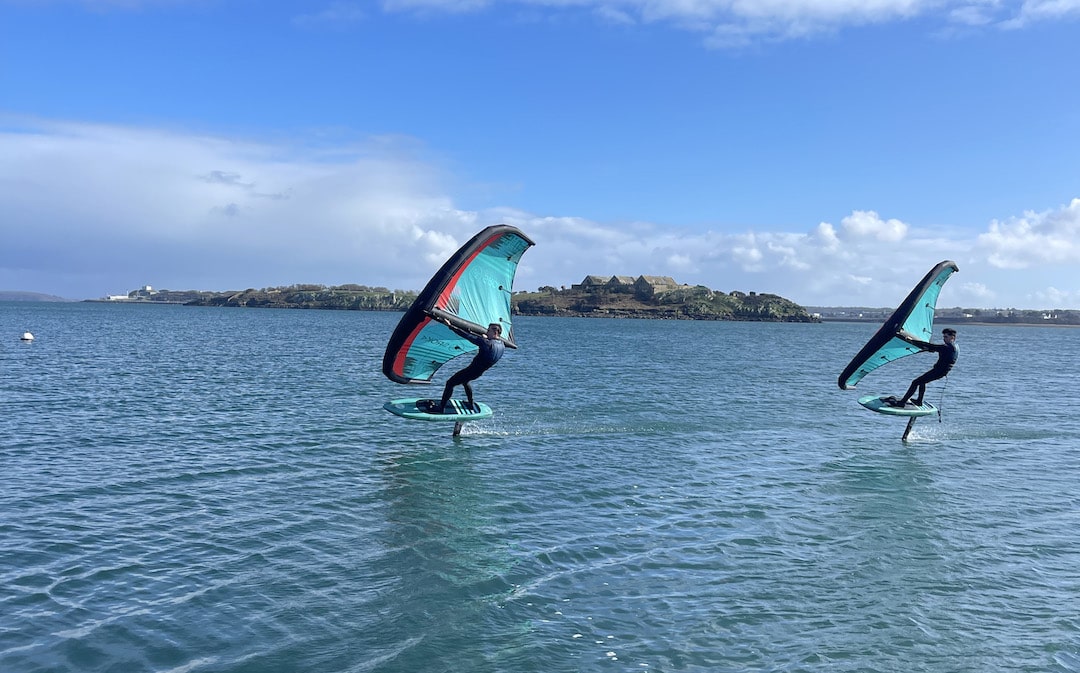
- Start almost stationary. Pump your wing to gain horizontal speed. Don't try to fly immediately; prioritize horizontal speed first.
- Then, when you feel you have enough horizontal speed, give 2 oblique pumps to use the wing's lift to get the board off the water. At the same time, pump with your feet to assist the takeoff.
Learn to fly with minimal distance:
- The key is to learn to fly during a gust for a maximum of 5 meters. This means you need to take off quickly and efficiently. Over a short distance, you'll need to put all your energy into taking off. If you have to pump over a long distance, it's almost impossible. So save your energy to give it your all at the right moment.
- Store power in your wing. If, during pumping, your wing comes back to you too quickly, it means the wing hasn't stored enough power. You need to adapt your pumping style. Back-and-forth arm movements don't work. Instead, you should make figure-eights with your arms, especially in light wind.
- Finally, take off on the correct foot (regular or goofy); if you have a preferred side for pumping, start on that side.
Observation and Anticipation
When you want to wing foil in light wind, pay attention to micro-gusts. You must constantly anticipate lulls or gusts. It's easier to pump with a gust than without one. And when flying, if you observe a lull approaching in front of you, you should start pumping with the wing and/or board to get through the no-wind zone. Conversely, if you observe a gust in front of you, you can accelerate and head further upwind to gain ground upwind, allowing you to be comfortable if a lull occurs afterward. Therefore, reading the water is fundamental.
Energy and Technique:
- To significantly improve your technique, choose calm water to facilitate learning how to wing foil in light wind.
- Pumping in light wind and chop during wing foiling is much more technical because the chop will hinder the board's horizontal speed. So, train to improve your technique to get going in all conditions.
Flying in light wind with a Wing Foil requires real learning. Those who are strong in strong winds are not necessarily strong in light winds. You have to adapt your technique and improve your efficiency, and you have to adapt your equipment.
The opportunity arises to stand out; choose to fly before others in light conditions can save many sessions, especially for our friends who ride on inland waters.
If you still have questions on this subject, or for any other request, do not hesitate to contact us!