


Our advice for paddleboarding
Do you dream of peacefully gliding on the water, discovering new landscapes, or simply getting some exercise? Stand-up paddleboarding (SUP) is for you! To paddle with confidence, you need to know the different types of SUPs, choose your equipment carefully, and keep a few safety tips in mind. Sroka, a watersports specialist, explains in detail why and how to start stand-up paddleboarding. Practical advice awaits you!
Why start paddleboarding?
Paddleboarding combines pleasure and health, providing numerous benefits:
- A fit body: Physically, paddleboarding engages many muscles, especially those in the legs, back, abs, and arms. It's therefore an ideal fitness activity to tone your physique and improve your endurance.
- Perfect balance: To stand on your board, you constantly need to adjust your position. This natural exercise improves your sense of balance and coordination.
- A serene mind: Being in the middle of a natural spot, whether it's a beach, a lake, or a river, offers a feeling of relaxation and connection with nature.
An activity accessible to all
Contrary to what one might think, paddleboarding is accessible to everyone. Whether you are an adult or a child, a beginner or experienced, there is a board for every profile. Thanks to the diversity of board types, everyone can find what they're looking for, whether for a paddle yoga session or a sports race.
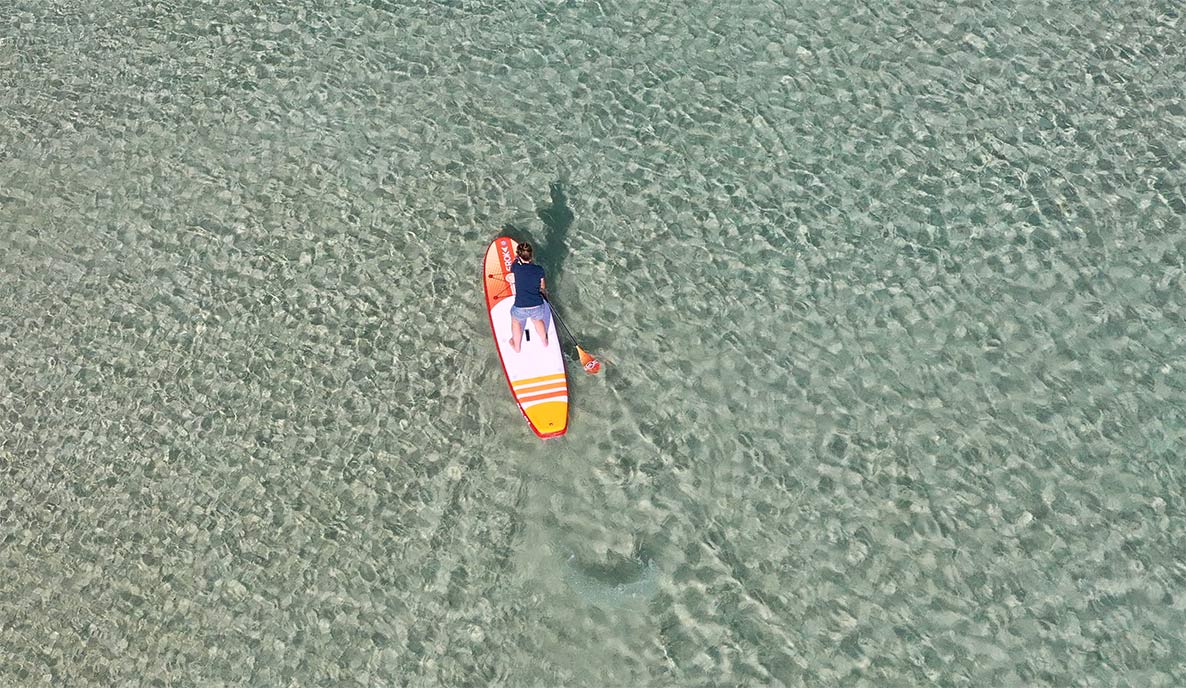
The different paddleboarding disciplines.
Paddleboarding is a discipline that offers a multitude of possibilities to satisfy all desires:
- SUP surf: for lovers of board sports and thrills,
- Touring: ideal for discovering landscapes from a new angle. You can explore creeks, rivers, or lakes.
- Yoga: Paddle yoga is an original practice that combines the benefits of yoga and paddleboarding. You can relax with postures on a wide board, for example.
- Racing: for the more athletic, paddle race is a discipline that involves covering long distances at high speed.
The basics for starting stand-up paddleboarding
Before you hit the water, here are some basic concepts to master.
Understanding the different types of SUPs
There are different types of boards:
| Board type | Material | Main use | Advantages | Disadvantages |
| Inflatable Paddleboard | PVC and Drop Stitch | Leisure, beginners | Easy to transport and store, resistant to shocks and drops, lightweight | Less rigid, requires prior inflation |
| Hardboard Paddleboard | Fiberglass, epoxy, carbon | Performance, competitions | Better glide and rigidity, faster | Heavier, bulky, fragile to shocks |
| Race Paddleboard | Fiberglass, epoxy, carbon | Competitions, long distances | Very fast, designed for speed | Less stable, difficult for beginners to maneuver |
| Surf Paddleboard | Fiberglass, epoxy, carbon | Surfing, waves | Maneuverable, designed for waves | Less suitable for calm waters and long distances |
| All-round Paddleboard | Fiberglass, epoxy, carbon | Versatile use | Versatile, suitable for different conditions | Average performance, neither particularly fast nor very maneuverable |
| Touring Paddleboard | Fiberglass, epoxy, carbon | Tours, excursions | Good stability, designed for long distances | Slower than race paddleboards |
| Yoga Paddleboard | PVC and Drop Stitch | Yoga, fitness on water | Very stable, wide platform | Less performance for speed, mostly suitable for calm waters |
Prerequisites before starting
Before your first outing, make sure to:
- Know how to swim to reduce risks,
- Assess weather conditions: wind, waves, and currents can make paddleboarding more difficult, even dangerous.
- Choose a calm body of water: lakes, calm rivers, and sheltered beaches are ideal for beginners. Avoid areas with many boats or strong currents.
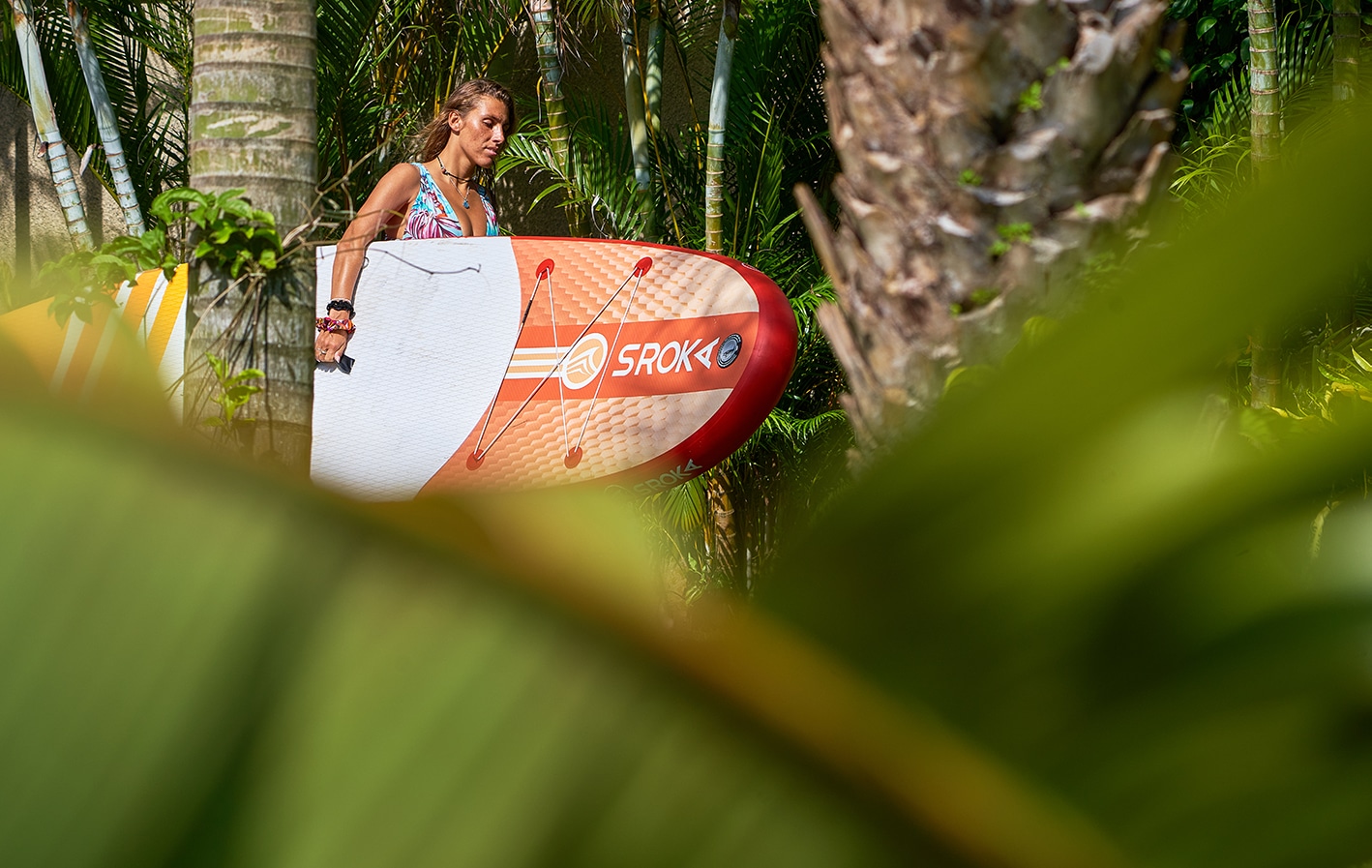
Properly carrying and storing your SUP board
To avoid injuries, learn how to properly transport your board. For a rigid board, we recommend using a transport cart. If you transport it by car, use a strap to distribute the weight. For inflatable boards, a specially designed backpack will make transportation easier.
If you have a rigid board, store it away from bad weather and UV rays. For inflatable boards, deflate it completely before storing it in a dry place away from heat. Regularly clean your board and accessories with fresh water.
Properly carrying and storing your SUP board
To avoid injuries, learn how to properly transport your board. For a rigid board, we recommend using a transport cart. If you transport it by car, use a strap to distribute the weight. For inflatable boards, a specially designed backpack will make transportation easier.
If you have a rigid board, store it away from bad weather and UV rays. For inflatable boards, deflate it completely before storing it in a dry place away from heat. Regularly clean your board and accessories with fresh water.
What equipment to choose for stand-up paddleboarding?
Now that you have the basics for starting SUP, it's time to look at the essential equipment for paddleboarding.
Which SUP board to choose?
The heart of your equipment is, of course, the board. As we saw earlier, there are two main types of boards: rigid and inflatable.
- Rigid boards offer better glide and greater stability. They are ideal for those who want to practice regularly and are looking for sensations close to surfing. However, they are heavier and less easy to transport.
- Inflatable boards, on the other hand, are lightweight, compact, and easy to store. They are perfect for those who want to discover and learn paddleboarding on the go. They are also more versatile and can be used in the sea, river, or lake.
For beginners, an inflatable all-around board is recommended. It offers a good compromise between stability, versatility, and ease of transport. The size of the board is also important. The heavier you are, the wider and thicker the board should be to ensure good buoyancy.
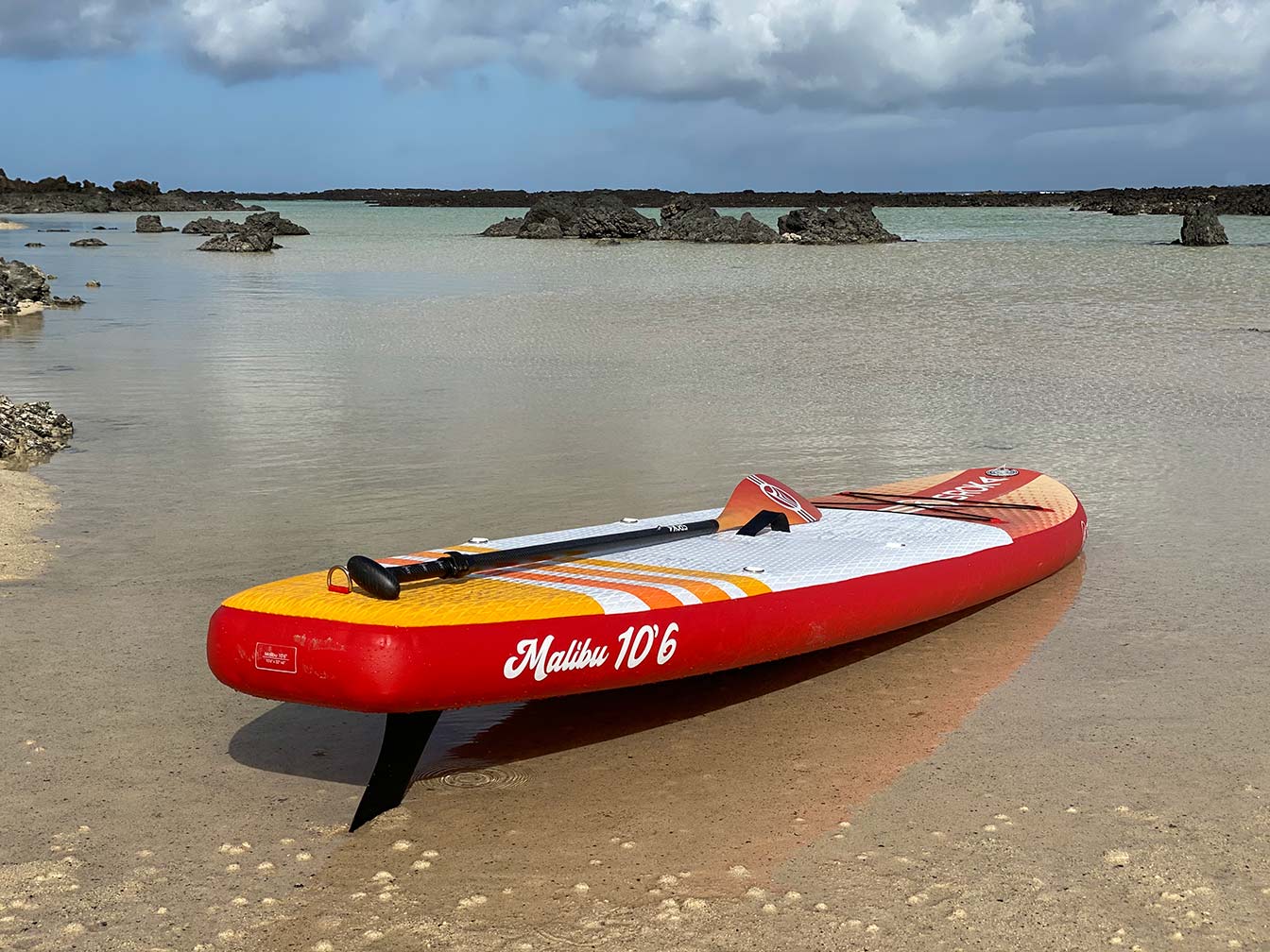
Essential accessories for paddleboarding
To complete your equipment, you will need several accessories:
- The paddle: the paddle must be adapted to your size and skill level. There are adjustable paddles that will allow you to adjust the length according to your body type.
- The leash: the leash is a cord that connects your ankle to the board. It will prevent you from losing your board if you fall.
- The pump (for inflatable boards) allows you to inflate your board to the manufacturer's recommended pressure.
- The wetsuit: a wetsuit will keep you warm and more comfortable in the water, especially outside the summer season.
- The life jacket: although not mandatory in all cases, a life jacket is highly recommended, especially if you are not comfortable swimming.
- The carry bag: a carry bag will allow you to transport your board and accessories with peace of mind.
- Not to mention UV protection: cap and sunscreen.
3 essential techniques for paddling and maneuvering
Before standing up, take time to familiarize yourself with your board. Start by kneeling on it and paddle gently to feel comfortable. This intermediate position will allow you to get used to the movements of the water.
- Getting on and standing on your board: start by kneeling before slowly moving to a standing position. Maintain a stable posture.
- Paddling correctly: use the paddle to paddle efficiently. Hold your paddle the right way. Alternate paddle strokes on each side to go straight. To turn, make wider movements (or on one side, paddle normally, and on the other side, paddle backward: from back to front. This will allow the board to pivot on itself.)
- Starting in calm waters: for your first attempts, choose a calm environment like a lake or a river with a weak current. This will allow you to focus on your balance and technique without being disturbed by waves or wind.
In addition to these 3 essential techniques, always look ahead, take deep breaths to relax, and most importantly, have fun! Paddleboarding is first and foremost about enjoyment.

Safety and good practices in SUP
Paddleboarding is practiced in an aquatic environment and can present certain risks, especially in difficult weather conditions or if you stray too far from the shore. This is why it is essential to take all necessary precautions to ensure your safety and that of others.
Always wear a life jacket and attach the leash to your ankle. Respect local regulations and avoid areas with strong currents. Even in good weather, wind can quickly complicate the practice. Always take the time to assess the risks before setting out.
All your SUP equipment at Sroka
To equip yourself, have fun, and progress quickly, Sroka offers a wide range of stand-up paddleboarding equipment. Whether you are looking for an inflatable board or accessories and spare parts like paddles and life jackets, we have everything you need for an optimal experience.
Visit our catalog to discover all our offers and equip yourself for your next paddleboarding sessions!
If you still have questions on this subject, or for any other request, do not hesitate to contact us!