


Paddleboarding, there's no need to introduce it; it's a water sport that involves moving across the water with a board and a paddle. It allows for various disciplines and suits many practitioners due to its ease of use, its ability to quickly escape crowds while being close to nature.
The notion of "best paddleboard" is subjective. It depends on your expectations, your needs, and what you are primarily looking for in a paddleboard.
The best inflatable paddleboard for you will not be the best paddleboard for your neighbor. Some will be looking for the best price, others for the best stability and/or versatility, or maximum performance. Each criterion will lead to different choices. The best paddleboard for everything does not exist. It's a matter of compromise. In this article, we will help you choose and find the best paddleboard for you.
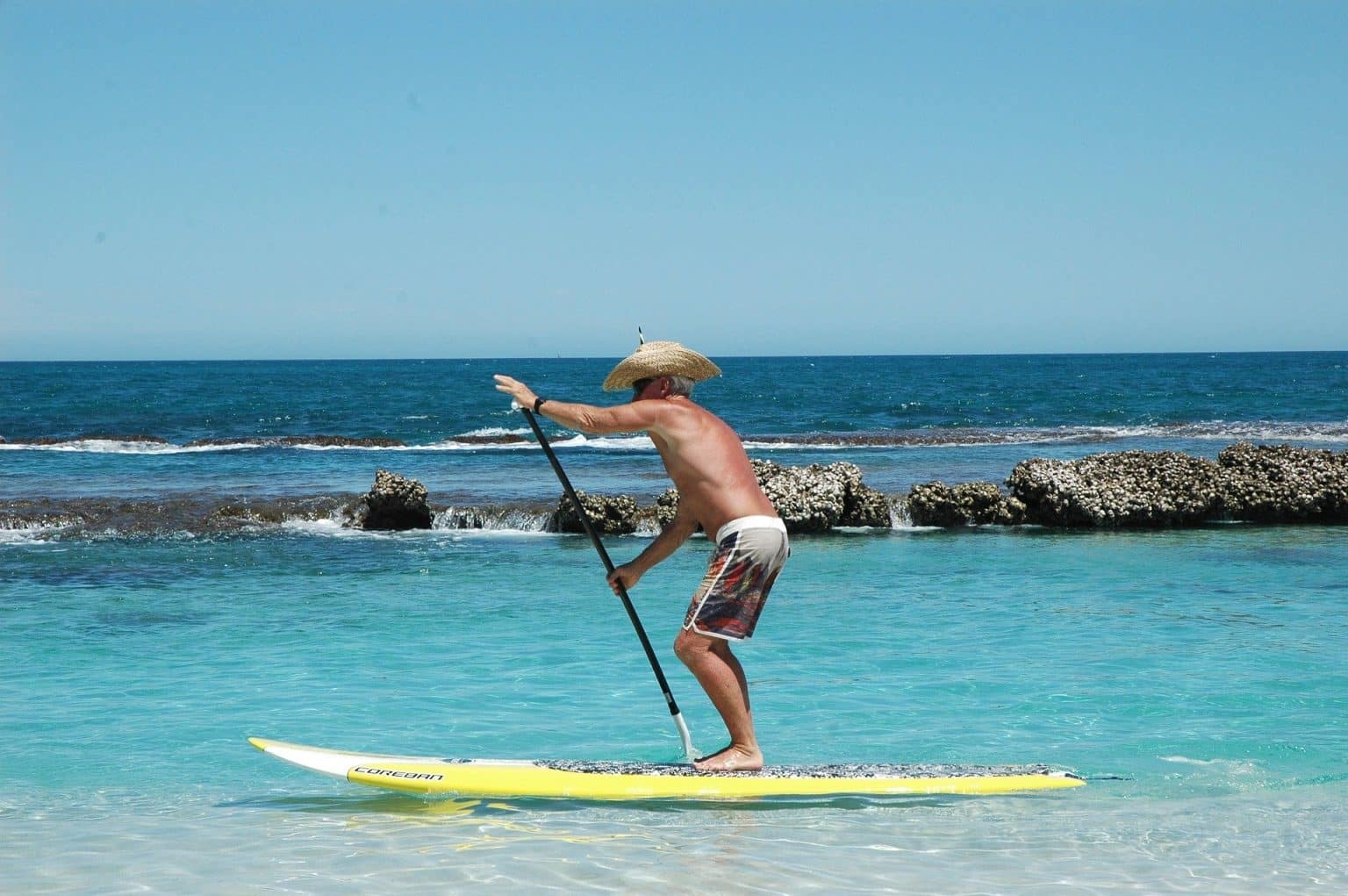
What are the criteria for choosing a paddleboard:
Rigid Paddleboard VS Inflatable Paddleboard
The first criterion to consider is bulk. If you have plenty of space and live by the water, the space issue is not the same as for those living in apartments. A rigid paddleboard will offer better glide and more precise sensations.
However, rigid paddleboards are bulkier, more fragile, and therefore not suitable for everyone.
An inflatable paddleboard is a very interesting alternative if you're not looking for extreme performance, as it allows you to do the same things as a hardboard without the drawbacks of a rigid paddleboard. You'll lose a little in glide and board rigidity compared to a hard SUP board. However, it will be more family-friendly, easier to take on vacation, more robust, and perfectly adequate for recreational use.
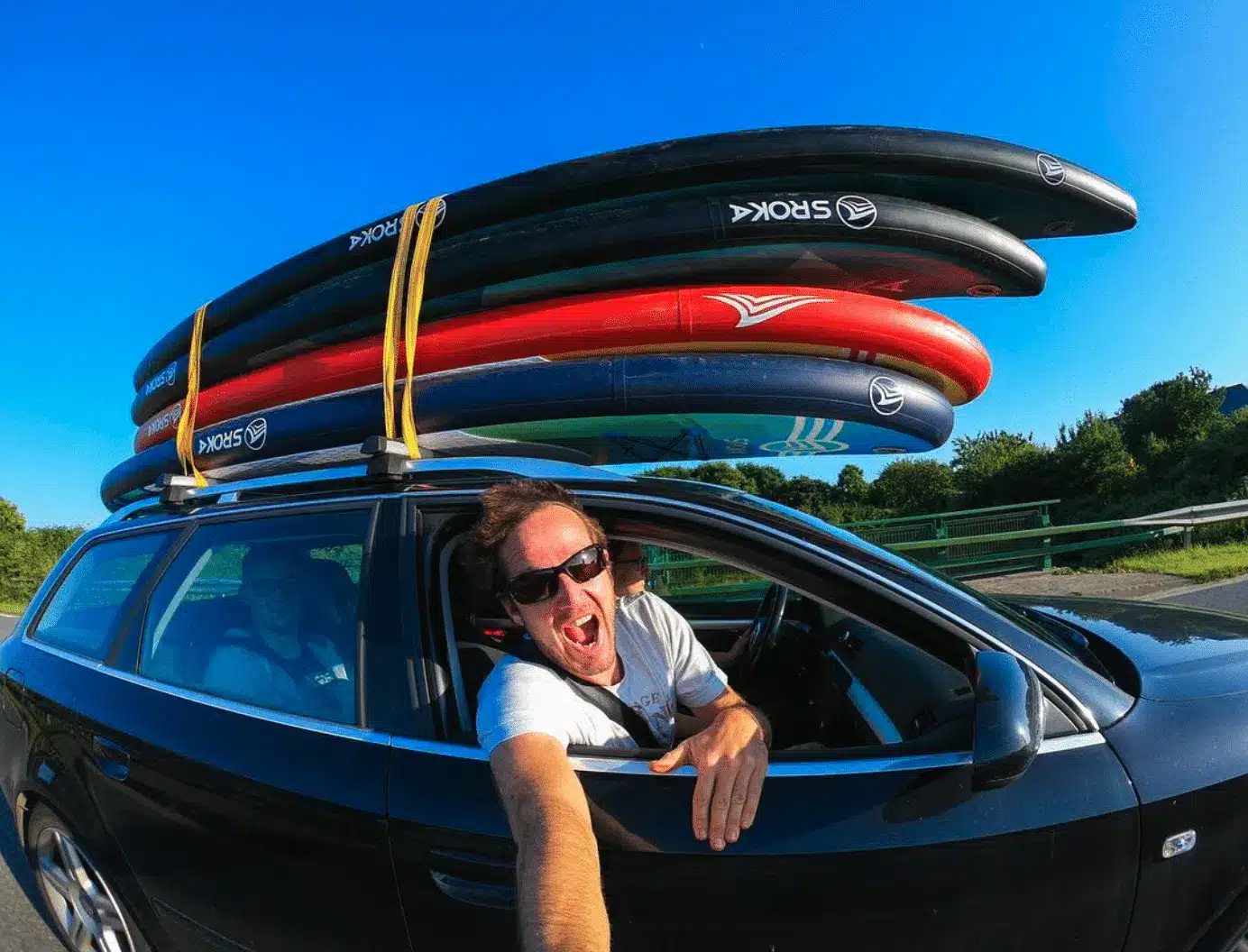
Based on preferred disciplines (initiation, touring, racing, surfing), the choice of paddleboard changes
Depending on whether you want to go touring, sporty touring, initiation, take a child with you, or do racing or surfing, the board's length, width, and rigidity (and therefore construction) change, as does simply the board's overall length.
If you're a beginner, a shorter board around 10 feet will do very well. The same applies if you want to surf; a board under 10 feet is recommended as it will turn more easily.
If you're not very comfortable with stability, opt for a wider board to increase your lateral stability.
If you're looking for a paddleboard for gliding and covering long distances, opt for a rather long board, beyond 11'6 – 14 feet.
Skill level (beginner, intermediate, expert)
The rider's skill level strongly influences board choice; a beginner, an intermediate, or an expert will not use the same size paddleboard.
The trend will nevertheless remain the same.
Those who want to race or go on long tours will favor large paddleboards, while those who want to ride waves will choose smaller boards.
However, what will make the difference is the board's width.
A beginner can certainly use a 12'6 paddleboard to start but will choose a slightly wider paddleboard for more stability (31 or 32 inches wide). Conversely, if an expert wants to use a 12'6, they will likely use a 12'6x28 wide paddleboard.
Width determines a paddleboard's stability; the wider the paddleboard, the more stable it will be but the less it will glide.
Therefore, the length of the board is not a criterion to consider based on skill level. Rather, width will be an important criterion.
Paddler's Weight and Height
Of course, the paddler's size will be fundamental for board selection. Proportionally, if we talk about percentages, a 2m adult will have the same equivalence with a 14-foot paddleboard compared to a 1m60 adult with a paddleboard in feet. We are talking about the ratio between the rider's height and the board's size. So, the taller you are, the more suitable it will be for you to get a large paddleboard. Unless you are short and want to maximize glide, then a paddleboard beyond 12' will be beneficial.
Similarly, weight will influence board choice. A person with significant weight will be more stable on a larger and wider board.
In summary, the physique of each practitioner should be taken into account to optimize your board choice.
A small person has the choice of all sizes. A heavier person will need a larger and wider board to increase their stability and glide.
5. Price
The price of a paddleboard is determined by many criteria, and this list is not exhaustive but will give you a more precise idea of a paddleboard's quality.
- The first criterion that comes into play is the length of the paddleboard. A paddleboard is handmade. Therefore, the longer the SUP, the longer the manufacturing time. This is why large paddleboards cost much more than a 10-foot SUP, for example.
- The second criterion is the quality of the PVC used. Indeed, there are many different qualities of PVC. Some factories specialize in inflatable beach buoys but also manufacture paddleboards. Other factories, like ours, manufacture high-end semi-rigid boats. In our factory, we use the same quality of PVC as on semi-rigid boats. This allows us to be more impact-resistant, more rigid, and more durable over time. We still have some rental companies using our products for over 8 years without changing them.
- The number of PVC layers in the board. I agree, from the outside, it's not visible. But the number of PVC layers determines the quality of the paddleboard, its rigidity, and its durability. To have a cheap paddleboard for less than 200 euros, you have to reduce the working time on each board, reduce the quality of the PVC, and reduce the quantity of PVC as well as the quality of the glues (we will discuss this point just below). All these restrictions will mean that a paddleboard can cost 3 times less to produce than a high-end product. Concretely, this translates into a paddleboard that rolls up very easily (this is one of the criteria for the quantity and quality of PVC used); the more easily a paddleboard rolls up (when stored), the less material there is in it. The SUP will then be less rigid, more fragile, and less stable; every time a chop touches the board, you will feel the chop's movement on the board.
Thus, the harder the paddleboard is to fold, the heavier it will be (for the same size and dimensions), and the more rigid, strong, and durable it will be over time. The amount of material put into a board determines the rigidity, durability, and price of the paddleboard;
- The quality of the adhesives. In the same logic as the quantity and quality of PVC used, this influences the durability of a paddleboard. The more expensive a paddleboard, the better and more durable the quality of the adhesives, allowing it to withstand high temperatures. As we manufacture our paddleboards in semi-rigid boat factories, we use the same adhesives, and therefore we are renowned for having strong and durable products.
6. Important features to consider
As we've seen, there are many criteria to consider
- On the one hand, your technical level; a beginner paddleboarder will not choose the same board as an expert.
- Your program: whether you want to do athletic touring, learn, or surf. The size, shape, and width of the paddleboard differ.
- Your physique will necessarily influence the size of the paddleboard you buy.
- If price is one of your main criteria, then you'll have to compromise on durability and rigidity. Again, a paddleboard's rigidity, durability, and stability are determined by the amount of carbon inside the board. The more layers, the higher quality the PVC, and the better the adhesives, the longer your paddleboard can be used.
- We therefore advise you to rinse it from time to time with fresh water at low pressure.
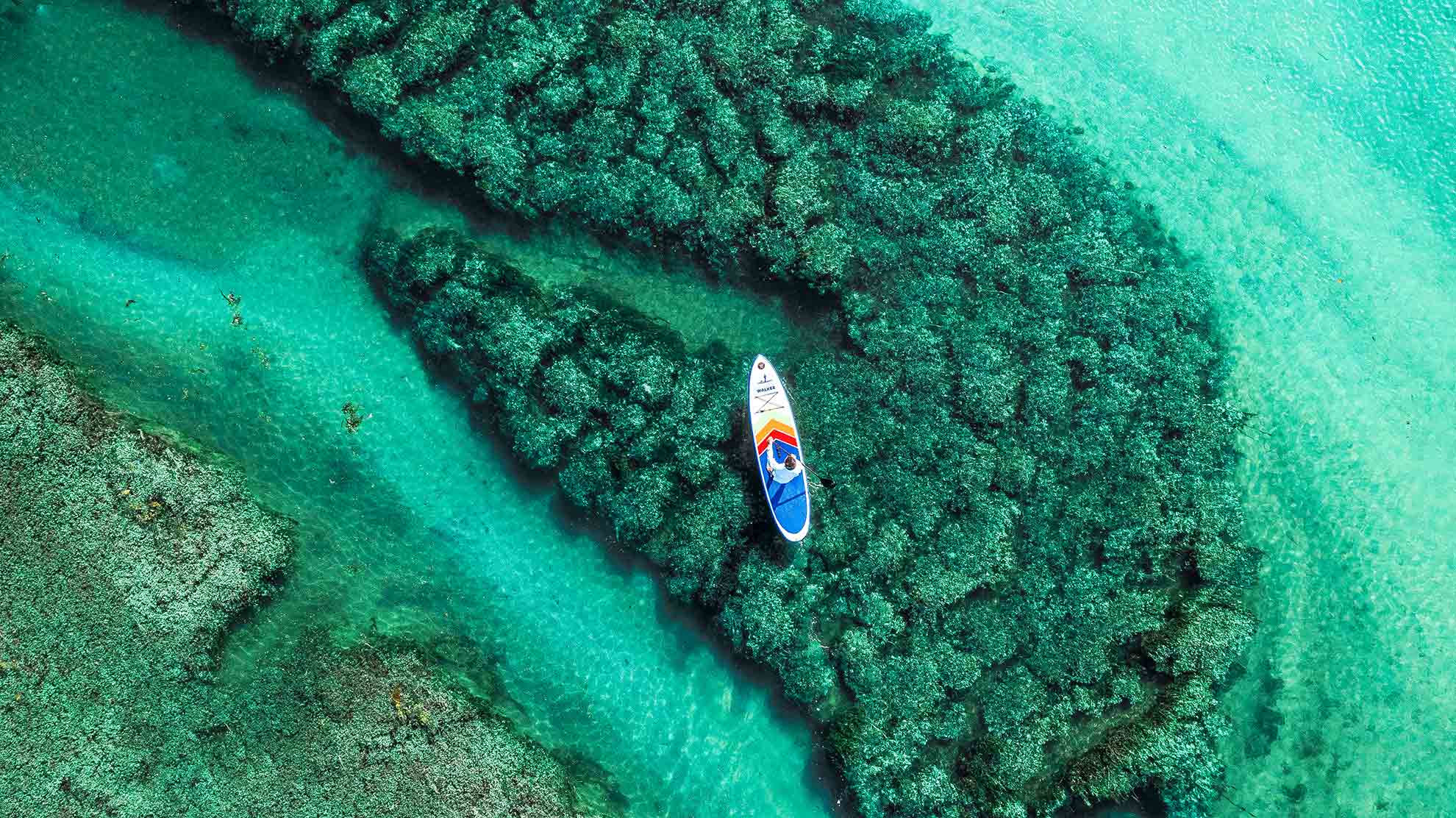
Presentation of the best paddleboards by category according to the criteria mentioned
1) The Beginner
If you have no experience in board sports, to start, we advise you to choose a medium-length board (around 10-10'6). It will give you great maneuverability and ease of practice. It will be easier to inflate, store, and handle. This type of board is stable as long as you have enough board width. So we advise you not to go below 31 inches wide.
Of course, if you are tall and heavy, you will need to enlarge and widen the board a bit (for example, a 10'6 x 32 board will do very well).
In our range, we recommend three paddleboards for beginners.
- The Ocean Walker 10’4 x 32 paddleboard is an accessible, all-in-one pack that is easy, light, and compact.
- The Easy 10 x 31 or the Easy 10’6 x 32 paddleboard. The Easy 10 is by far the more accessible of the two; smaller and lighter, it will be perfectly suited for people under 85 kg. The latter will be suitable for larger individuals.
- Continuing to move upmarket, the Malibu 10 and 10'6 paddleboards are from the professional range. More robust and durable over time, they have built our reputation with watersports centers and beach clubs.

2) Solo touring
If you want to go on solo tours, whether sporty or not, we advise you to choose longer boards with a refined nose, which allows for better glide and less water displacement. Concretely, this means less paddle effort to cover the same distance. You exert less effort and go faster without pushing harder.
To perfectly match solo tours, we can recommend two ranges:
- The Easy range in 11'6 or 12'6, these are paddleboards that maintain width for maximum stability with very good glide and excellent value for money.
- The Alpha paddleboard range from 11'6x32 to 14x27 is a very high-end range, with reinforced, rigid PVC. This range comes closest to the rigidity of a rigid board.
3) Duo / Family Touring
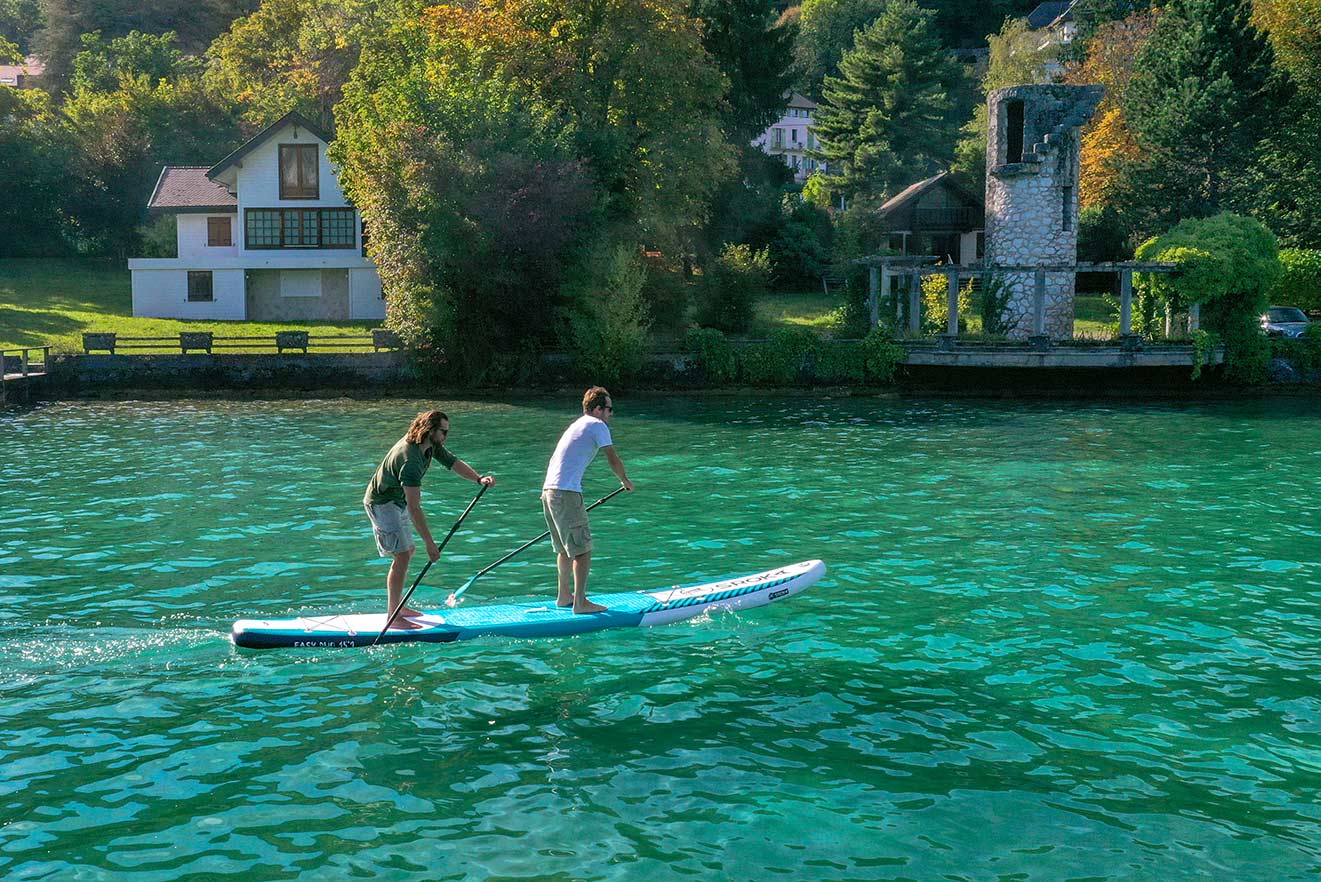
If you want to paddle with multiple people on one board, you need to increase the board's length. There are duo paddleboards that can accommodate 2 adults and 2 children. These boards are generally much longer (around 16 feet), but they truly allow everyone to cruise together on the same board and foster real cooperation between the different people on the board. It's a bit like team sports: to move forward, you need to make a common effort that facilitates the progress of the craft.
This range is designed for riders who want to be two on a board.
The Easy Duo paddleboard offers the best value for money. Strong and ultra-stable, it can accommodate the whole family.
The professional range's duo, however, is the strongest on the market; it was developed by clubs for clubs. It will provide a bit more rigidity and stability at higher speeds.
4) Racing
If you want to race or go on fast tours, we advise you to opt for a board that is over 12'6 with very little width to facilitate glide. In this regard, if you choose, for example, an Alpha 14'x29, you will have a perfect compromise for gliding while maintaining stability. The longer the board, the less you will need to paddle a little to the right and a little to the left. You will glide more with fewer paddle strokes.
Without hesitation, we recommend the Alpha range in 12'6x28 or 14x27 or 29 wide. This professional range will provide stiffness thanks to reinforced construction on the rails, deck, and hull. These paddleboards will offer maximum glide, and because the paddleboard is very rigid, it will be ultra-stable regardless of sea conditions.

5) Surfing
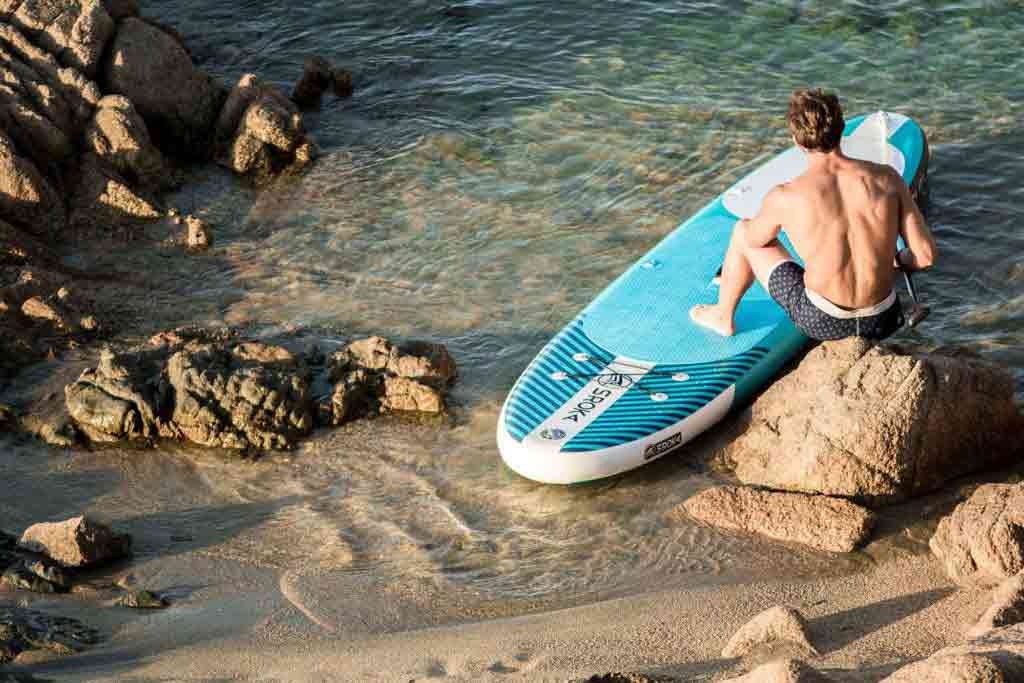
For surfing, you need to reduce the board's length and have a more pinched outline at the front and back to facilitate maneuverability. These boards require a bit more agility and balance as they are slightly less stable. However, you can find a compromise by taking a 10-foot board, for example, with a slightly less pinched outline at the ends, which will give you stability but a little less maneuverability.
We recommend 3 different models:
- First, the 9'5 wave. It's designed for 70% surfing and 30% cruising, part of the professional range, reinforced for added rigidity, it will give you perfect sensations for SUP surfing.
- Another possible choice is the Easy 10 or the Malibu 10, which are two paddles oriented 70% cruising and 30% waves. They will be a little less maneuverable but more stable.
- The Malibu is part of the professional range, meaning it's ultra-reinforced, and the Easy 10, which has the same shape, offers excellent value for money.
6) Are there versatile paddles for different activities?
Yes, there are of course versatile paddles, but not for all disciplines at the same time. Indeed, if you want to surf, race, have stability and not too much size, it will be complicated to do everything. It's like with all sports. A product touted for doing everything will never be relevant in every discipline.
So, you have to make choices.
For example, if you want 30% waves and 70% family cruising, the paddle can be the same. If you want to do a bit of sporty cruising but also own a paddle for the family, that's entirely possible. You'll have to accept not being entirely proficient in all disciplines.
Our choice would be the Easy 10 or Malibu 10 range, which would be a good compromise for surfing and cruising. If you are heavy, opt for the Easy 10'6 or the Malibu 10'6.
If you want to start and do a bit of cruising (without using it for waves), we advise you to look at the Easy 11'6 or 12'6 range or the Alpha range in 11'6x32 or 12'6x31
Comparison of different types of paddles available on the market
1) Which brand to choose for a quality paddle?
[wptb id=88515]
2) What makes an inflatable paddle better than others?
- PVC Quality: Different qualities of PVC exist, each with its own rigidity. Some brands use truck tarpaulin, while others, like us, prefer PVC specifically designed for rigid inflatable boats. These reinforced PVCs offer superior longevity.
- Glue Quality: The glues used play a crucial role. We have chosen to work with the same suppliers as for rigid inflatable boats. Some brands reduce the quality of glues to cut manufacturing costs, but this can compromise the board's lifespan.
- Amount of PVC in the board: The greater the amount of PVC, the more rigid the paddle. In summary, a very light paddle contains less material inside, while a reinforced paddle will be slightly heavier due to its additional layers of PVC on the rails or its increased thickness.
These three factors contribute to the quality and performance of a paddle. It is essential to find the right balance between rigidity, durability, and weight to choose the board that best suits you.
- Paddle Shape: The shape of the paddle is essential and varies depending on your discipline. For example, boards over 11 feet are ideal for cruising and long distances. On the other hand, a shorter board will be better suited for waves or family outings. It's important to note that water generates 800 times more drag than air. That's why we spend time testing our paddles with our naval architect to find the right balance between rigidity, glide, and stability.
- Colors and Design: A high-performing, rigid, and stable paddle that is also aesthetically pleasing increases the perceived value of the product. Furthermore, an attractive design can play a role when you wish to resell your paddle.
- Quality Equipment: The quality of the bag, pump, and paddle directly impacts the overall quality of your product. Even if you have the best paddle on the market, a poor-quality pump or paddle can compromise its use.
- Price: Price is an undeniable indicator of quality. A paddle sold for 150 euros likely cannot be considered a high-quality product.
All these criteria help to differentiate quality and assist you in choosing one paddle over another.
At SROKA, your goal is clear: to offer quality products that meet all demands. We offer three product ranges:
- Ocean Walker: In this range, you keep the good glues and good PVC from your factories, but you reduce the quantity. This allows us to offer an attractive price while guaranteeing the product's durability.
- The Easy range offers the best value for money.
- High-End Paddles: You offer two high-end ranges, the Alpha and the Malibu.
It's reassuring to know that you emphasize quality and customer satisfaction.
3) Does price influence the quality of a paddle?
To recap, the quality of a paddle depends on several factors, including:
- Number of layers: Multiple layers of reinforced PVC contribute to the paddle's rigidity and durability. However, this also increases manufacturing cost.
- Material quality: The quality of the PVC and glues used affects the paddle's performance and longevity. Opting for high-quality materials is essential.
- Handcrafted construction: Paddles are handmade, which requires more time and labor. This is reflected in the final price.
- Accessories and design: Quality accessories, as well as a refined design, can also influence the price.
In short, it is crucial to find the right balance between quality, performance, and budget when choosing a paddle.
Conclusion
Choosing the right paddle depends on your program and specific needs. Here are some tips to guide you:
- Type of Glide: If you are looking for better glide, opt for stand-up paddles with pointed noses. These boards are designed to cut through the water more efficiently and offer an optimal gliding experience.
- Criteria to Consider:
- Technical Level: Your experience level plays a crucial role. Beginners can prioritize more stable boards, while experts can turn to more high-performance models.
- Body Type: Your height and weight influence the choice of board. A board suited to your body type will allow you to balance and maneuver better.
-
Desired Product Quality: Determine whether you prefer a first-price, good value for money, or high-end model.
- Usage Program: The length of the paddle varies depending on your program:
- For cruising and long distances, opt for boards over 11 feet.
- For waves or family outings, a shorter board will be more suitable.
- Caution in Choice: If you choose an unsuitable paddle, you risk having difficulty standing. However, a wise choice will allow you to fully enjoy your experience on the water.
If you still have questions on this topic, or for any other request, do not hesitate to contact us!