


Which paddle board for the ocean?
Stand-up paddleboarding is a water sport that involves moving while standing on a board with a paddle. It can be practiced on various types of bodies of water, but the ocean offers a particularly varied and stimulating playground. Whether for a leisurely ride, surfing, touring, or racing, paddleboarding at sea allows you to discover magnificent landscapes, enjoy the benefits of saltwater, and experience thrilling sensations.
But to practice ocean paddleboarding, you need to choose the right equipment. Indeed, not all paddleboards are suitable for marine conditions, which can be changeable and challenging. Therefore, several criteria must be considered to find the ideal paddleboard for your sea adventures.
In this article, we will give you tips and recommendations for choosing the best paddleboard for the ocean. We will also present the best brands and models of inflatable paddleboards for the sea, as well as the essential accessories for this activity. Finally, we will give you some tips for safe practice and indicate the must-visit spots for stand-up paddleboarding at sea.
What types of paddleboards are suitable for sea use?
There are two main types of paddleboards: rigid paddleboards and inflatable paddleboards. An inflatable paddleboard and a rigid paddleboard have many differences. However, we can still say that in 80% of cases, an inflatable paddleboard is the most judicious choice. Indeed, it's the ideal option if you are looking for a versatile SUP (leisure, touring, beach days, yoga...). A good quality inflatable paddleboard will guarantee very good performance and great durability, while remaining affordable. Not to mention the very practical and easy transport and storage. On the other hand, if you want to compete or surf big waves, a high-end rigid SUP will be more suitable.
What are the differences between paddleboards specifically designed for the ocean and those for other types of water bodies?
Paddleboards specifically designed for the ocean have particular characteristics that make them suitable for marine conditions. They differ from paddleboards for other types of water bodies in their shape, size, thickness, and fin.
The shape of the paddleboard influences its stability, glide, and maneuverability. There are several shapes of paddleboards:
- The surf paddleboard: it has a short and wide shape, with a pronounced rocker (curve) at the front and back. It is designed for surfing waves and being agile in turns.
- The all-round paddleboard: it has a versatile shape, with a balance between length, width, and rocker. It is suitable for cruising, surfing, and touring on calm or choppy waters.
- The touring / cruising paddleboard: it has a long and narrow shape, with a low rocker at the front and back. It is optimized for glide, speed, and comfort on flat or slightly choppy waters.
- The race paddleboard: it has a very long and very narrow shape, with minimal rocker at the front and back. It is specially designed for speed racing on flat or choppy waters.
To choose the right paddleboard shape for the ocean, you must define your objective: surfing waves (surf paddleboard), leisurely cruising (all-round and touring paddleboard), or covering long distances (touring and race paddleboard).
The size of the paddleboard depends on your build, your level, and your practice. In general, the longer the paddleboard, the faster and more stable it is, but the less maneuverable it is. The wider the paddleboard, the more stable and comfortable it is, but the less fast and reactive it is. The thicker the paddleboard, the stiffer and more buoyant it is, but the less close to the water and sensitive to movements it is.
The thickness of the paddleboard influences its stiffness, buoyancy, and balance. In general, the thicker the paddleboard, the stiffer and more buoyant it is, but the less close to the water and sensitive to movements it is.
The fin of the paddleboard plays an important role in the stability, direction, and performance of the paddleboard. There are several types of fins: the central fin, which attaches under the paddleboard at the center of gravity, ensures lateral stability and the trajectory of the paddleboard; the side fins, which attach under the paddleboard at the rails (edges), improve maneuverability and control of the paddleboard in turns and waves; the rear fin, which attaches under the paddleboard at the rear, increases the speed and reactivity of the paddleboard.
Criteria to consider when choosing a paddleboard for the ocean (stability, dimensions, materials)
As we have just seen, choosing a paddleboard for the ocean depends on several criteria related to the shape, size, thickness, and fin of the paddleboard. But there are other criteria to consider when choosing a paddleboard for the ocean:
- Stability: this is the ability of the paddleboard to remain balanced on the water. It mainly depends on the width and thickness of the paddleboard, as well as the distribution of volume. The wider and thicker the paddleboard, the more stable it is. The more concentrated the volume in the center of the paddleboard, the more stable it is.
- Dimensions: these are the measurements of the paddleboard in length, width, and thickness. They are expressed in feet (') and inches ("). For example, a 10'6 x 32" x 6" paddleboard measures 10 feet and 6 inches in length (about 320 cm), 32 inches in width (about 81 cm), and 6 inches in thickness (about 15 cm).
- Materials: these are the components that make up the paddleboard. They influence the weight, rigidity, strength, and price of the paddleboard. Among the strongest constructions are: rigid fiber paddleboards, rigid carbon paddleboards, and high-end PVC inflatable paddleboards (beware of low-end PVC paddleboards that will not last over time).
The best paddleboard models for the ocean from Sroka Company
Our brand, Sroka Company, is a French brand created by Bruno Sroka, three-time kitesurfing world champion. We offer high-quality inflatable paddleboards, made with durable materials that will allow you to keep your paddleboard for years. Our paddleboards are suitable for all levels and all practices, from surfing to touring, including yoga. Here is a selection of our best paddleboard models for the ocean:
The Malibu
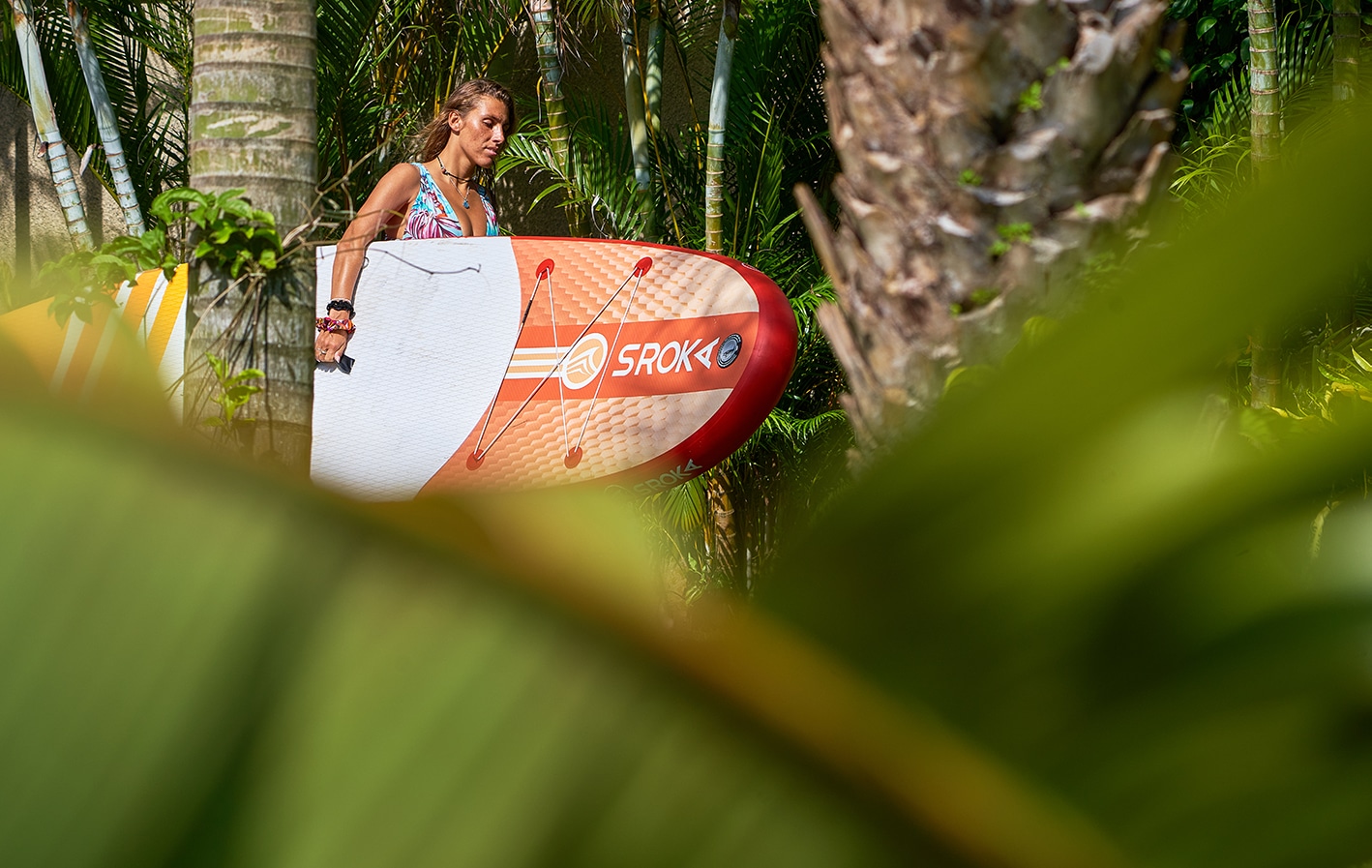
The Malibu is a versatile and comfortable all-round paddleboard, ideal for cruising, surfing, and touring on calm or choppy waters. It has a wide and stable shape, with a moderate rocker at the front and back. It is equipped with a removable central fin and two fixed side fins. The Malibu is made of double-layer fused PVC to ensure good solidity for all your ocean adventures.
The Alpha and the Girly
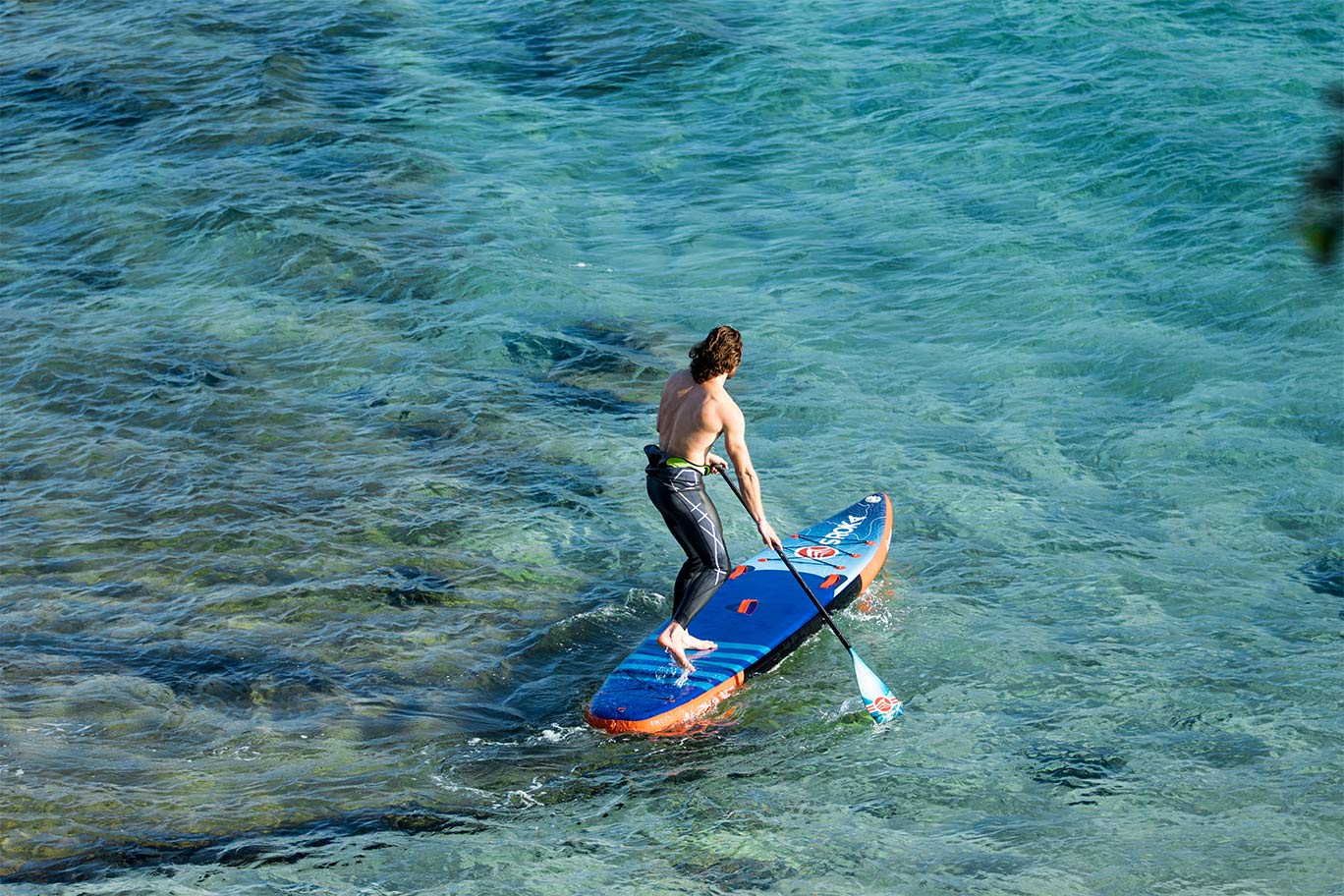
The Alpha is a paddleboard midway between a touring paddleboard and a race paddleboard. Its refined profile allows for efficient and fast paddling, without too much effort. Built with thermal-welding technology and its 3 layers of PVC on the rails, it offers excellent rigidity and optimal solidity, making it an ideal choice for long ocean tours.
The Girly, on the other hand, has the same technical characteristics as the Alpha, but with a refined design that combines glide and elegance.
The Wave 9’5
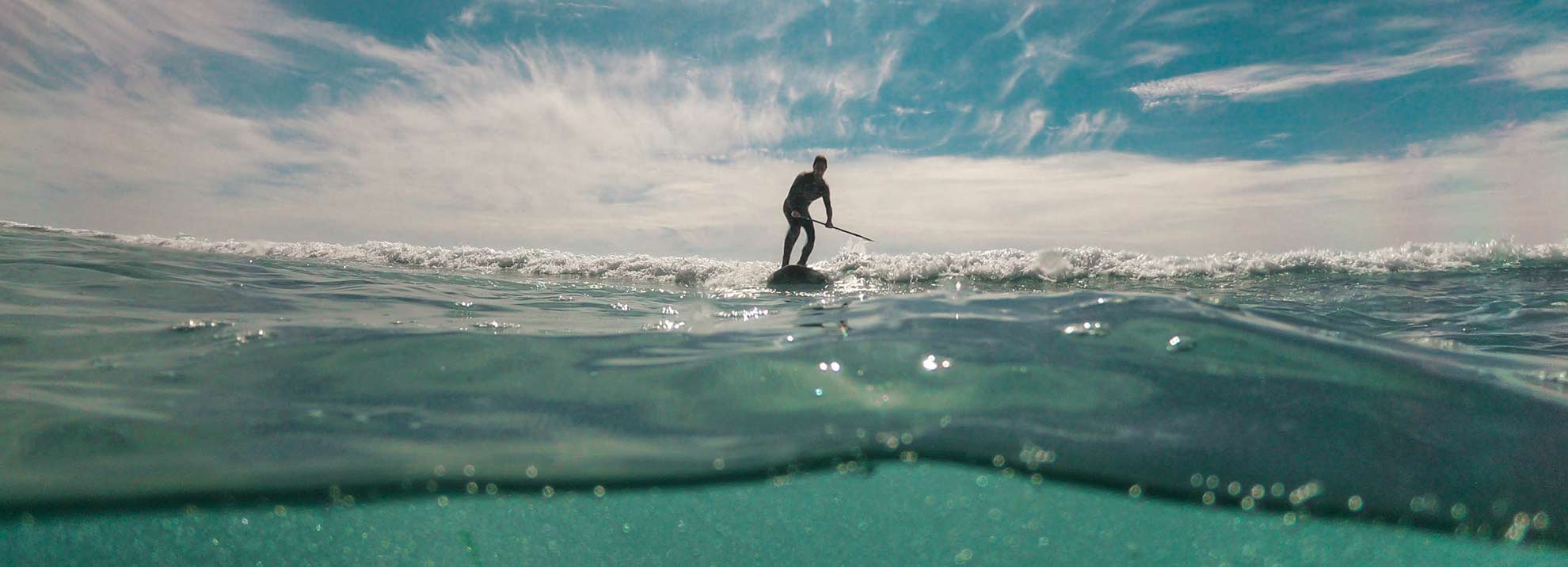
The Wave 9'5 inflatable surf paddleboard is designed to let you discover the joys of surfing. It's a short board with a rounder outline, which allows for better turning on the wave. Thanks to its construction with Fusion technology, this paddleboard is light and rigid, which is an important advantage for surfing waves. It's the perfect compromise for cruising and discovering surfing in small waves. This inflatable SUP is suitable for both beginners and experienced paddlers.
Guide to essential accessories for stand-up paddleboarding at sea
To fully enjoy stand-up paddleboarding at sea, adequate preparation is essential. The unpredictable and potentially dangerous marine elements require appropriate caution and protection. Here is a list of indispensable accessories for a safe and enriching stand-up paddleboarding experience at sea:
- The leash: This device, attached to the practitioner's ankle or calf, maintains a constant connection with the board. In case of a fall, the leash prevents the loss of the paddleboard and makes it easier to re-attach if needed, whether due to fatigue or currents.
- The life jacket: It ensures buoyancy in case of immersion. It is highly recommended for minors and beginners to wear one. However, it is advisable to have one regardless of your skill level, as no one is safe from a change in weather that makes practice difficult.
- The wetsuit: It protects against cold, UV rays, chafing, and injuries. It is particularly advisable to wear one when paddleboarding in the ocean, especially in winter or in colder areas.
- The dry bag: Having a dry bag is very practical for storing and protecting personal belongings such as phone, keys, water, food, etc.
- The pump: The pump is essential for inflating and deflating the inflatable paddleboard, allowing pressure to be adjusted according to navigation conditions.
How to practice safely, our tips
Stand-up paddleboarding at sea is a sport that requires a certain vigilance and preparation. To avoid accidents and unpleasant surprises, a few safety rules must be followed:
- Check the weather: before heading out to sea, check the weather forecasts (wind, swell, tide, etc.) and choose a spot suitable for your level and objective.
- Inform someone: before heading out to sea, inform someone (family, friend, club, etc.) of your route, its duration, and your phone number.
- Wear appropriate equipment: before heading out to sea, equip yourself with a leash, a life jacket, a wetsuit, and a dry bag containing safety items (whistle, lamp, survival blanket, etc.) and the best inflatable paddleboard for the sea.
- Respect navigation rules: while navigating, respect authorized zones, priorities, safety distances, and signals.
- Stay vigilant: while navigating, remain attentive to weather conditions, currents, waves, obstacles, and other users.
- Know when to give up: while navigating, know how to assess your limits and those of the equipment, and do not hesitate to turn back or ask for help in case of a problem.
The 4 best places for stand-up paddleboarding at sea
Arcachon Bay
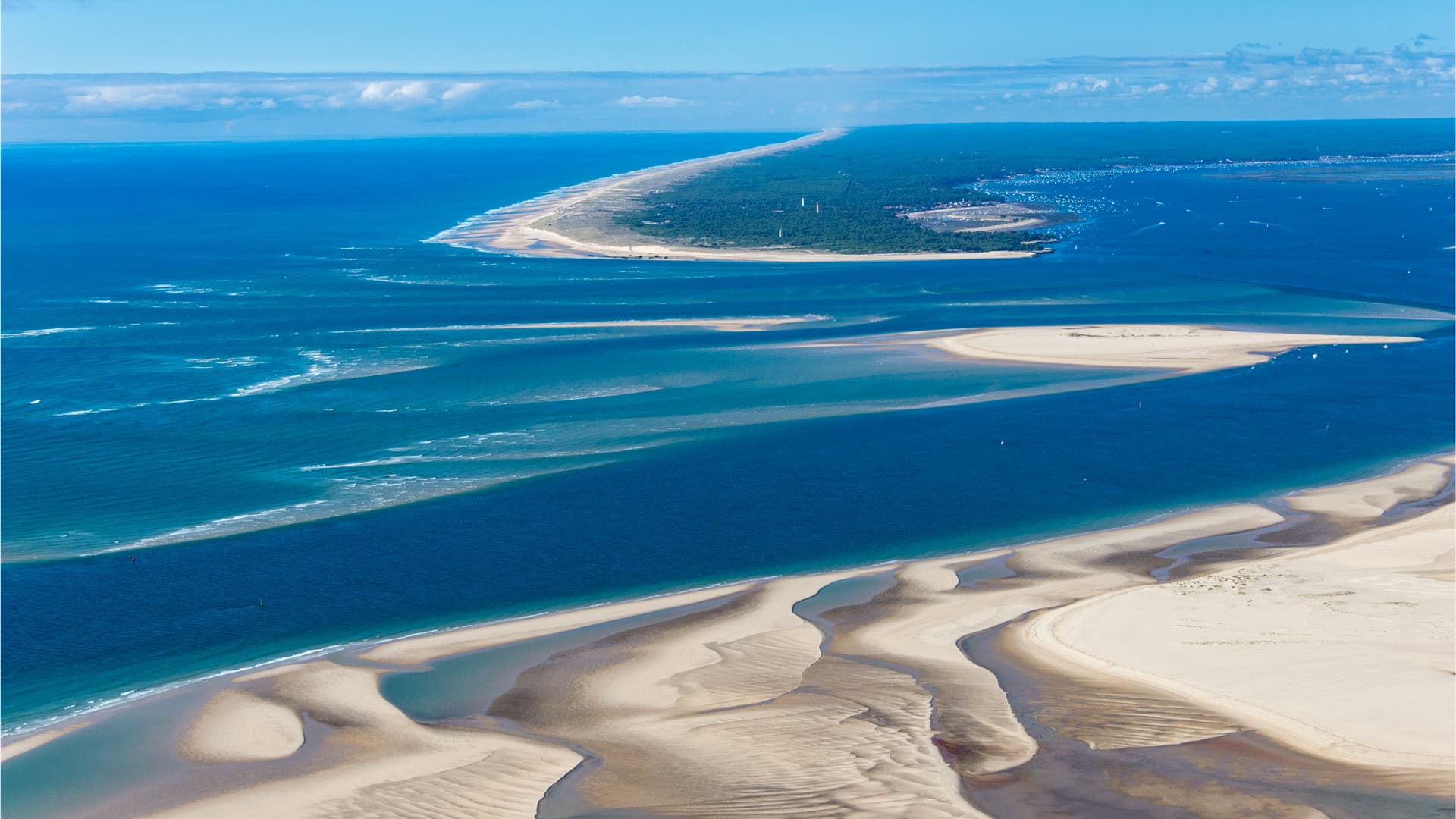
A true haven for cruising, surfing, or sea touring. You will be amazed by the view of the Arcachon basin, Cap Ferret, Bird Island, and the majestic Dune du Pilat. Abundant biodiversity awaits you, with rich and varied flora and fauna.
The Crozon Peninsula
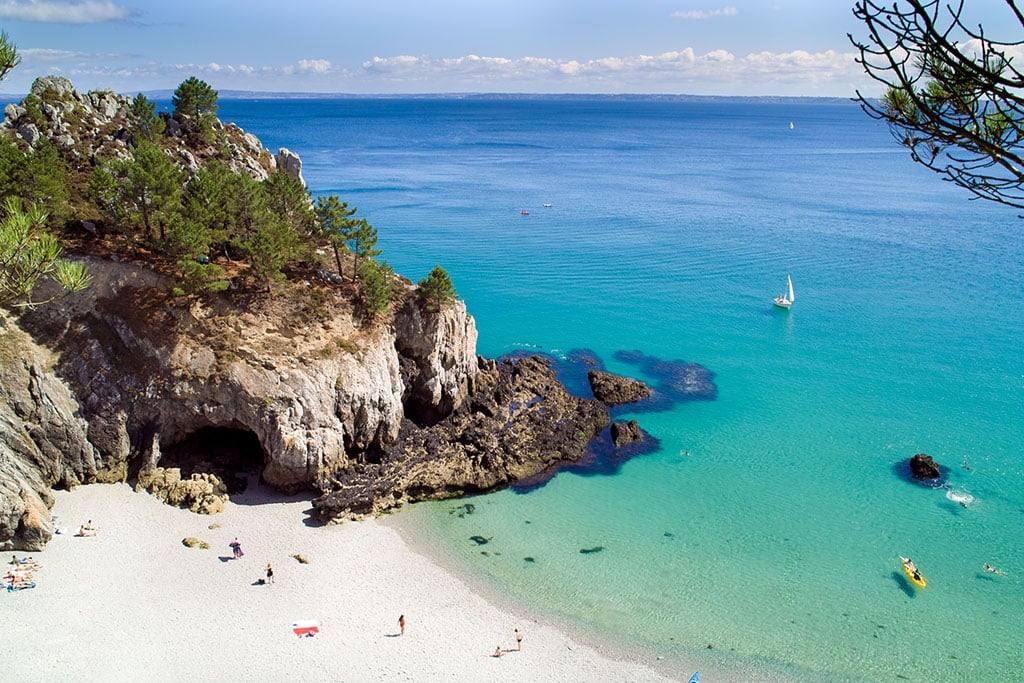
This is the perfect place for surfing or sea touring. You will enjoy quality waves, panoramas as wild as they are paradisiacal, and exceptional sites such as Pointe de Pen-Hir, Pointe du Raz, the Virgin Island (see photo), or the mysterious sea caves.
Somme Bay
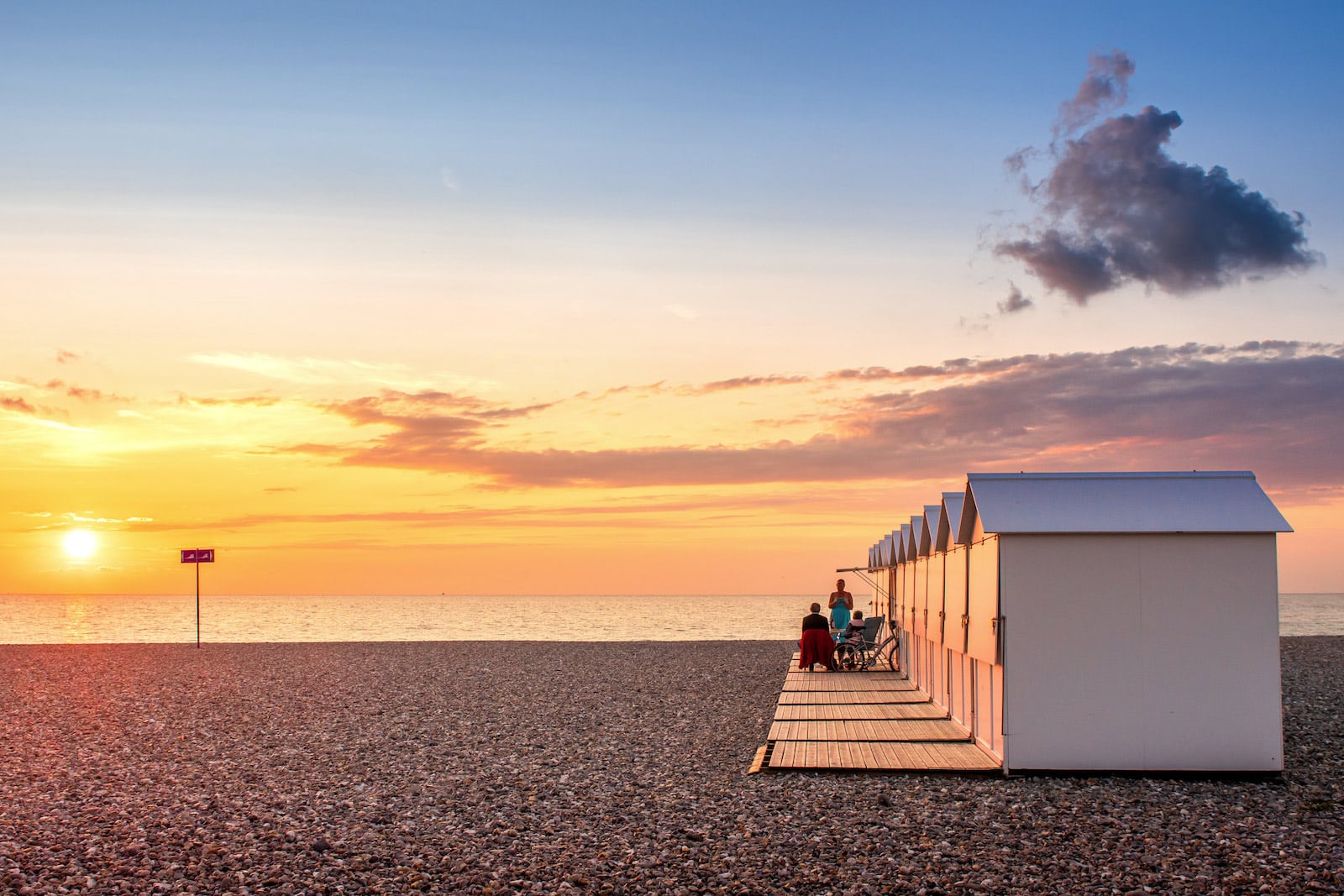
It’s the ideal place for a walk or a sea hike. You'll discover the Baie de Somme Regional Natural Park, the charming villages of Le Crotoy and Saint-Valery-sur-Somme, as well as the Marquenterre ornithological reserve. Seals, birds, and horses punctuate this uniquely beautiful landscape.
The French Riviera
A true paradise for sea walks or hikes. You'll savor the Mediterranean climate, crystal-clear waters, and iconic cities like Nice, Cannes, and Saint-Tropez. Also worth exploring are the Lérins Islands, Porquerolles, and Port-Cros.
Our favorite paddleboarding spot? The Calanques of Cassis. Starting from Cassis beach, the calanques are easily accessible by paddleboard; you can go from one calanque to another while admiring the beauty of the coast.
Sea stand-up paddleboarding opens the door to a myriad of benefits and pleasures as a water sport. It's a way to exercise, relax, have fun, and explore corners of paradise. However, fully enjoying sea paddleboarding depends on choosing the right equipment and calmly respecting safety rules. We sincerely hope that this article has enlightened your quest for the ideal paddleboard for your future sea escapades.