


Stand-up paddleboarding (SUP) is much more than just a recreational activity. It's a complete sport that engages numerous muscle groups and offers a unique experience of connecting with nature. In this article, we'll explore in detail the muscles used in SUP and give you tips to optimize your training.
Why is Stand Up Paddleboarding an excellent full-body exercise?
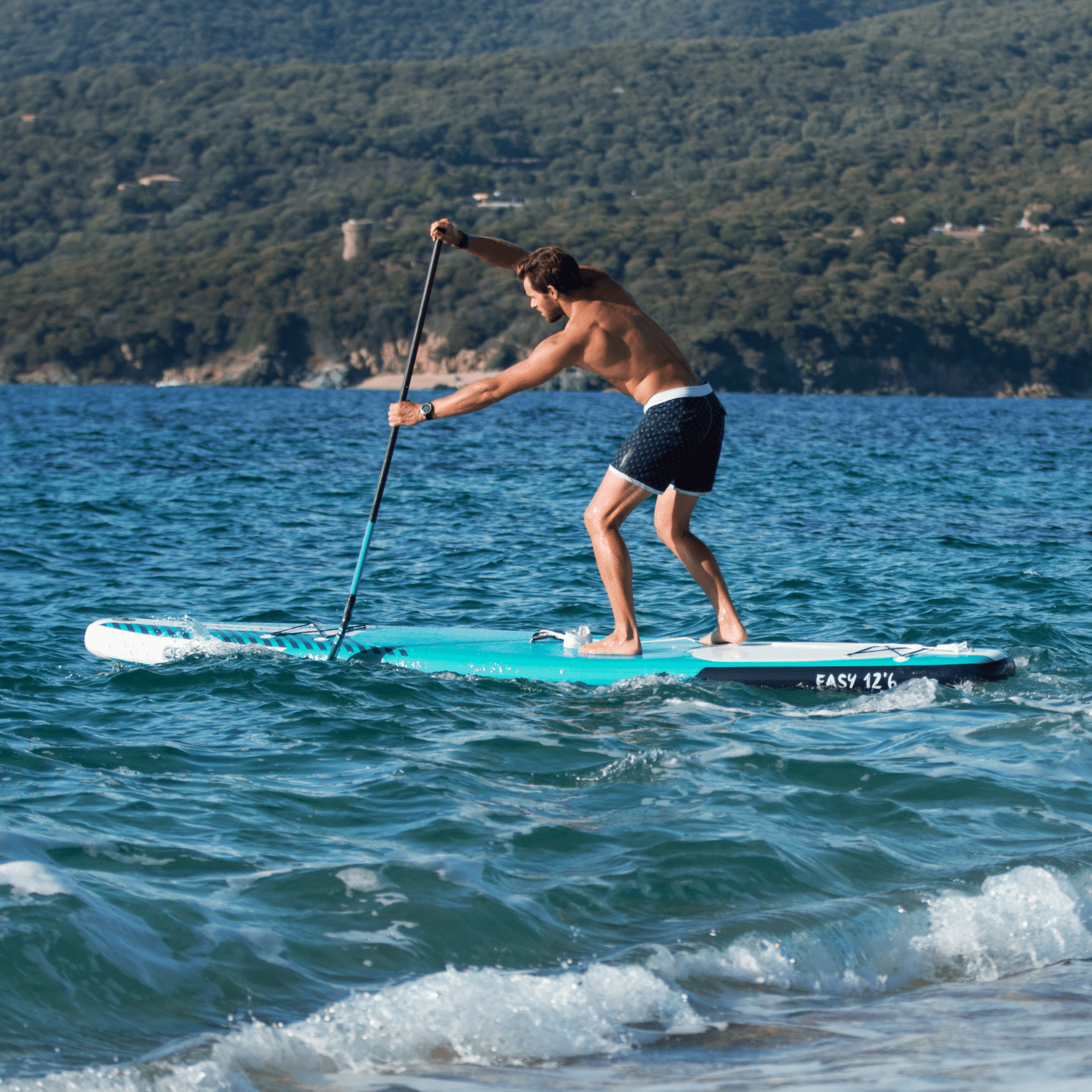
The crucial role of abdominal and core muscles in SUP
Paddleboarding is an excellent physical activity for working the muscles of the upper body in depth, toning and strengthening them, without risk of injury.
- The back is certainly the most used part of the body in paddleboarding. Indeed, the paddling movements required to move forward necessitate a pulling action that engages the latissimus dorsi, trapezius, and rhomboid muscles.
- In paddleboarding, balance is maintained by the contraction and relaxation of the abdominal muscles. These muscles allow your body to find its point of equilibrium on the board. Furthermore, when you paddle, your upper body needs to stiffen, and this is when your abdominal muscles come into play by contracting.
-
Strengthening exercises:
- Plank: To strengthen all the muscles of the trunk.
- Oblique crunches: To target the obliques.
- Trunk rotations: To improve trunk stability and mobility.
- The muscles in your arms and shoulders are also heavily engaged during paddleboarding and act as a link between your abdominal and back muscles. The paddling motion transfers the effort from your abdominals to your back and involves the deltoid and pectoralis major muscles, which work together to allow for shoulder rotation and paddle propulsion. You'll quickly notice that the paddle tends to lift out of the water as you bring it towards you. In this case, your shoulders should apply slight pressure to the shaft to keep the paddle blade submerged.
- Finally, the arm muscles, particularly the biceps and triceps, are also involved in the rowing motion, while the forearms are used to maintain a good grip on the paddle.
-
Strengthening exercises:
- Pull-ups: To strengthen the back and arms.
- Bench press: To work the pectorals and triceps.
- Lateral elevations: To target the deltoids.