


The inflatable stand-up paddleboard or SUP appeals to you, and you want to take the plunge and get equipped for the upcoming summer or spring. But once you've made the decision, you wonder, "how to inflate an inflatable paddleboard?".
Inflation problems, while of negligible severity, are very common. Follow this article to the letter, and you'll be sure to avoid these minor inconveniences.
An under- or over-inflated paddleboard presents a problem:
- under-inflated, it risks "banana-ing" and deteriorating quickly due to the various creases this causes.
- over-inflated, your SUP risks having its PVC seams detach, or even its drop-stitch (the inner part that connects the deck and the hull and keeps the board flat) to the point of becoming a sausage.
So, together, we will first check your equipment, then discuss the key points for preparing your paddleboard before inflation, and finally, some additional tips just after covering the inflation itself.
The necessary equipment
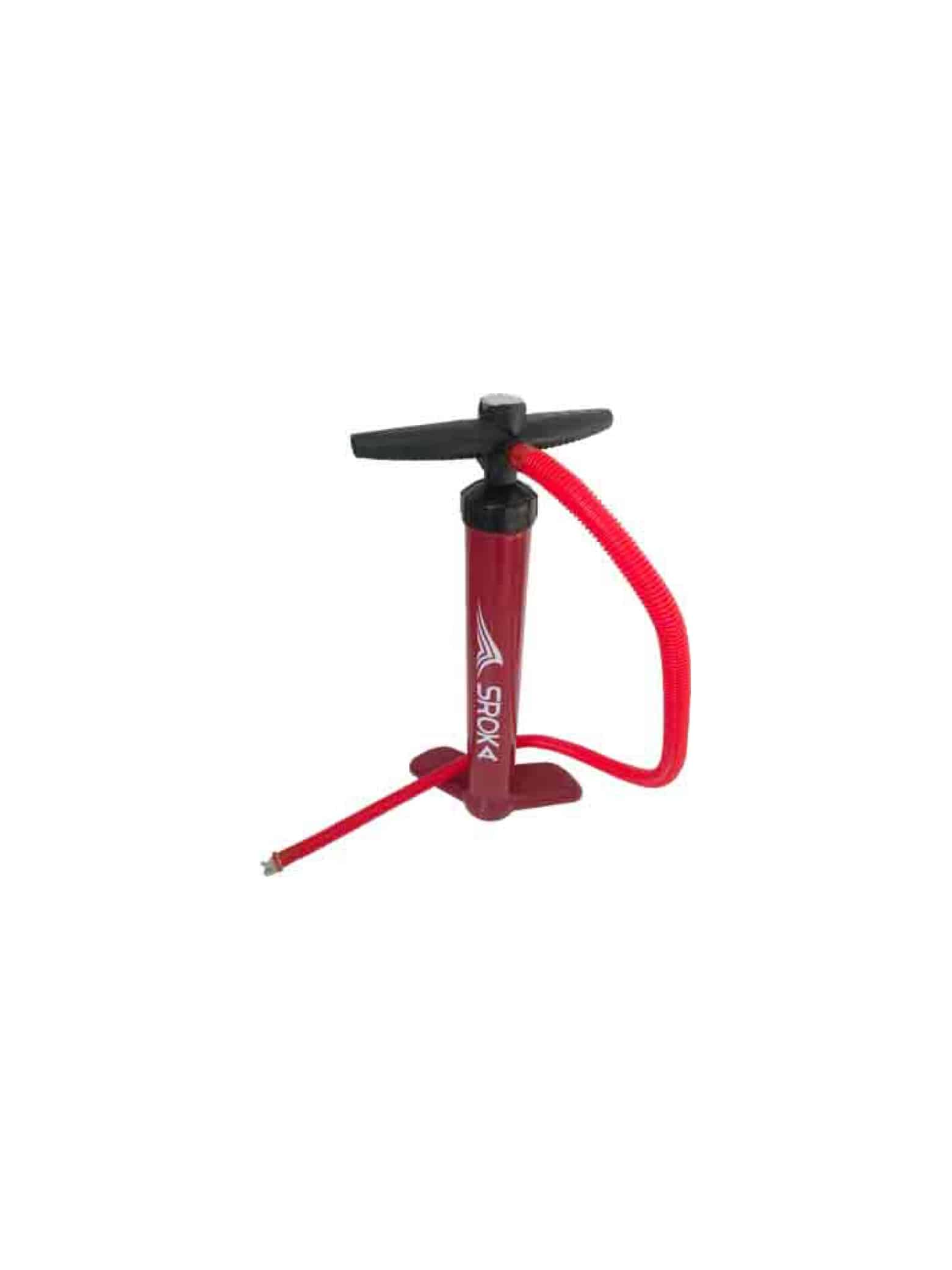
What equipment do we need to inflate your paddleboard? Approximately everything that came in the pack you ordered. That is:
- The SUP (obviously)
- The high-pressure pump
- The fins
- The valve removal wrench
Preparing to inflate the paddleboard
First, it's important to find an adequate place to inflate your SUP; avoid areas that might damage it, such as stones or asphalt if you have to inflate it in a parking lot. (In the event you have no choice, use the storage bag to protect your paddleboard from ground abrasion.)
Also, prioritize a location sheltered from strong winds, to prevent your paddleboard from flying away and potentially injuring someone or getting damaged.
Before you start inflating, unroll your SUP and check its good condition. Also, check that your pump is functional and that your fins are suitable for the slots on the hull of your SUP. Using the valve removal wrench, check that it is properly tightened, which could cause leaks.
Steps for inflating a stand-up paddleboard
Your paddleboard is now unrolled, in a secure location, and your equipment is functional.
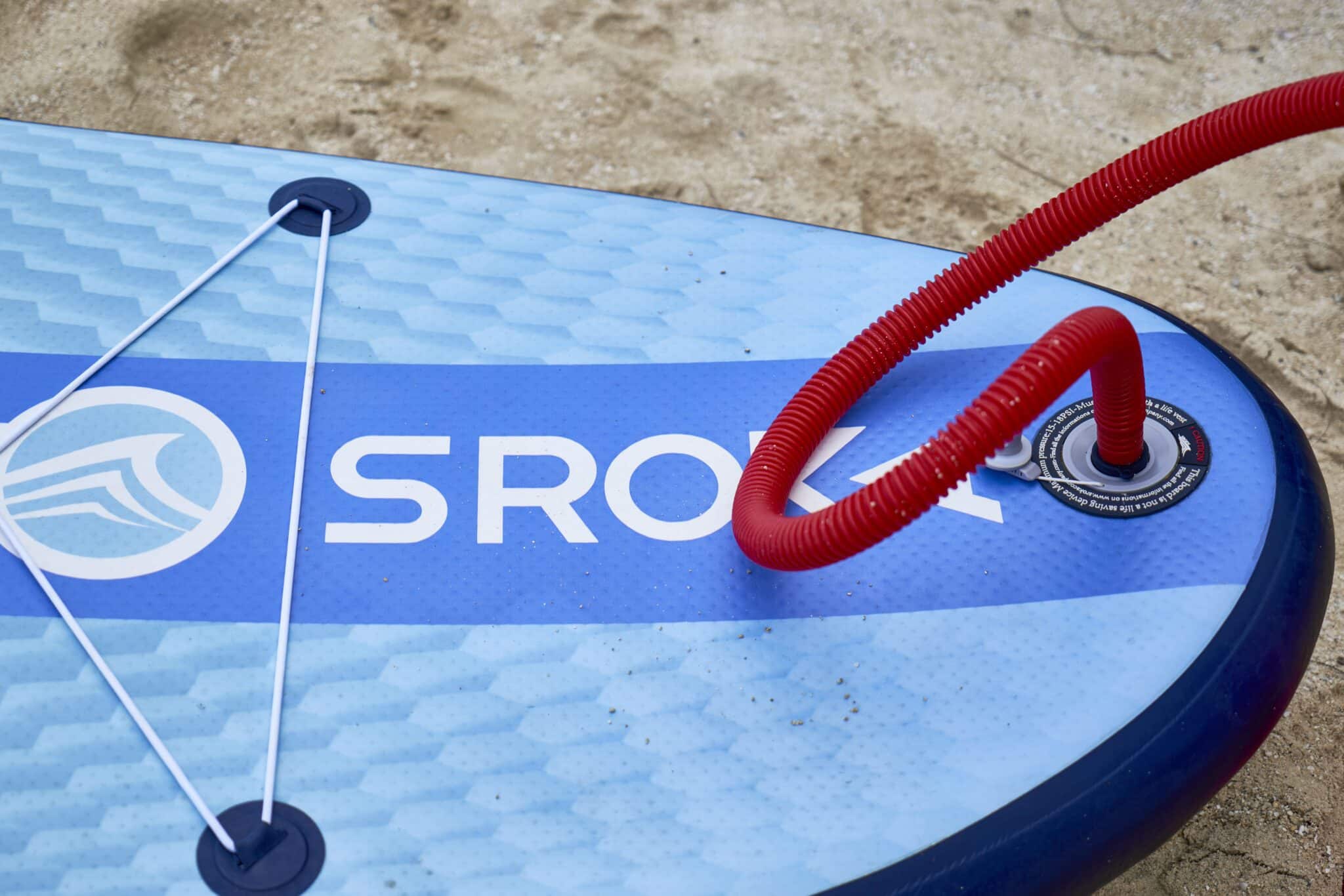
- Start by connecting your pump to your SUP. To do this, check that the valve preventing air from escaping is in the inflation position, meaning the central part is protruding. If not, turn it a quarter turn while pressing it lightly to put it in the correct position.
- Next, connect the pump hose with a quarter turn clockwise. Be careful, the tension on the hose might cause it to turn counter-clockwise on its own. In this case, pre-tension the pump hose in the opposite direction before connecting it so it stays in place without your help.
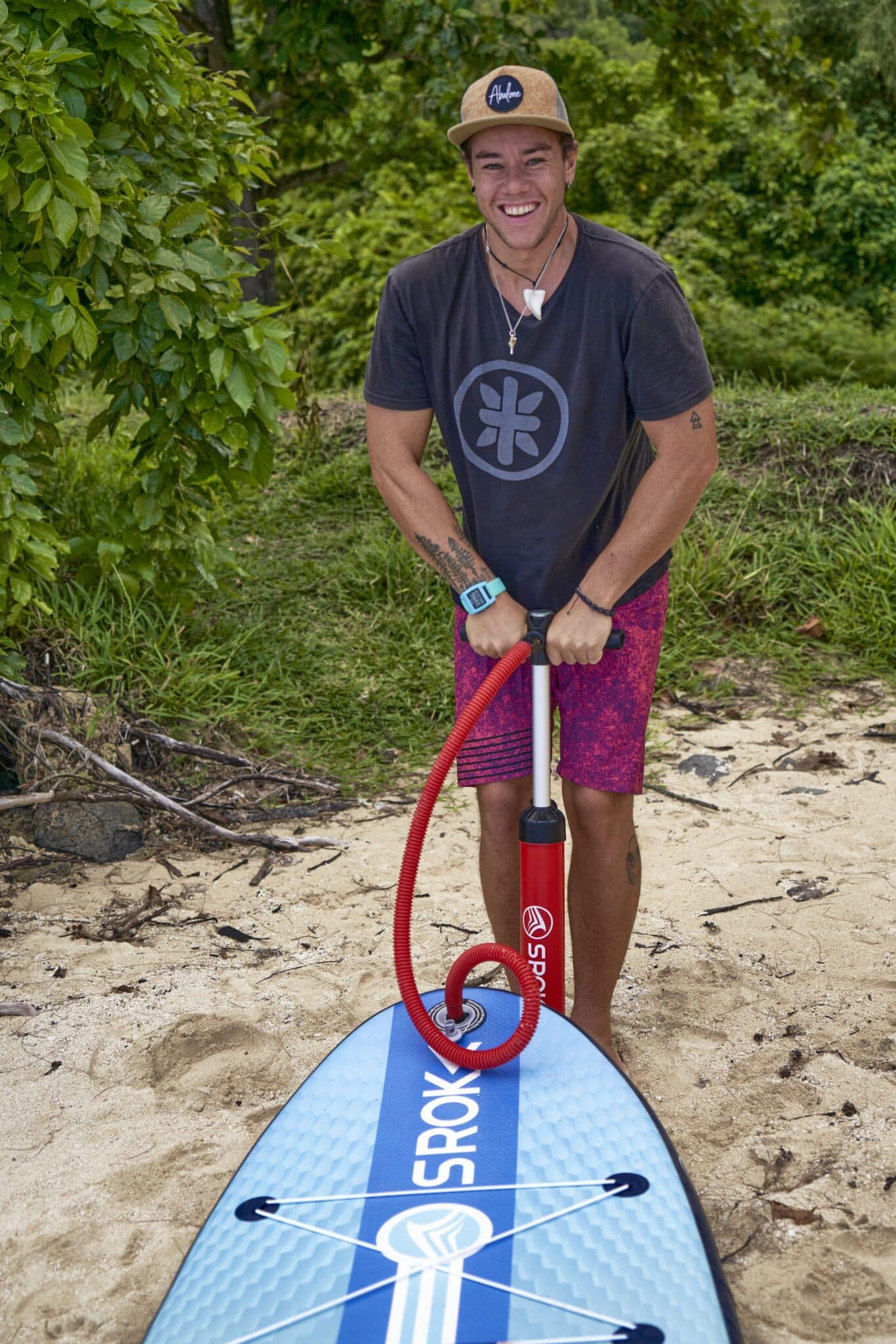
- You can now inflate your paddleboard to the indicated pressure around the valve or in the user manual. Start with the pump in mode 2, then finish with mode 1 when mode 2 becomes too difficult.
- Once the recommended pressure is reached, disconnect the pump from the SUP and close the valve cap. Finally, check that your paddleboard is rigid and does not show any appendage that would warn of a potential rupture.
SROKA's tip:
The paddleboard pressure varies according to the activities you want to do or your weight. For example, if you're going on a SUP downwind, slightly lowering your pressure will allow you to better catch the waves and thus avoid burying the nose and slowing down between swell trains.
Additional tips
To guarantee an exceptional lifespan for your Stand up paddleboard, make sure you never leave it in the sun when you are not using it, especially in summer when the temperature rises. For information, the human pain threshold is around 60 degrees Celsius or slightly below; it's a benchmark. On days when you can't place your hand on a black surface (like a car), the temperature of your paddleboard in direct sunlight risks exploding in addition to being worn out by UV rays.
Conclusion
In summary, choose a place where you won't risk damaging your equipment, check it, and be mindful of the pressure you apply to your paddleboard. Once inflated, be wary of the sun, which can wreak havoc in summer.
Finally, always ensure you practice safely; avoid very windy or too cold days if you are not equipped accordingly. Also, beware, summer doesn't always mean warm water. Even when it's 30 degrees outside, hypothermia is always possible when the water is 17 degrees, as is often the case in windy regions.
How to inflate a paddleboard? You now have the answer. All that's left is for you to go enjoy the water. Many other articles are available on our site to assist you in your paddleboarding practice, so feel free to take a look!
The SROKA team.
If you still have questions on this topic, or for any other request, do not hesitate to contact us!