


The 360 in wing foil is a maneuver that allows you to start flatwater freestyle. This trick, which consists of performing a complete turn on yourself while maintaining flight, is not only impressive to watch but also incredibly rewarding to achieve.
Mastering the 360° requires a good understanding of the fundamentals of wing foiling, and complete coordination between the upper and lower body. In this article, we will guide you through the key steps to successfully perform a 360° in wing foil, starting with the essential basics up to advanced tips that will make you an expert in executing a 360° in wing foil. Whether you are a curious beginner or looking to perfect your skills, this guide is designed to give you the foundations to succeed with the 360°.
Ready to embark on the adventure of the 360° in wing foil? Follow us step by step and discover how to master this trick with grace and confidence.
Wing foil, how to master the 360°: Prerequisites
1. Mastery of wing foil fundamentals
To successfully perform a 360° in wing foil, it is essential to have a good grasp of the basics. Before attempting this maneuver, you must master:
- Balance on the foil: You must be comfortable managing your balance on the foil, whether in a straight line or in a turn, with the ability to change foot positions on the board.
- Wing control: Good wing control is crucial. You need to know how to position and move it in the wind to get the necessary propulsion or counter its power.
- Basic turns: Knowing how to perform jibes is essential before attempting a 360 and starting to execute tacks.
- Maintain sufficient speed to stay in the air for the entire duration of the 360°.

2. Optimal conditions
Optimal conditions for practice are crucial. Choose moderate wind conditions, neither too strong nor too weak, for better control and increased safety. It is also advisable to practice on flat water with not too many waves or currents to facilitate the maneuver.

3. Suitable equipment for performing a 360°
- Foil: Use a foil adapted to your level and size. But above all, a foil that glides and stays airborne for a long time. For example, foils with a large wingspan will provide you with significant glide and flight time.
- Wing: Choose a wing of the correct size according to wind conditions. A slightly smaller wing will be easier to turn and less physically demanding.
By ensuring you meet these prerequisites, you will increase your chances of successfully performing your 360 in wing foil and enhancing your freestyle experience on the water.
The different steps to successfully perform a 360°
Breaking down the different steps to perform a 360 in Wing foil:
1. Preparation
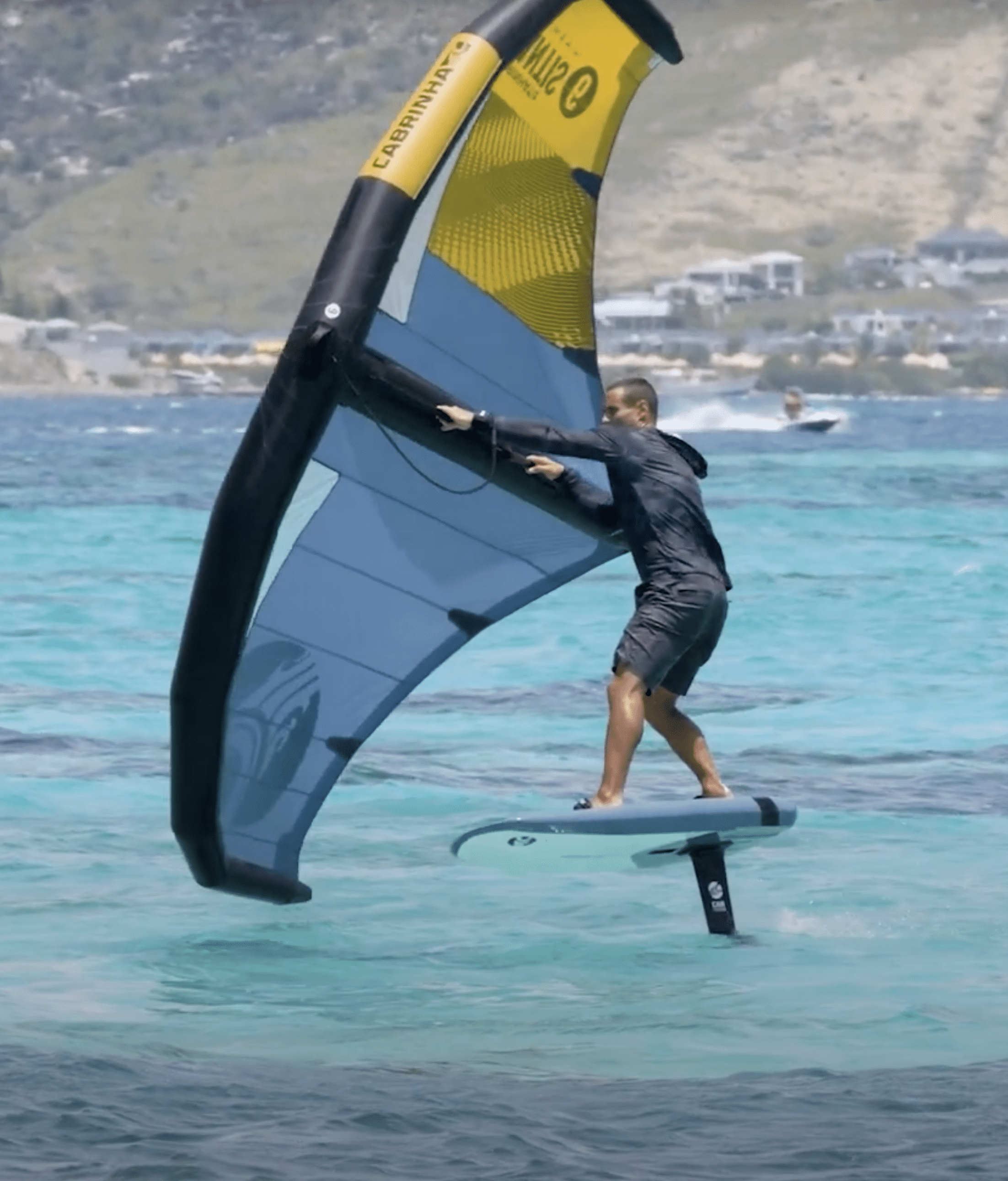
- Starting position: Make sure you are comfortable with your wing foil and have good initial speed. Too low a speed will not allow you to complete your rotation. The starting position must be balanced and stable. Ideally, remove all your foot straps, or if you don't know how to ride without foot straps, remove at least the back strap. Your back foot can be offset downwind to give you more stability.
- Gain more speed before initiating the 360°.
2. Initiating the Rotation to successfully perform the 360°
Basically, a 360 will always start like a jibe in terms of foot pressure on the board. So just imagine yourself performing a jibe.
- Initiate the rotation: Start by pressing on the balls of your feet while slightly leaning your body towards the inside of the turn and turning your shoulders in the desired direction of rotation.
- Using the wing: Use the wing to help you turn by positioning the leading edge downwards to facilitate rotation without the tips touching the water. Push the front hand forward and down and bring the back hand up to head height to orient the wing and begin the rotation.
3. The 360° Rotation
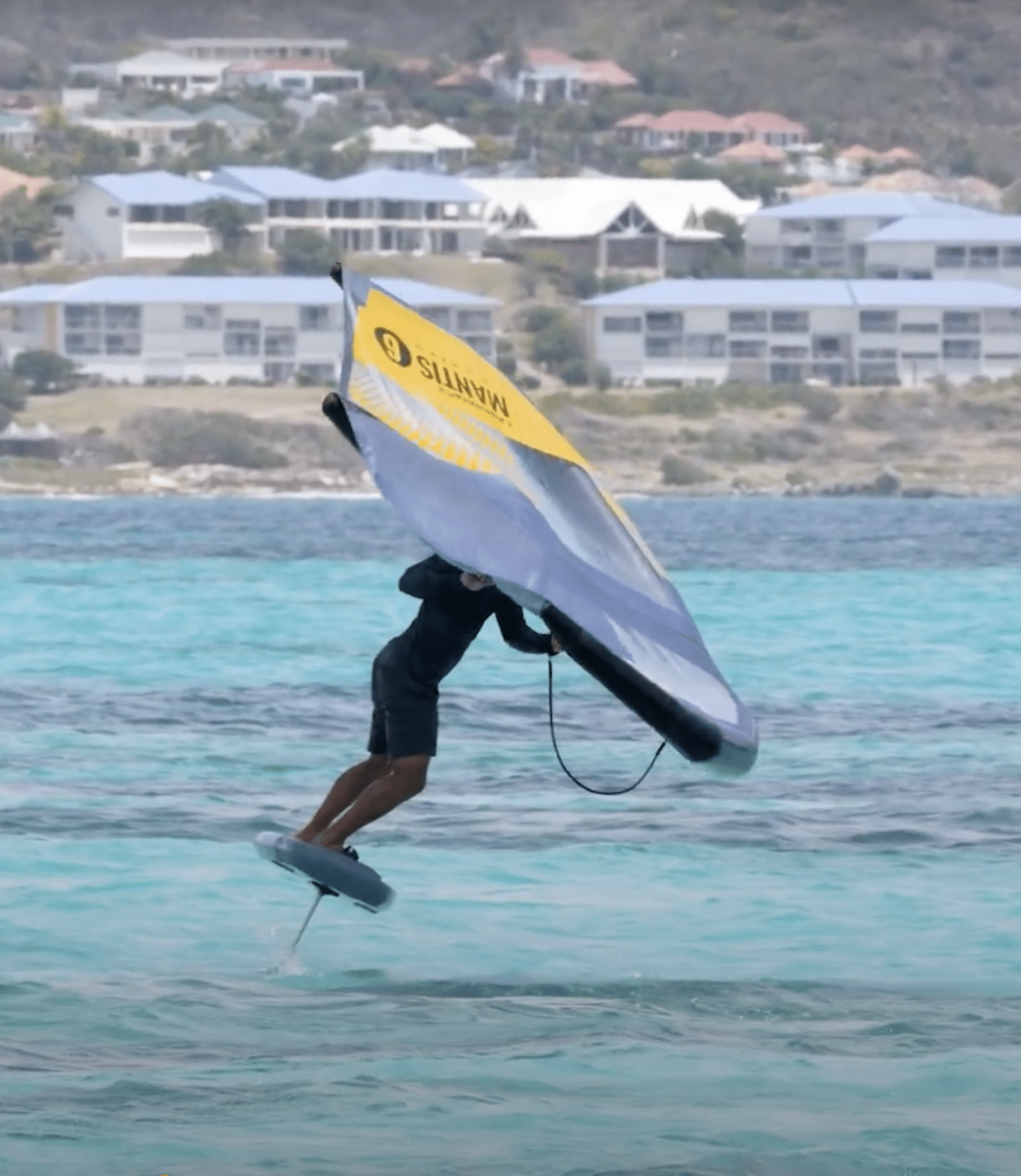
- Body coordination: Continue to apply pressure on your feet. When you have passed downwind, counter the power of the wing which will want to fill up in the opposite direction. Therefore, your foot pressure and balance on the board will be fundamental. When you are against the wind, you must succeed in completing your rotation. Bring the wing above your head by pushing your front hand forward and bringing it above your head. This will allow you to pivot your wing in the right direction while reducing the power in the wing, thus facilitating the end of your rotation.
- Maintaining balance: Focus on maintaining your balance on the foil using your legs.
4. Height Control
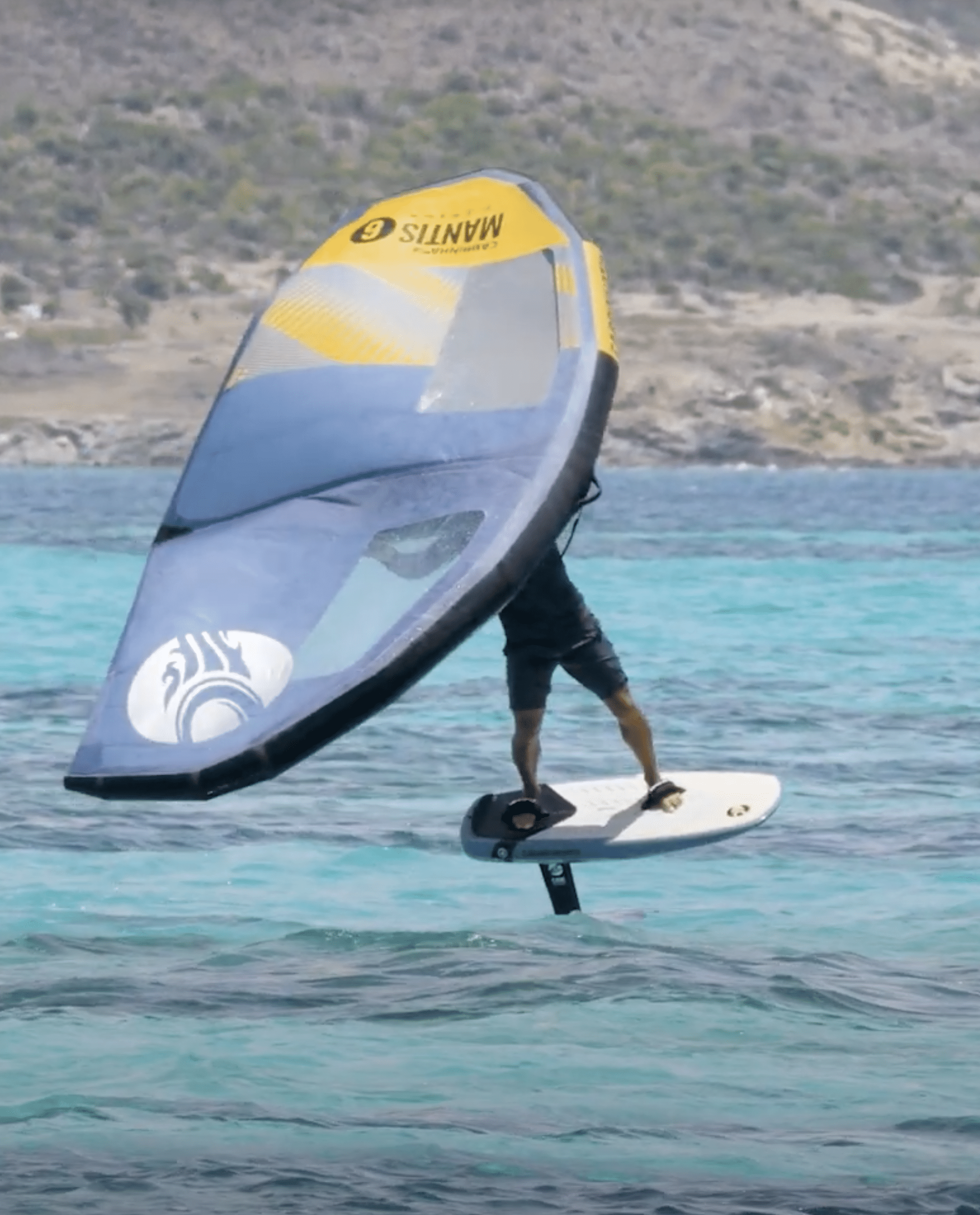
- Height adjustment: Use the foil to control your height during the rotation. Make sure to maintain a constant height to avoid touching the water. You can start with a little more height because as you rotate and lose speed, this greater initial height will give you more flight time.
- Using your legs: Bend your knees slightly to absorb variations and maintain a balanced position.
5. Completing the 360° Rotation and Regaining Speed to successfully perform your 360°
- Finish the rotation: Continue to press on the balls of your feet to complete the rotation. If your board touches the water, it means your turning radius is too wide. So opt for a shorter turning radius.
- Wing adjustment: Pull on the back hand and push on the front hand while heading slightly downwind to regain speed and stability.
Additional tips
Regular practice: if you want to progress quickly with 360s, we advise you to dedicate 20 to 30 minutes in your session and focus solely on this maneuver. There's no secret; concentrated repetition over a short period will facilitate your learning.
Error analysis: Practice identifying and correcting your mistakes to improve your technique. Focus on the wing's position and your foot pressure.
Common errors:
- When I'm upwind (facing the wind), the wing pushes me to the outside of the turn and makes me fall.
Solution: Before reaching upwind, push on your front hand to position your wing above your head and pull on your back hand at the same time. This will allow you to position your wing in line with the wind to prevent it from unbalancing you.
- Rotation too wide and my board touches the water.
Solution: Reduce your turning radius to turn tighter and regain speed more quickly.
Key points for successfully performing a 360° in wing foil
- Start like a jibe; pressing on the balls of your feet to head upwind.
- Tilt your wing by positioning the leading edge towards the water.
- Continue your rotation, when the wing starts pushing you upwind, it's time to push on the front hand again and pull on the back hand. The wing's leading edge will position itself above your head. This will allow you to reposition the wing in a neutral position, enabling you to finish your rotation easily without losing balance.
- Continue to bear away towards the end of the rotation to regain speed and maintain your flight.
Performing a 360 in wing foil is a maneuver that, although slightly technical, becomes accessible with regular practice and good coordination. The key to success in this trick lies primarily in the perfect synchronization of the wing's positioning throughout the rotation. This coordination between the upper body and the wing's positioning is fundamental to maintaining balance and ensuring a fluid rotation.
By mastering these aspects, you will be able to perform 360s with grace and confidence, opening the door to new freestyle possibilities on the water. The goal of this maneuver is to clearly understand the wing's positioning to generate or neutralize its power. So, grab your wing, get on the water, and remember to enjoy the learning process while having fun.
If you still have questions about this, or for any other request, do not hesitate to contact us!