


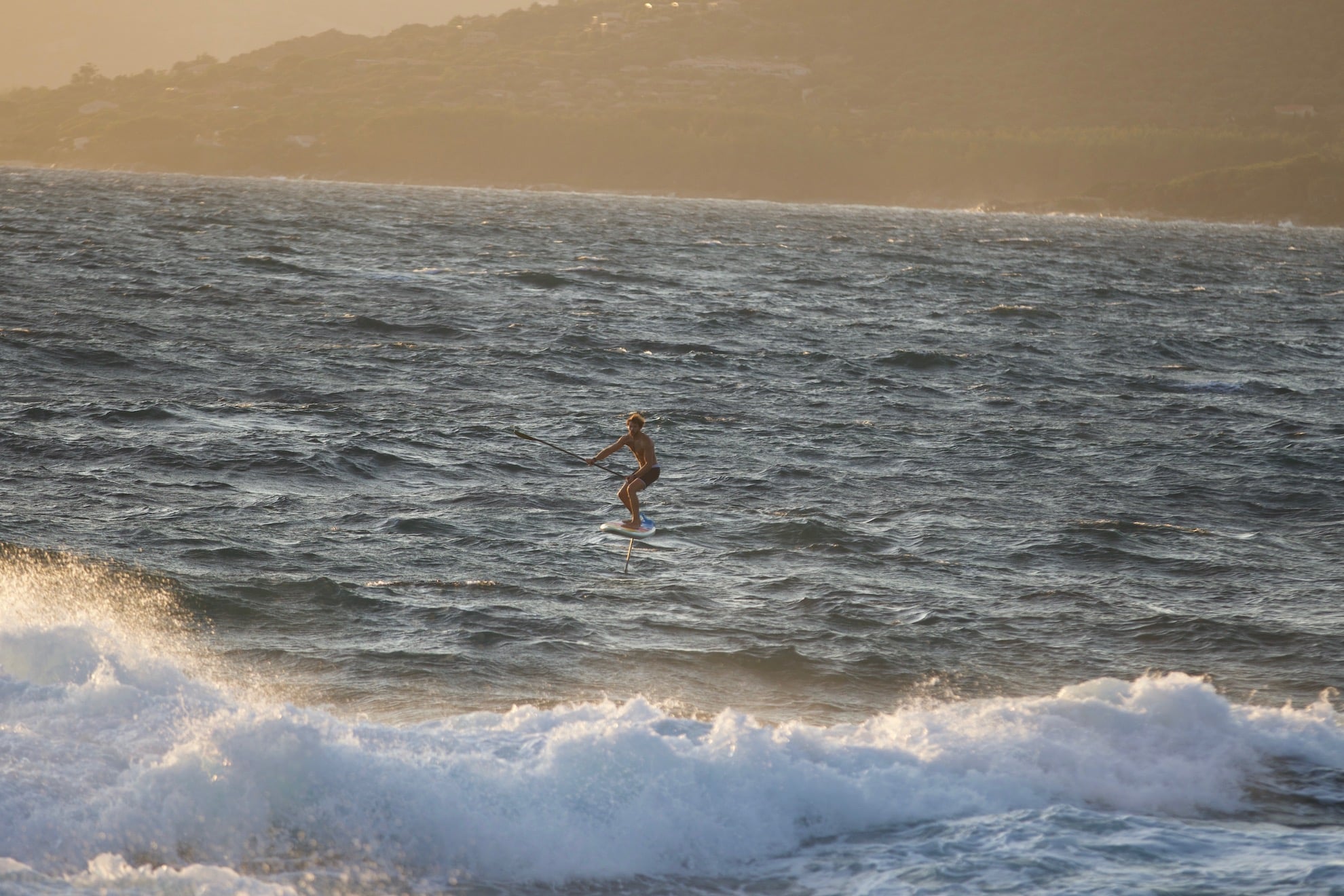
Imagine gliding over the waves, almost as if you're flying above the ocean!
Derived from downwinding, which has been practiced on SUPs for about ten years, foil downwinding involves riding down chop, carried by the wind and swell trains, all while flying!
Downwinding is the definition of freedom; set off with your board and paddle for flights that can last several hours depending on the chosen spot.
The idea in downwinding is not to go as fast as possible or carve as hard as possible; the objective is to glide for as long as possible on the swell, using its energy to propel you forward.
Who can do foil downwinding?
Foil downwinding is accessible through different paths, some more difficult than others and requiring greater experience.
- The wing option: Learning through wing foiling is the simplest. During your wing sessions, find a swell train, put the wing in freefly, and let the wave carry you. As you gain experience, you'll be able to start with a paddle and thus do real downwinds.
- Another option, for more experienced practitioners, is to jump straight into the deep end by starting with a paddle to learn how to manage takeoff and trajectories.
Therefore, everyone can practice downwinding at their own level, and with practice, anything is possible.
1. Getting equipped for SUP downwinding
By definition, downwinding involves riding down the swell, in our case with a board equipped with a foil. It therefore seems obvious that the equipment can have a fundamental impact on downwind practice and is therefore extremely important.
Choosing a downwind board
The choice of board is crucial; it will allow for the quickest possible take-off. The longer and narrower your board, the better its glide will be, and it will allow you to take off even with small swells. However, this also implies reduced stability, which can lead to falls. Opt for flat or slightly double-concave hulls. Some brands offer rounded hulls that are very unstable. Since the boards are not very wide, optimizing stability to maximize your chances of flying is fundamental. This will also increase your useful practice time.
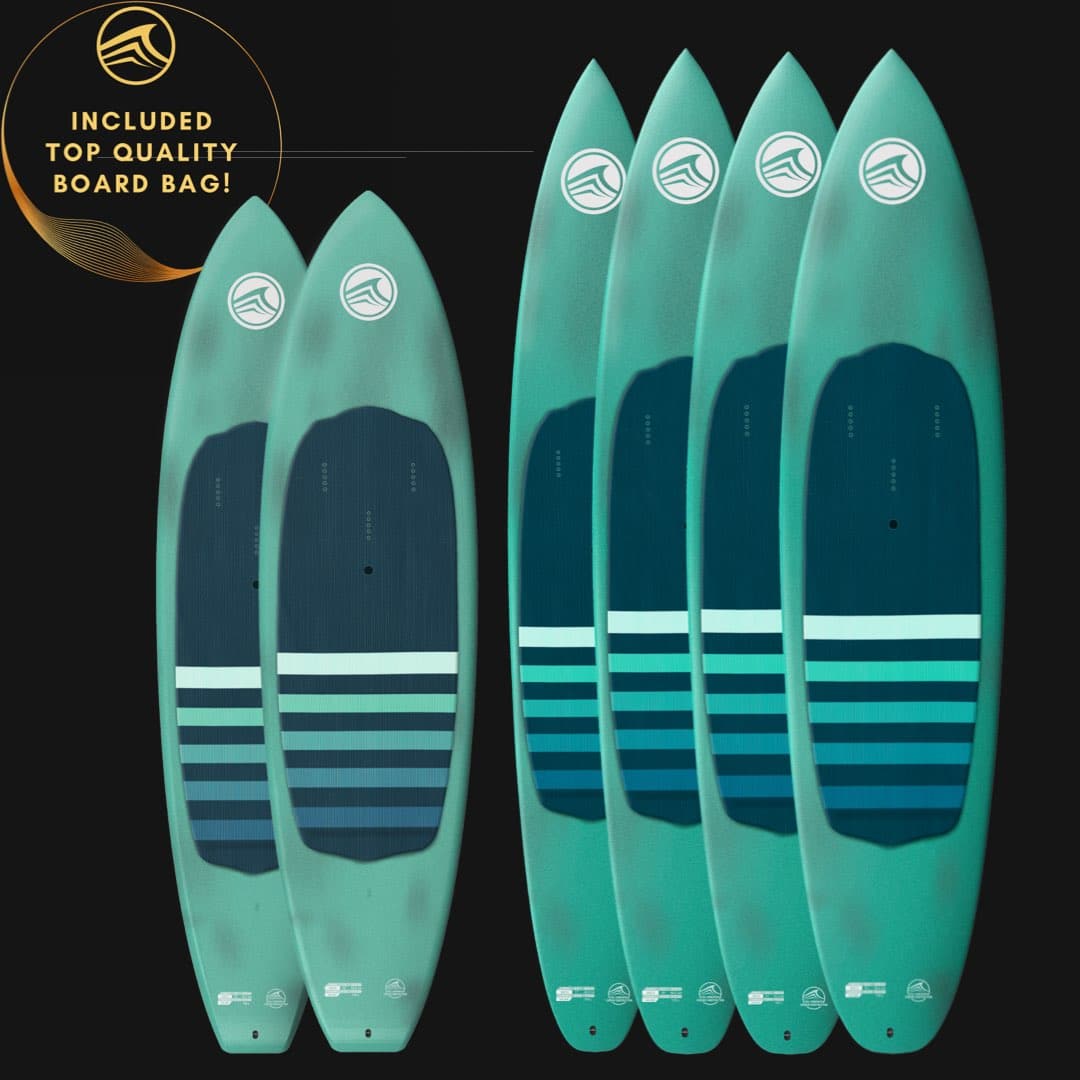
When starting out, it's important to choose a board with a minimum width (don't overestimate yourself) such as our DW 7'2W which is 22 inches wide.
As you progress, your improved balance will allow you to choose narrower boards that are less bulky in the air and, above all, have more glide, such as our DW 7'2 which is 20 inches wide.
For those who want to fully commit to downwinding, we have launched the DW 8'3 range: a specific board for paddle downwinding. We have 4 sizes: 8'3 x 17, 8'3 x 19, 8'3 x 21, and 8'3 x 23.
Last pieces of information to remember about the board. A shorter board will be more difficult to paddle because you will experience "row" (when you paddle on the right, it goes left and vice versa).
So a 7'2 will be perfect if you want to do both wing foiling and downwinding. However, if you want to optimize 100% for downwinding, choose larger boards like our DW 8'3 range.
The choice of foil
The mast:
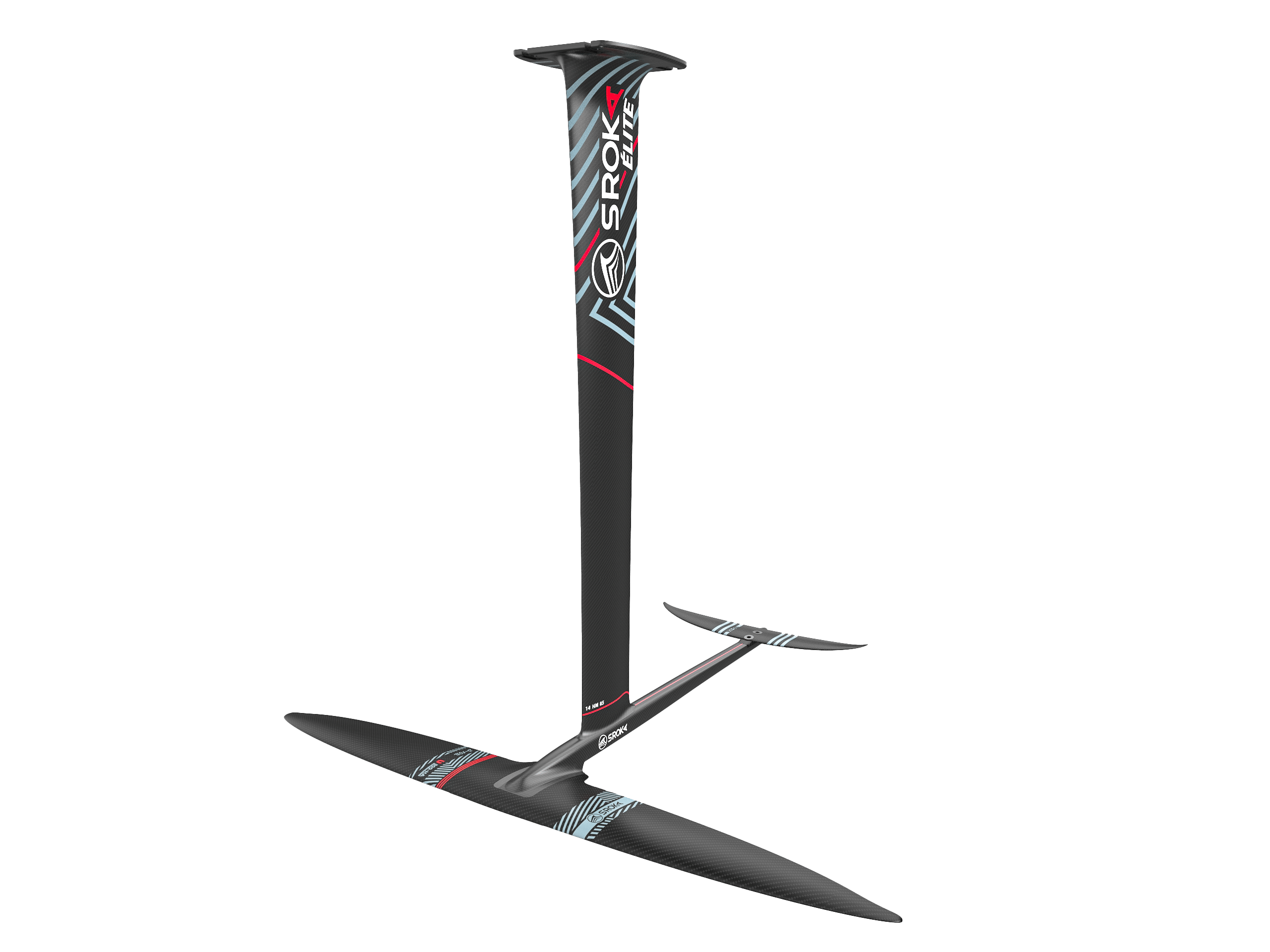
The choice of mast is crucial. The stiffness of a mast is fundamental for maximum control in your turns. The stiffer your foil, the more precise your movements will be. If you have an aluminum mast, a mast over 17 cm will be necessary to accommodate large front foil wings. Conversely, with carbon, you will need the best balance between a very thin and stiff mast. Generally, a high-modulus mast of 14mm (100% high-modulus M40J) will be perfect for downwinding. You will gain glide, finesse in flight, and thus be able to fly longer with less effort.
Front wing size: This is the engine of the foil; the size of your wing will influence your turning ability as well as your capacity to take off early and connect by pumping if necessary. A small wing will be more agile but will have less power for pumping. The choice of this wing is also influenced by weather conditions; when the swell is well-formed and powerful, the surface area of the wing is reduced.
We have launched a range specifically for Downwind. This is the UHA Downwind range. A range of front wings with high aspect ratio to maximize glide.
To start, we recommend using the 1260 UHA, the largest one, to maximize takeoff and flight time. Then, as you progress and depending on your size and conditions, you can reduce the size of the front wing.
Fuselage: The length of the fuselage affects the responsiveness of your foil; it will free up the foil in pitch. A shorter fuselage will make the foil more reactive, maneuverable, and unstable. A longer fuselage provides great stability. It is also possible to find a fuselage where the mast/fuselage junction is set back to allow for more efficient pumping.
The stabilizer: As its name suggests, the goal is to stabilize the foil; thus, a large stabilizer will make your foil more "docile" and a small one more lively. A smaller stabilizer will reduce drag and increase the speed of your foil.
Carbon or Aluminum Foil: Both work very well; it's a matter of budget. An aluminum foil will be cheaper and more resistant to impacts. A carbon foil will be faster and more maneuverable due to its reduced chord and thickness, but it will be more expensive.
An example of an ideal foil for downwinding at SROKA is the UHA 1260 cm2 front wing with an 80 cm mast and a standard fuselage.
The choice of paddle
A carbon paddle will clearly be more efficient. To be most effective, you should opt for a carbon paddle with a minimum of 50% carbon.
If you're not entirely comfortable, wear a helmet and a buoyancy vest or impact vest. The goal is always to have fun, so it's better to avoid getting injured.
Paddle alternative
Recently, a solution seems to have emerged to use a small traction kite connected directly to a small bar to get going very early without having to paddle. This is called para wing. Concretely, instead of paddling, inflate a small wing with the wind, and let yourself fly with this wing. When you want to, fold this wing into a small bag and fly effortlessly.
This alternative is for beginners or anyone who wants to discover the activity with a low technical paddling level.
The ultimate advantage of this parawing solution for downwinding is being able to take off even if you no longer have the strength to paddle. (This can also be seen as a safety feature).
2. Choosing the spot
Don't overestimate yourself; choose a spot with few people to start, and most importantly, stay away from everyone else to avoid colliding with another person.
Choose conditions where takeoff is easy but where the chop doesn't throw you off balance. Find a place where the swell is perfectly aligned with the wind.
Be careful at low tide where there is generally no depth and where the swell may be smaller in some places.
3. Learning balance and stability in foil downwinding
Before hitting a wave, get used to the board's stability. If you are a complete beginner, try paddling on flat water first to better understand how the board reacts. Practice paddling on the same side, always trying to go as straight as possible. This exercise will improve your paddling technique.
4. Efficient paddling technique for Foil Downwinding
The technique differs slightly with a short versus a long board. But the efficiency of paddling is fundamental for an easy start. It is the explosiveness of your movement that will propel you forward quickly and allow you to gain speed and be propelled by the wave.
Practice as in the flat start video. (Even if you can't do a flat start)
Once in the air, a few well-timed paddle strokes can save situations where you risk losing flight, such as losing a swell train or losing balance.
If you have managed to generate enough lift to take off on flat water (or if you feel you are close to taking off), it's time to choose a slope to help you with a wave.
5. Observing the swell and water surface and selecting the right slope.
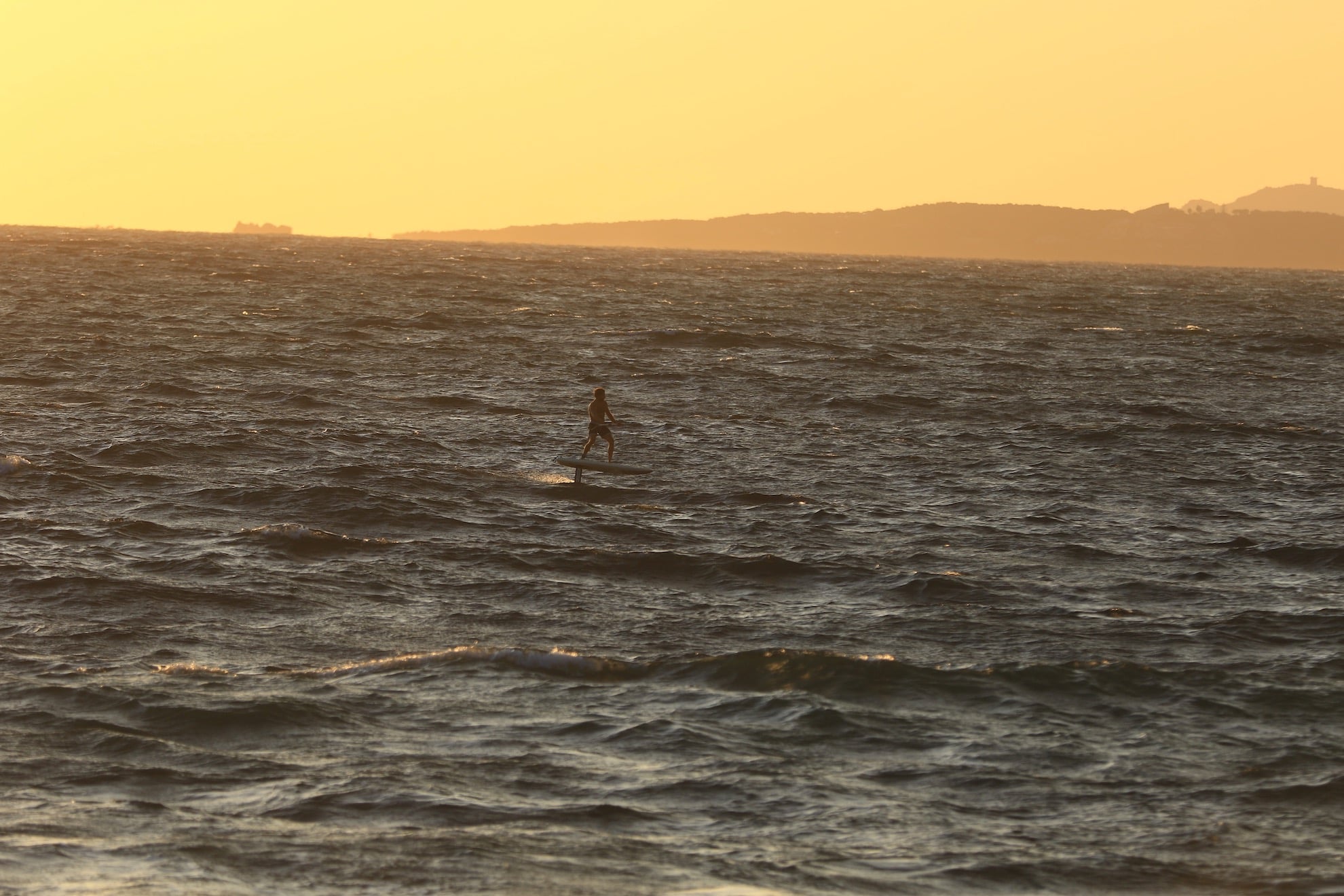
In downwind mode, a large part of your efficiency will come from choosing the right "bump" to take off.
Observe the water surface and choose the right bump (deep enough) to attempt to fly.
Swell "bumps" usually come in series of 2, 3, or 4. Try to choose the biggest one for maximum power to take off. Be as explosive as possible at that moment. You have 2 to 3 seconds to give it your all. If you manage to synchronize your paddling with the slope, you will have enough power to take off.
Bonus! Safety and best practices in downwinding
We already briefly mentioned it earlier, the objective of these sports is purely recreational, there is no need to put yourself in danger to be able to say that you are stronger or weaker than your neighbor. So if you go far from the shore, opt for safety equipment. If you are close to the shore, there is no need.
So if you are going far, it is absolutely essential to equip yourself; a helmet and an impact vest are the minimum.
The best safety is to practice in a group and for everyone to look out for each other.
But to avoid problems, it is ideal to take with you:
- a phone
- a GPS watch (Ultra 2)
- a fluorescent vest
- possibly distress flares
- a tow rope
- A Secumar belt can be a solution. It's a belt that inflates with a CO2 cartridge and a distress flare.
If you still have questions on this topic, or for any other request, do not hesitate to contact us!


