


How to choose your foil fuselage?
When buying a foil, every component needs to be considered. Indeed, all of them are important and will determine your session. In fact, we could almost say that there are as many foils as there are body types, conditions, or different practices. Whether you are a beginner or experienced, or if you want to practice Wing Foil, Surf Foil, Wake Foil, Wind Foil, Kite Foil, or even SUP Foil, each foil component will need to be adapted to you.
The choice of the fuselage on a foil will be a key element to optimize your sessions, turn more, go faster, or be more stable on the water.
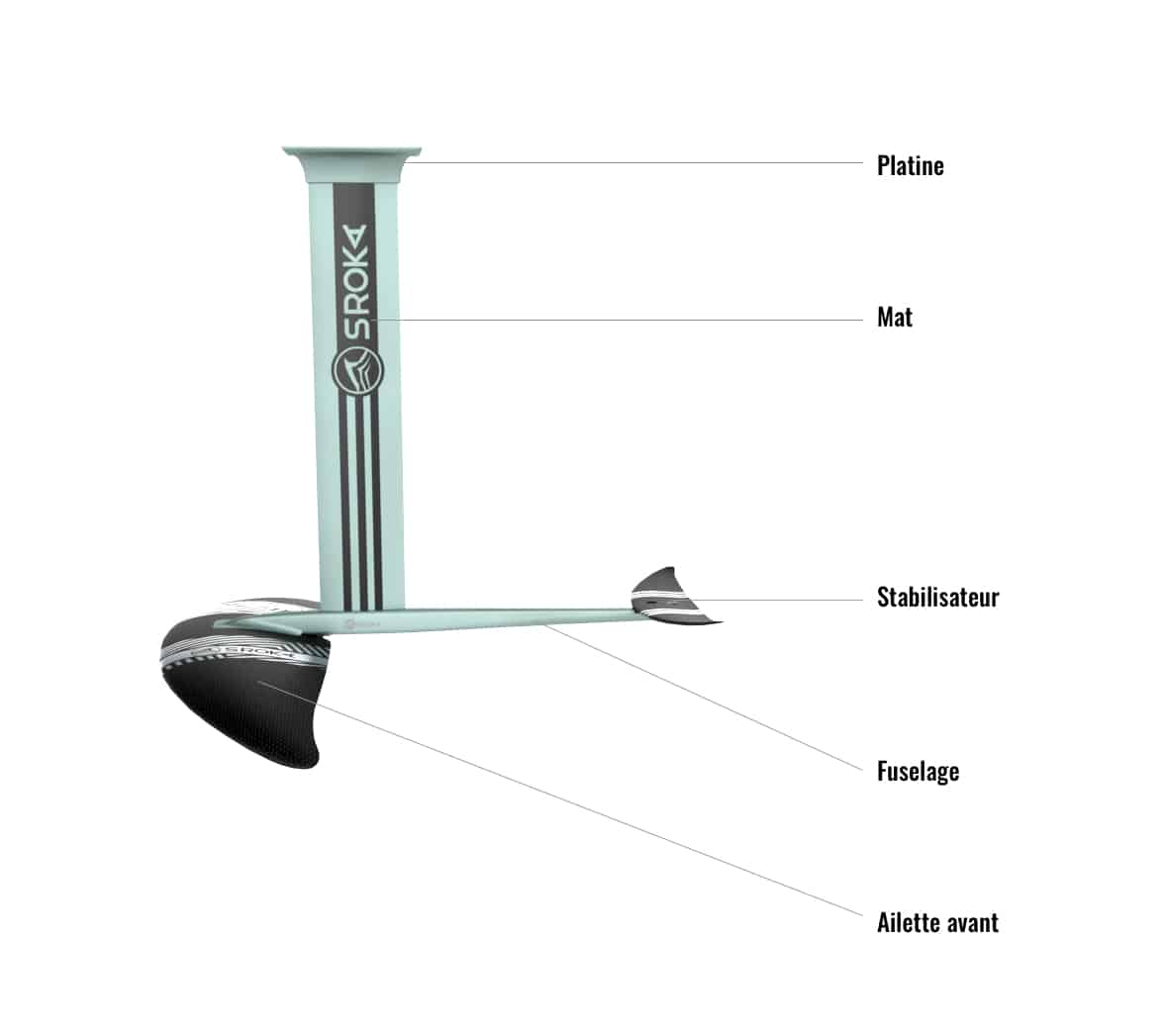
What is a fuselage?
Among these elements, today we are talking about the fuselage and our advice for choosing the one best suited for you. The fuselage is the part that connects your front wing to your stabilizer to your mast, which is itself connected to the board.
Depending on the brand, the fuselage can be directly connected to the mast, or as a separate part, for a fully modular, removable, and interchangeable foil. It can be made of aluminum or carbon for the carbon foil version. This will allow you to evolve your foil according to your desires and needs, without having to completely change your foil. Which will also be an undeniable advantage for your budget.
To understand how a hydrofoil works, we invite you to consult this article. You will find all the information to understand the phenomenon of speed and lift, the importance of the profile and size of each part of the foil… And more.
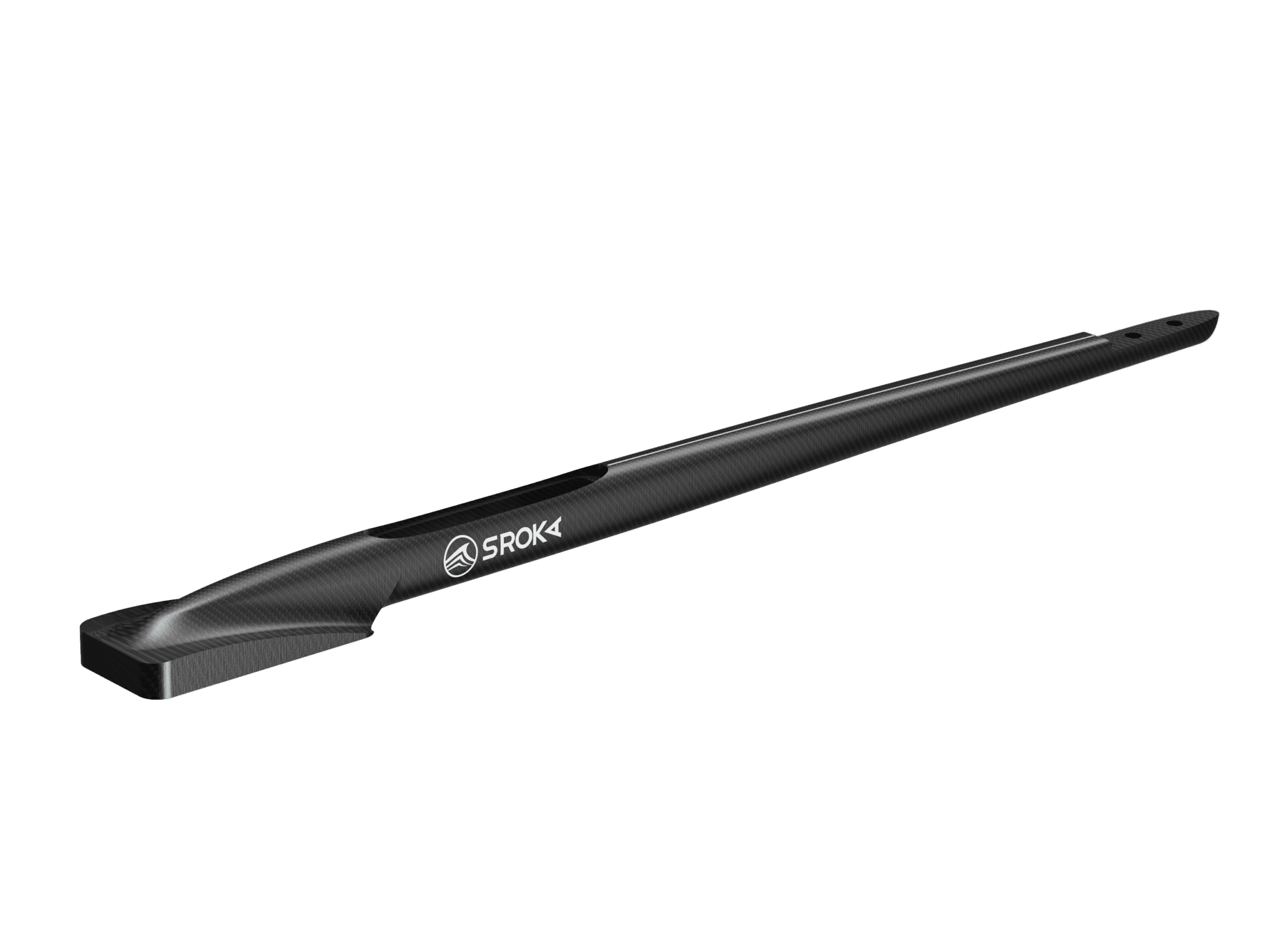
Materials used for a fuselage.
Among these elements, today we are talking about the fuselage and our advice for choosing the one best suited for you. The fuselage is the part that connects your front wing to your stabilizer to your mast, which is itself connected to the board.
Depending on the brand, the fuselage can be directly connected to the mast, or as a separate part, for a fully modular, removable, and interchangeable foil. It can be made of aluminum or carbon for the carbon foil version. This will allow you to evolve your foil according to your desires and needs, without having to completely change your foil. Which will also be an undeniable advantage for your budget.
To understand how a hydrofoil works, we invite you to consult this article. You will find all the information to understand the phenomenon of speed and lift, the importance of the profile and size of each part of the foil… And more.
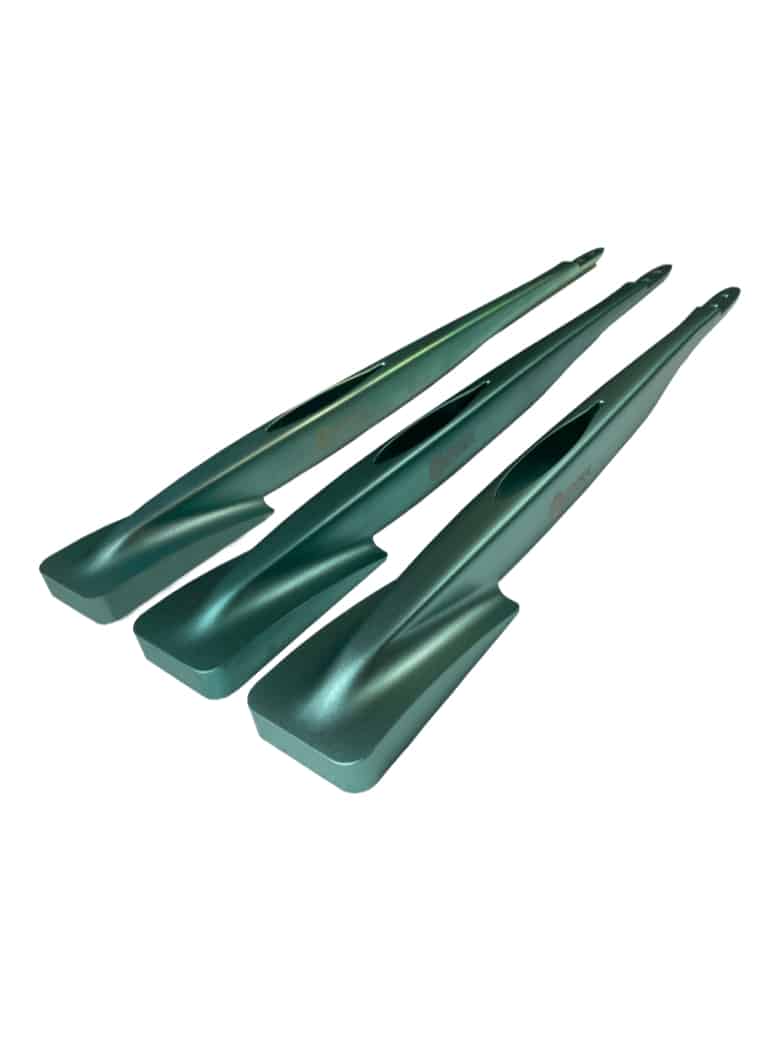
Fuselage thicknesses
We design our fuselages from T6061 T6 aluminum, of German quality. This noble component is a reference in the aerospace and maritime world, guaranteeing strength and resistance to the marine environment. Our goal is to achieve the highest quality and irreproachable reliability, so we surround ourselves with hydrodynamic experts who always strive to use the best materials. This aluminum fuselage is therefore for us the best quality-durability-price ratio.
The interlocking of our front wing on the fuselage ensures maximum rigidity and avoids many adjustment problems. The mast being very close to the front wing, the lever arm around the fuselage is small, which allows for reduced thickness and thus better hydrodynamic glide.
If the mast joint is far from the front wing, the fuselage will be thicker to ensure maximum rigidity during fuselage twists.
The length of the fuselage
The length of the fuselage will determine the longitudinal stability of the foil and its maneuverability. Depending on your needs, it will be necessary to adapt.
Currently, we have 4 fuselage sizes: 56 cm, 62 cm, 68 cm, 78 cm in aluminum.
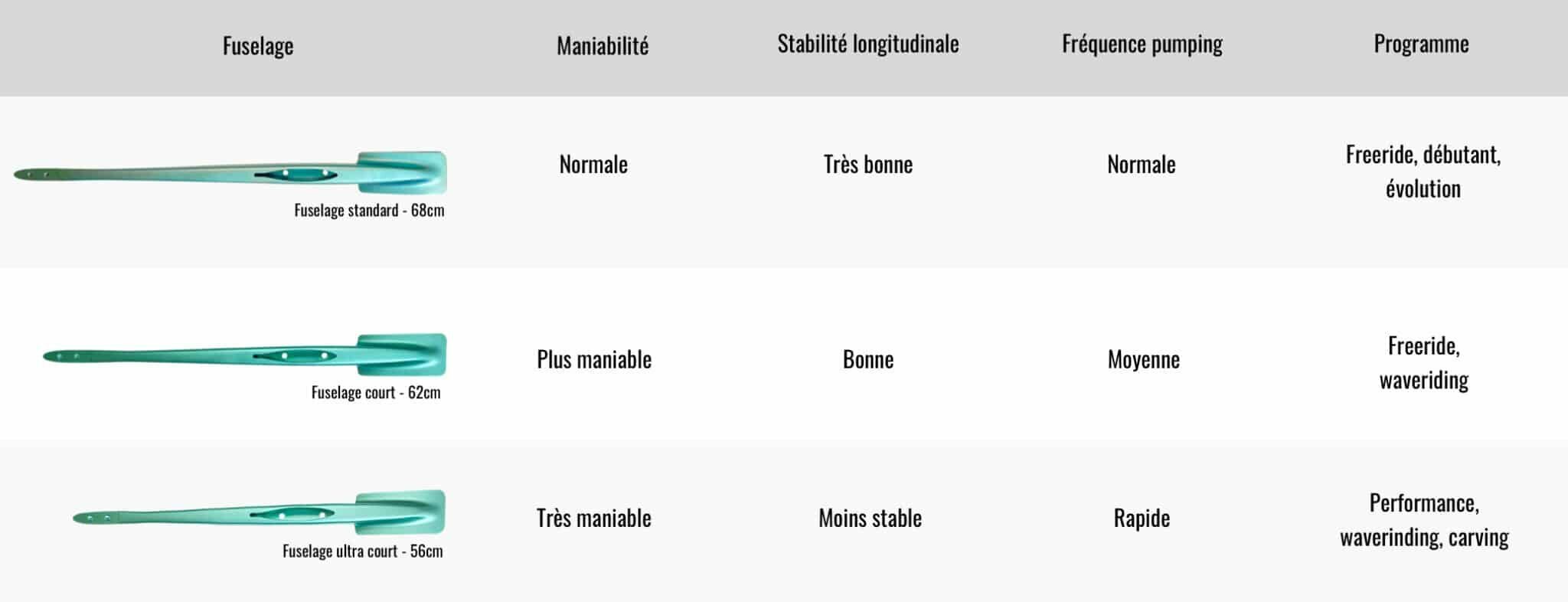
Depending on your level, you need to choose the right fuselage size.
1- A beginner will choose a longer fuselage to stabilize their foil longitudinally and facilitate flight control. The longer the fuselage behind the mast, the more stable the foil will be. However, the foil will be less maneuverable in this configuration. It will also be harder to pump because pumping requires oscillating the foil up and down. (All of which a beginner does not need)
2- From an intermediate level, you can reduce the length of the fuselage. This will make the foil livelier, more maneuverable, and less stable. It is very interesting to choose this option in waves to increase the maneuverability of the foil. On the other hand, if you are looking to go very fast, opt for a long fuselage.
Depending on your activity.
Indeed, depending on the discipline practiced, the length of the fuselage differs. A short or very short fuselage will be very appreciated in wake foil because the boat's wake is very short and therefore you need to turn quickly on yourself. Similarly, in surf foil, a short fuselage will allow for better turning of the foil and facilitate pumping.
On the other hand, if you are looking to go fast, push your speed limits, or simply cruise easily, a longer fuselage will work much better.
It's not the only element.
If you want to increase the maneuverability of a foil, the fuselage is certainly an element, but you must not forget the other elements: the span of the front wings, the span of the rear wings. Indeed, a wing with a high aspect ratio will turn less well than a more compact front wing. A large stabilizer will be less maneuverable than a smaller stabilizer.
So, to exploit all the advantages of a short fuselage to increase maneuverability, you must combine it with a smaller wing or a smaller stabilizer, or not.
- If you reduce the front wing, the stabilizer, and the fuselage, you greatly increase the maneuverability of the foil.
- If you keep the same front wing and reduce the stabilizer and the fuselage, the maneuverability will be slightly less but you will be more stable.
- Last configuration, you keep the same wings and only change the fuselage. In this case, maneuverability will increase compared to a configuration with a longer fuselage, but less than the first two examples.
If you want more information on how to make your foil more maneuverable, click on the link.
In summary, the choice of fuselage depends on your needs and what you want to do. If you want to increase maneuverability and have a more playful foil, then change your fuselage.
If you want to maintain the longitudinal stability of the foil but increase maneuverability, then you need to change the front or rear wing, not the fuselage.
You can configure the options infinitely. First, determine what you are looking for, and you will be able to customize your foil as you wish.