


A whole session without touching the water, that's the promise of the jibe. Jibing allows you to turn around and provides an exhilarating sensation of acceleration. It's also the fundamental maneuver to start having fun on the swell and tackle your first waves in WingFoil. Moreover, mastering this technique will improve your Wing waveriding, and allow you to perform Bottom Turns (half-jibe) on a wave. Once mastered, the jibe allows you to link surfs and tacks, never leaving the pleasure of flying. Wondering how to perform your first jibe in Wing Foil? Here are our tips.
Just like in Windsurfing, jibing in Wing-Foil allows you to turn around with the wind at your back. This maneuver is learned before tacking because it is easier to do. Before starting, choose a flat body of water, without too many people, with 15 to 20 knots of wind, and no offshore wind. Also, it will be easier to start without straps. You are more mobile to correct your mistakes and thus correct any potential missteps on the board.
To successfully jibe in WingFoiling, there are two essential methods. The Regular Stance or Jibe to Switch, which requires changing your foot pressure once the turn is complete. It is also very simple because you attack the turn facing the wing to exit backwards. The second method is the Switch Stance or Switch to Jibe, which requires reversing your feet before initiating the turn. This jibe is the most accessible, as you don't have to worry about swapping your feet at the end of the turn. However, it remains very personal. You may be more comfortable performing a standard jibe on one side and a switch to jibe on the other. It's up to you to test both to see which one is easiest for you.
How to jibe in Wing Foil?
Before explaining these two methods in detail, here are some fundamental rules:
- Jibe on your natural stance (goofy or regular).
- Look around carefully to avoid an accident by lifting the wing to see the trajectory in front of the leading edge or by putting the wing in "umbrella" position.
- Check the wind direction and your speed before committing to the maneuver (a jibe will always be performed from broad reach to broad reach).
- To switch your feet with as much balance as possible, position the wing slightly above your head to better see your trajectories.
- To switch your feet, pressing on the back leg will raise the foil and thus give you a little more time to swap feet.
- Initiate your jibe by pressing on the board on the inside of the turn.
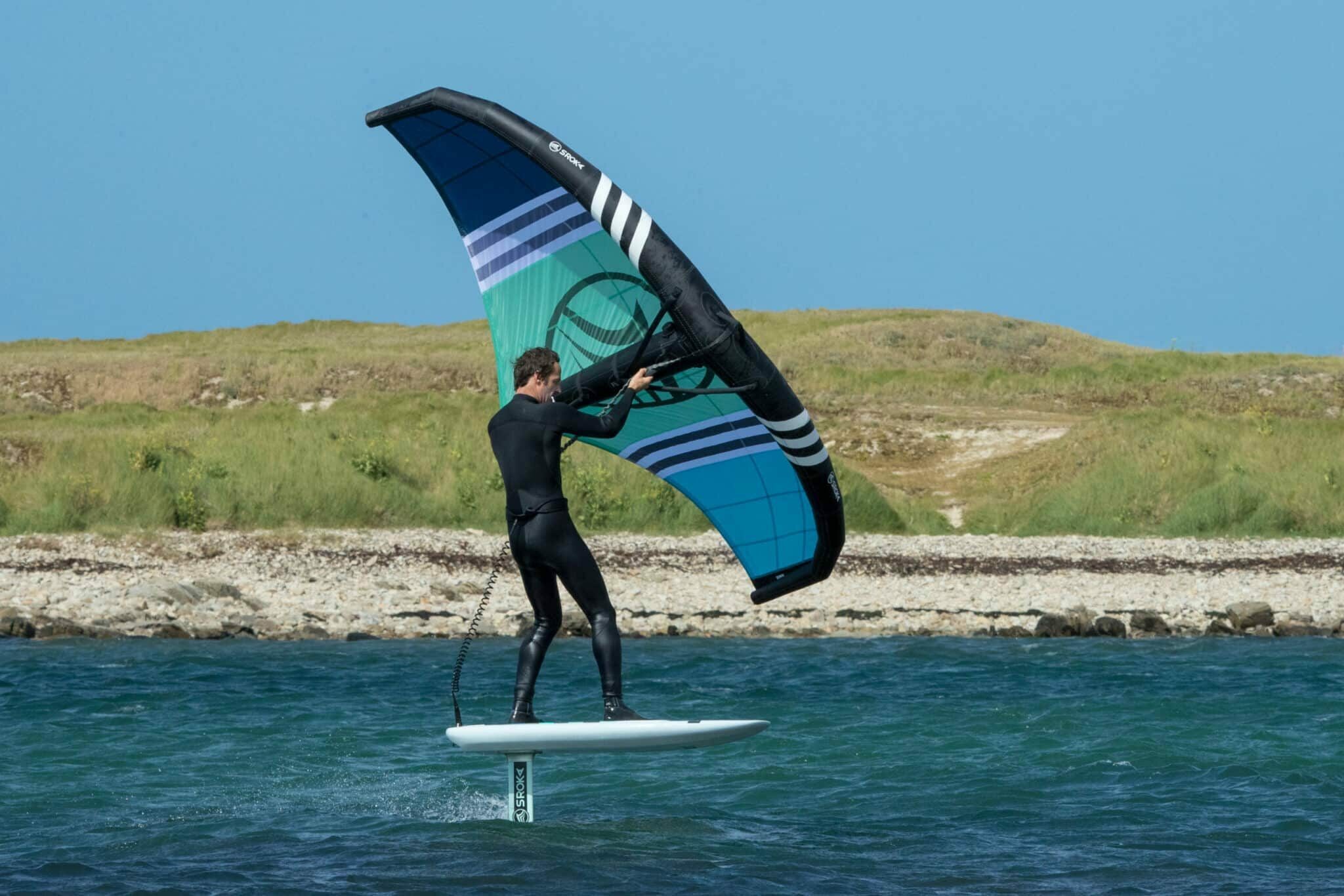
Method 1: Jibe to switch
To perform this maneuver, you need to switch your feet at the end of the turn. You will press on your toes to initiate the turn.
1. Starting Position
To start, you need good speed. You should be flying, stable, with crosswind. The foil is not too high on the water, to prevent it from stalling during the maneuver. Feet are positioned along the longitudinal axis of the board.
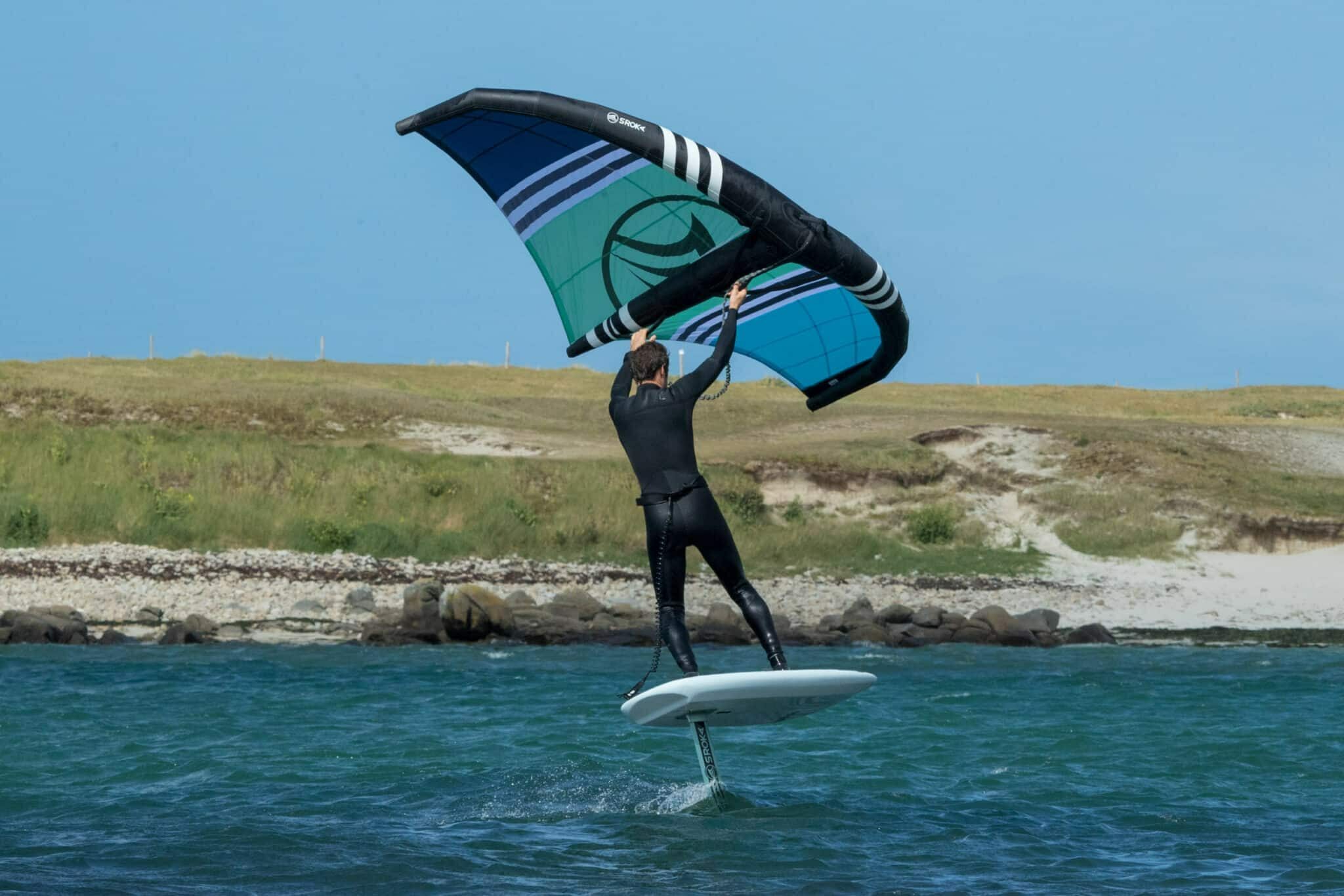
2. Initiating the turn
Bear away slightly while transferring body weight to the balls of your feet. The board then leans towards the center of the turn, moving away from the wind. The wing gradually rises, almost horizontal, above your head. Your feet remain well aligned with the board's longitudinal axis.

3. Changing wing side
Once you've reached downwind, or slightly past the wind axis, start by adjusting the position of your front hand. Initiate a wrist movement to pivot the wing. Then, release your back hand. Rotate the wing with your front hand. The free hand becomes the back hand. It takes hold of the wing again and provides power. Throughout, maintain pressure on your toes to continue engaging the turn and gradually approach a broad reach, then a crosswind.
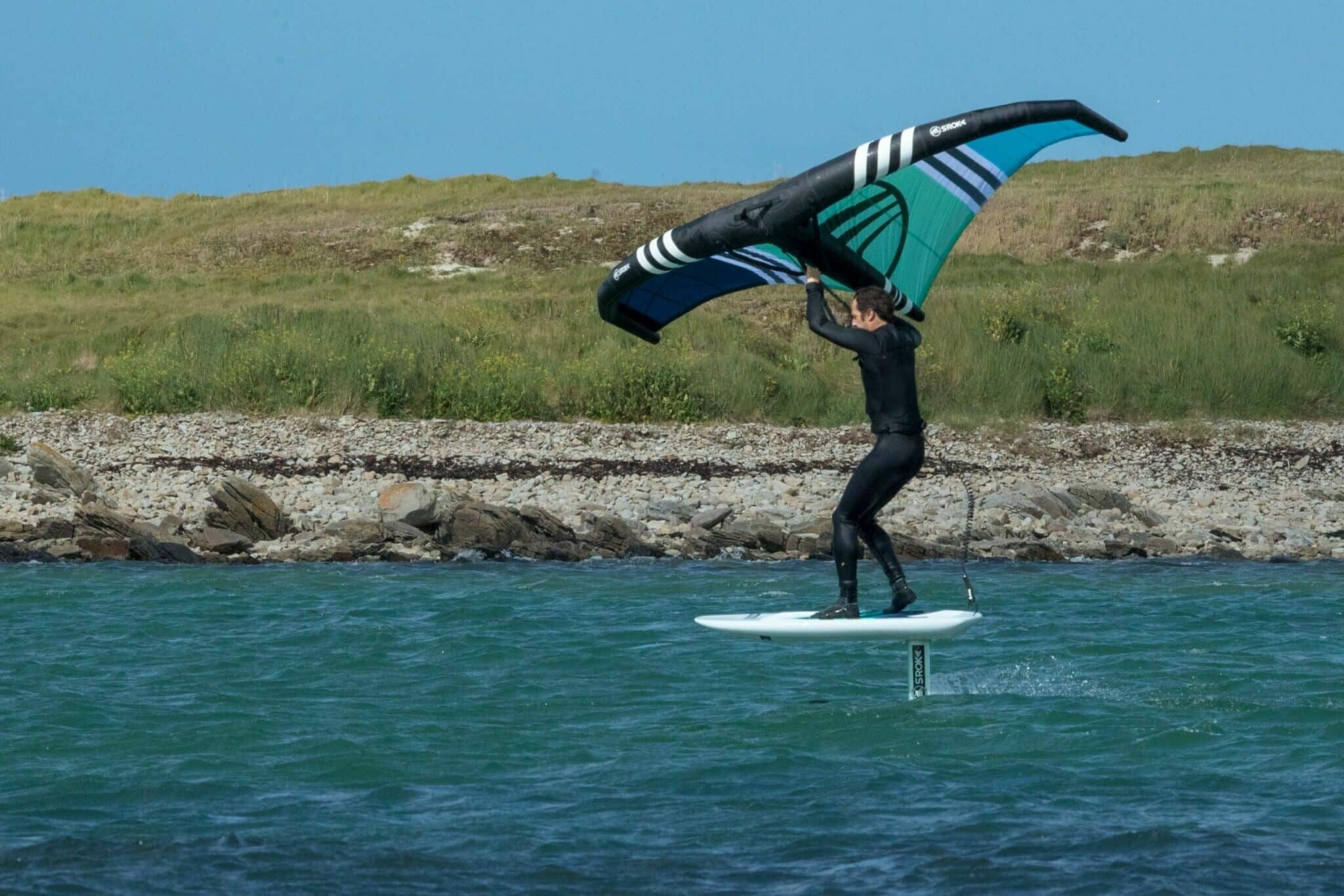
4. Foot position change/switch
We have passed the wind axis. The wing is on the correct side; all that remains is to reposition our feet. Above all, don't forget the small push backward to gain height before the permutation and thus lighten our pressure on the board. Then we perform the switch, taking a shuffling step to swap the front and back feet. The feet must remain centered on the board.

5. End of turn and relaunch
Now we need to regain speed. The feet return to their initial position. The wing tilts towards the water. You can pump a little to relaunch the board and pump with the Wing if necessary.
In summary
- Start your jibe with good speed and a crosswind.
- Tilt the board towards the water, with the wing horizontal above your head. Initiate the turn.
- Adjust hand positioning once you reach downwind, to pivot the wing, while continuing to engage the turn.
- Perform the switch. Don't forget the little push on the back to gain height before swapping feet.
- Relaunch at the end of the turn by pumping.
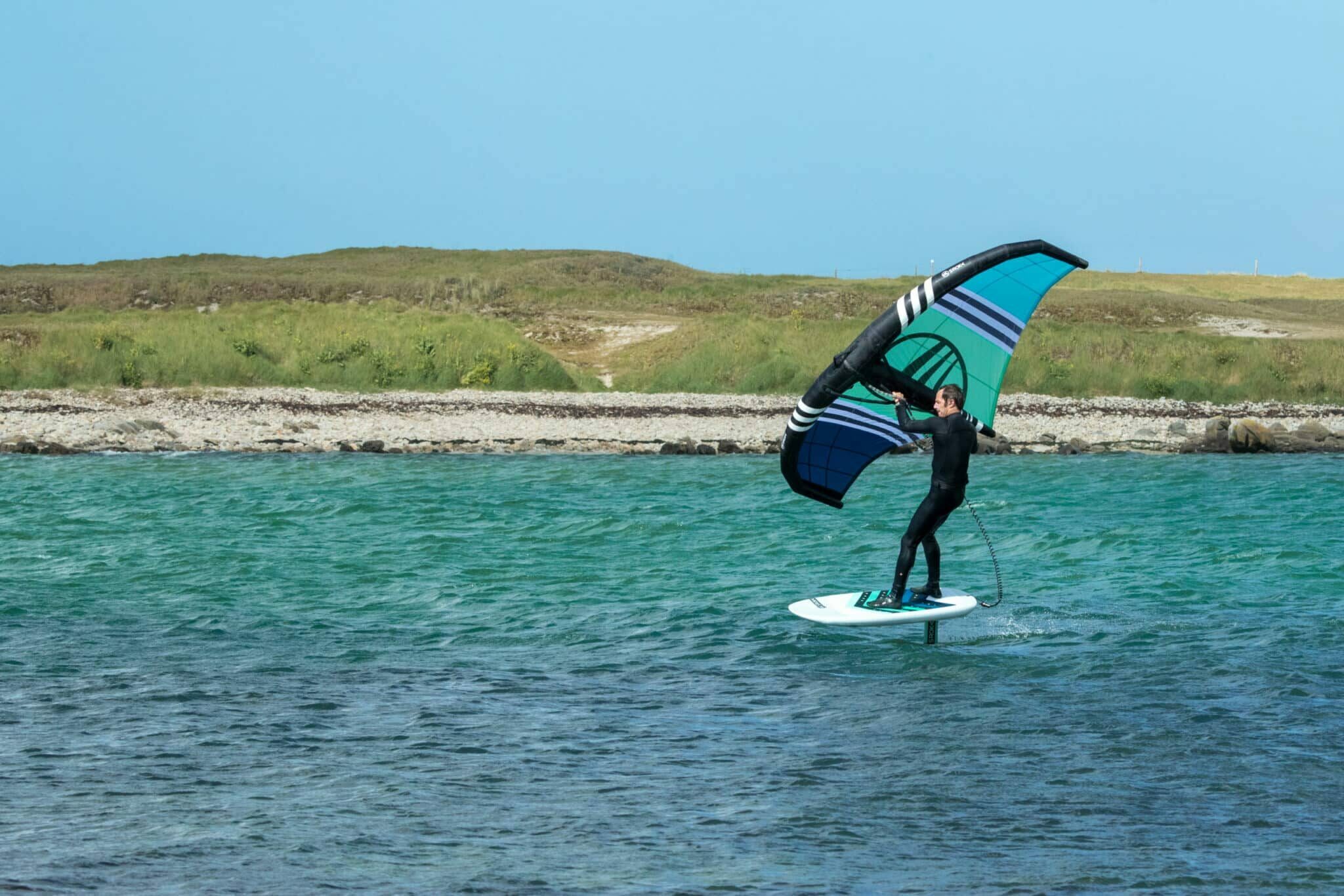
Method 2: Switch to jibe
This technique involves swapping feet before the turn. After taking a shuffling step forward, you exchange the back foot and the front foot. You press on your heels, lifting the wing above your head to initiate the turn.
1. Starting position:
This is the same as for the first maneuver.
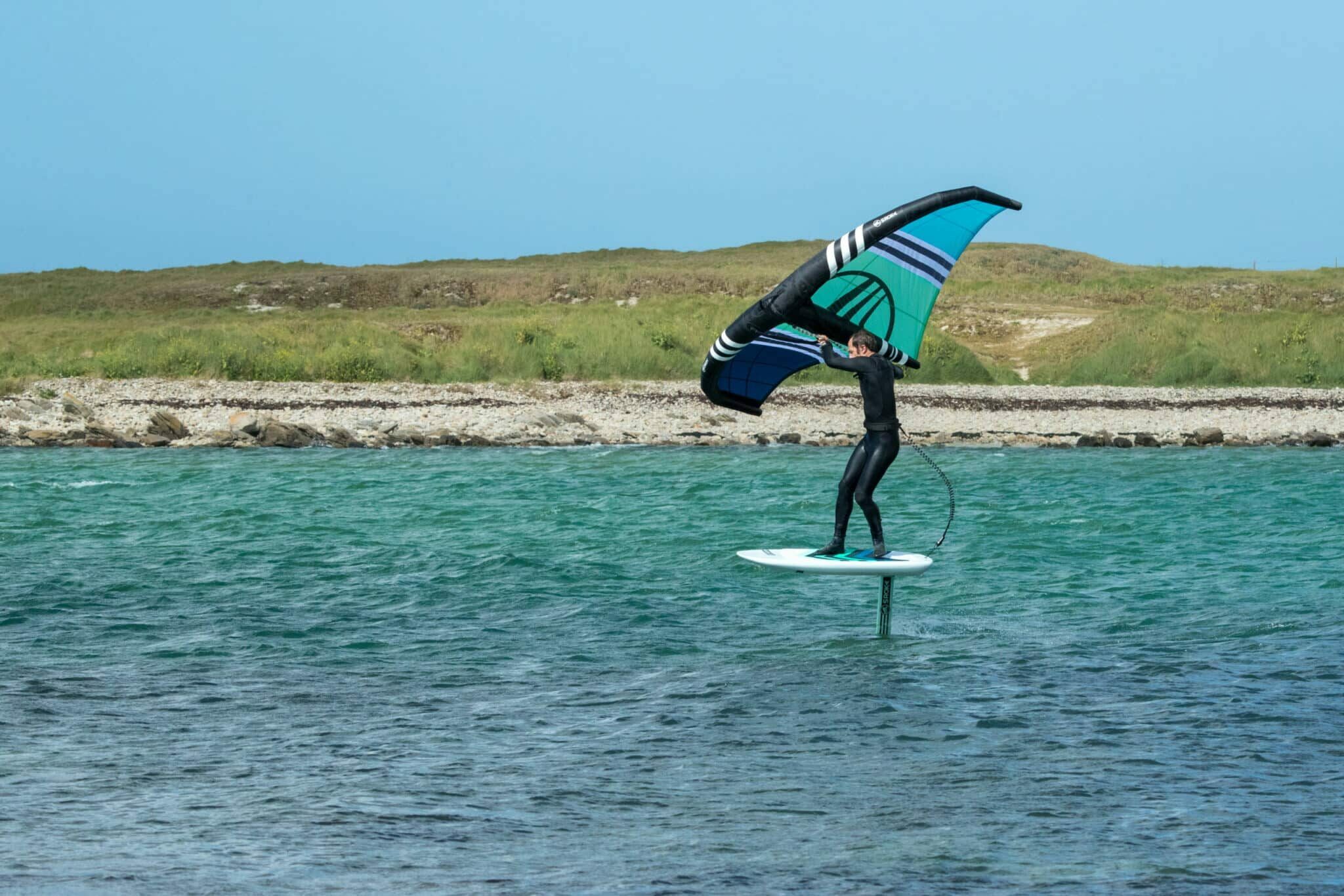
2. Changing foot position/switch:
Just before switching stances, give a small push on your back foot to lift the board upwards and thus lighten your foot pressure. At this precise moment, swap your stances on the board (during the ascending phase of your board). Your board will tend to nose-dive as your center of gravity has shifted forward (hence the importance of raising it, which will give you a little more flight time). This step will guarantee you height and facilitate the relaunch. Once the impulse is given, you perform a shuffling step forward. The positions of the two feet are inverted. You end up with both heels towards the wing (downwind). Balance is better if the position of the front foot, slightly downwind, (and the back foot slightly upwind) facilitates entry into the turn.
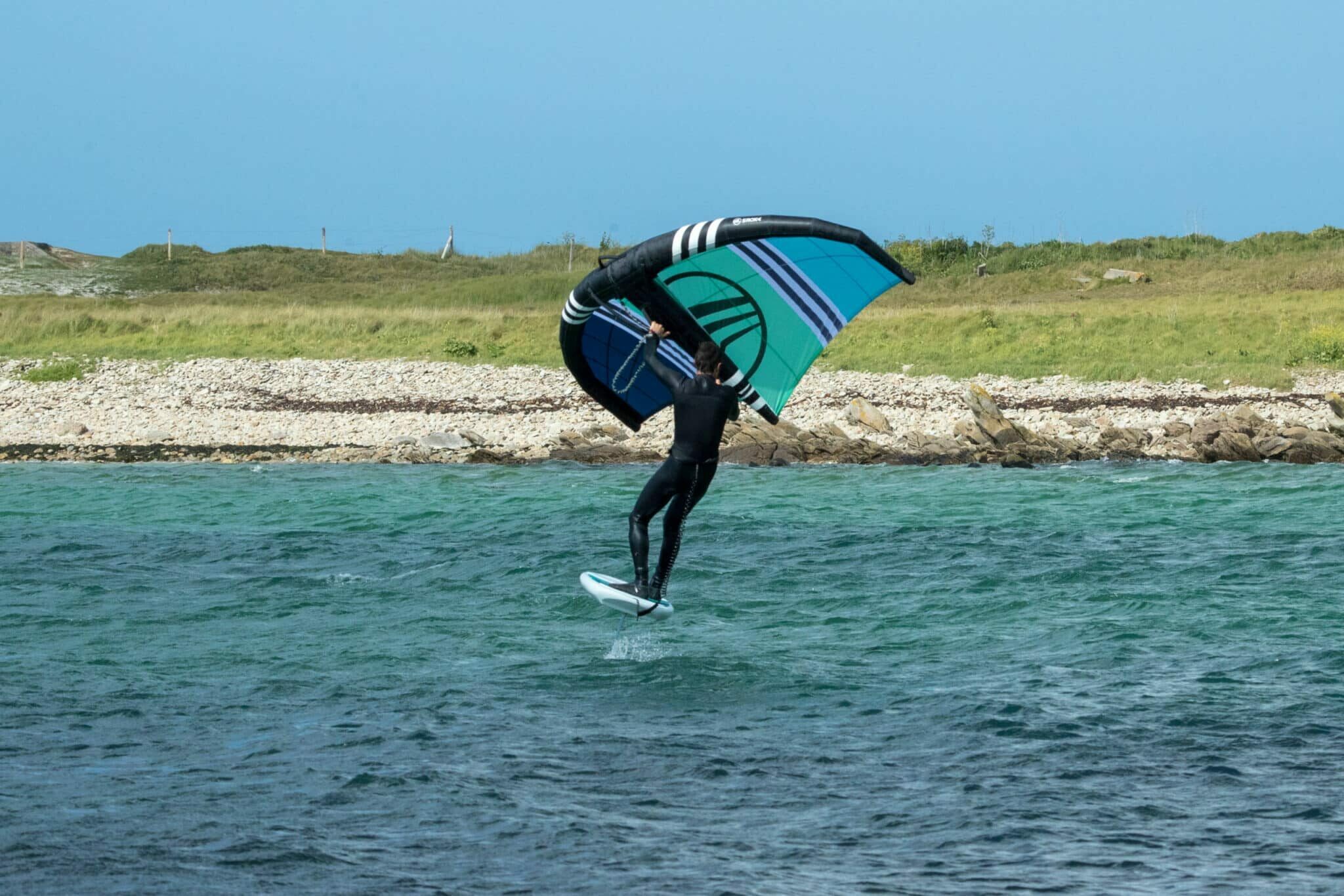
3. Initiate the turn:
Press on your heels to initiate the jibe. The board turns away from the wind. Gradually raise the wing above your head, until it is almost horizontal. The turn should be constant and wide. This allows you to maintain speed until you exit the jibe. You then feel a great sensation of acceleration when everything works well. Throughout the trajectory, maintain pressure on your heels, not your toes, to continue engaging the turn.


5. End of turn and relaunch:
Now you need to regain speed. Your feet return to their initial position. The wing tilts towards the water. You can pump a little to relaunch the board. Keep your gaze forward, not on your feet, to better control your trajectory.
In summary
- Start your jibe with good speed and a crosswind.
- Switch your feet after giving a small push on your back foot to lift the board upwards and thus lighten your pressure.
- Initiate the turn by pressing on your heels and gradually raising the wing above your head, until it is almost horizontal.
- Change the wing side by swapping hands.
- Relaunch speed at the end of the turn.
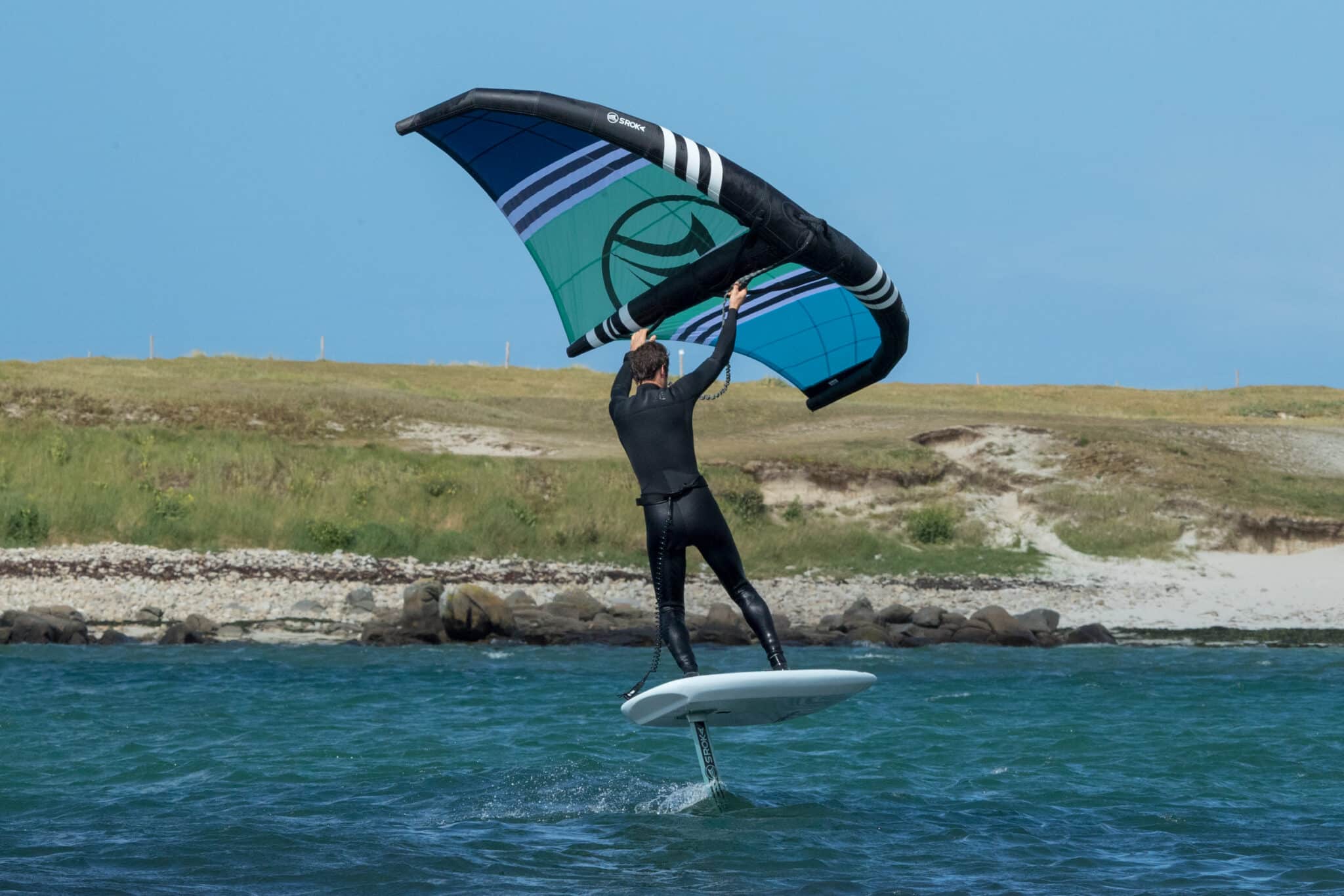
How to train
- To practice the switch: on one tack, practice switching your feet without jibing, and sail in that position. (Don't forget to raise your board upwards before initiating your switch)
- To practice your turn trajectory: initially, you can initiate the first part of the turn, then return to the crosswind trajectory and repeat several times without swapping your feet. Practice making 'S' shapes on the water, focusing on changing the wing's side.
- To practice wing rotation: without swapping your feet, practice making 'S' shapes on the water, focusing on the wing's positioning.
Advanced tips/pro tips:
- Look ahead to anticipate your trajectory. (Your gaze directs your trajectory)
- Enter the turn with the wing slightly oversheeted/with a little more power than necessary. This allows you to have enough speed to finish the maneuver.
- A little pumping at the exit of the turn helps relaunch the board and flight and compensate for lost speed.
- You can tighten the turn by accentuating your pressure on your heels or toes. You'll have more speed and a greater sensation of acceleration. So you need to think about losing as little speed as possible during the turn.
If you still have questions about this, or for any other request, do not hesitate to contact us!