


5 tips for practicing Sup Foiling
Imagine gliding over waves, almost as if you're flying above the ocean!
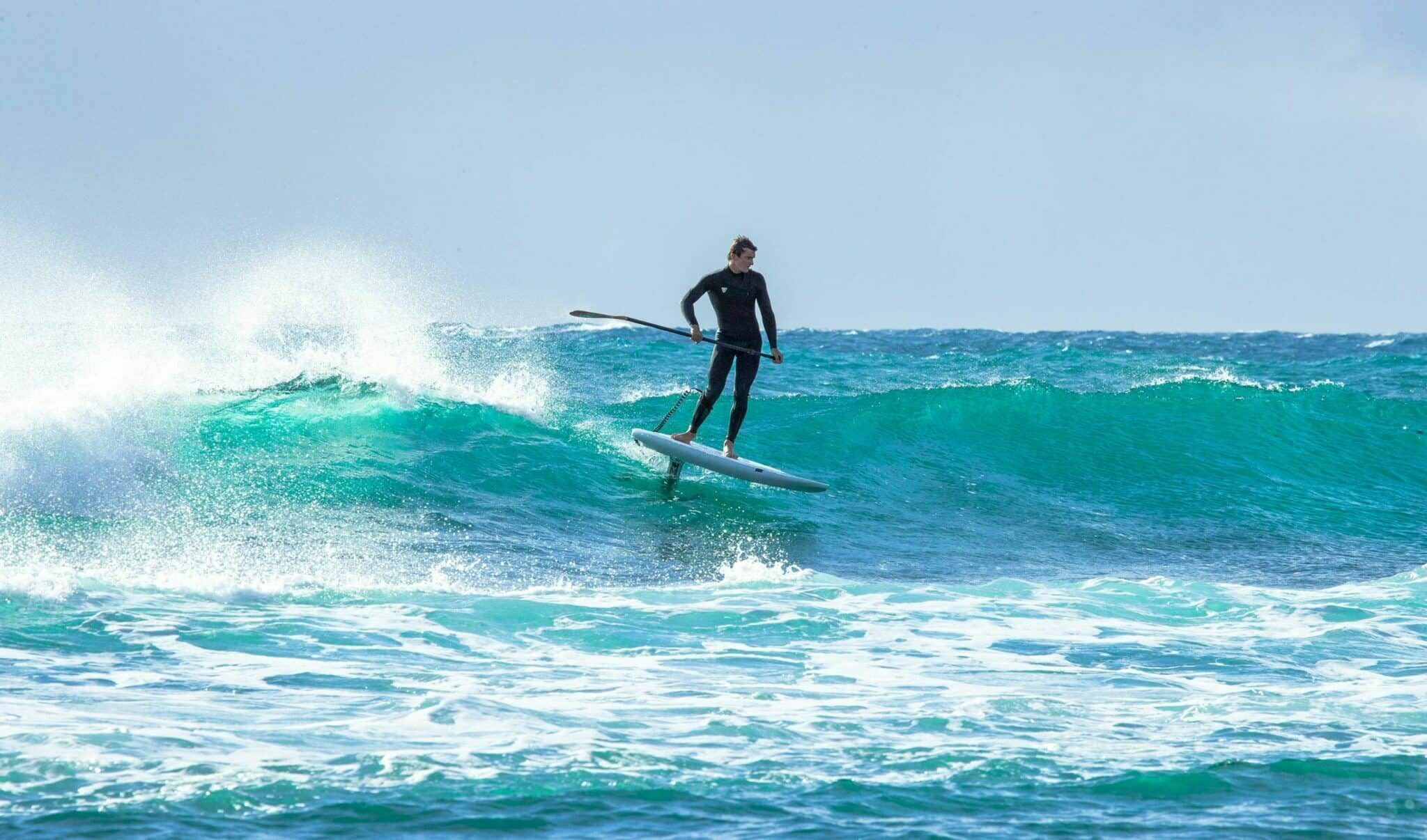
SUP Foiling is a mix of paddleboarding and foiling. SUP foiling, also known as stand-up paddle foiling, is an activity where you surf waves with a stand-up paddleboard equipped with a foil underneath. The foil is an "underwater airplane" that flies underwater and uses hydrodynamic flows.
Surfing with a surfboard in gentle waves isn't very pleasant. However, such waves are perfect for Sup foiling. A gently sloping, round wave will be ideal for foiling. There are different disciplines in Sup foiling:
- there are beach waves that can be Sup foiled and
- there is Downwind foiling.
In this article, we will only talk about Sup foiling. Here are some tips for getting started and essential points to know.
Who can do Sup foiling?
SUP Foiling requires little prior expertise in paddleboarding or foiling. It is a discipline that is quite easy to learn, allowing beginners to discover the joys of foiling. Indeed, learning SUP Foiling is generally more accessible compared to other disciplines in the world of foiling. This practice not only offers the discovery of the foiling environment but also allows experienced surfers to discover a different way of reading waves. To start Sup foiling, you can begin by being towed by a boat. This simplifies learning by being pulled by the boat.

Tip 1: Choosing your equipment for Sup foiling
1. How to choose your stand-up paddleboard for sup foiling?
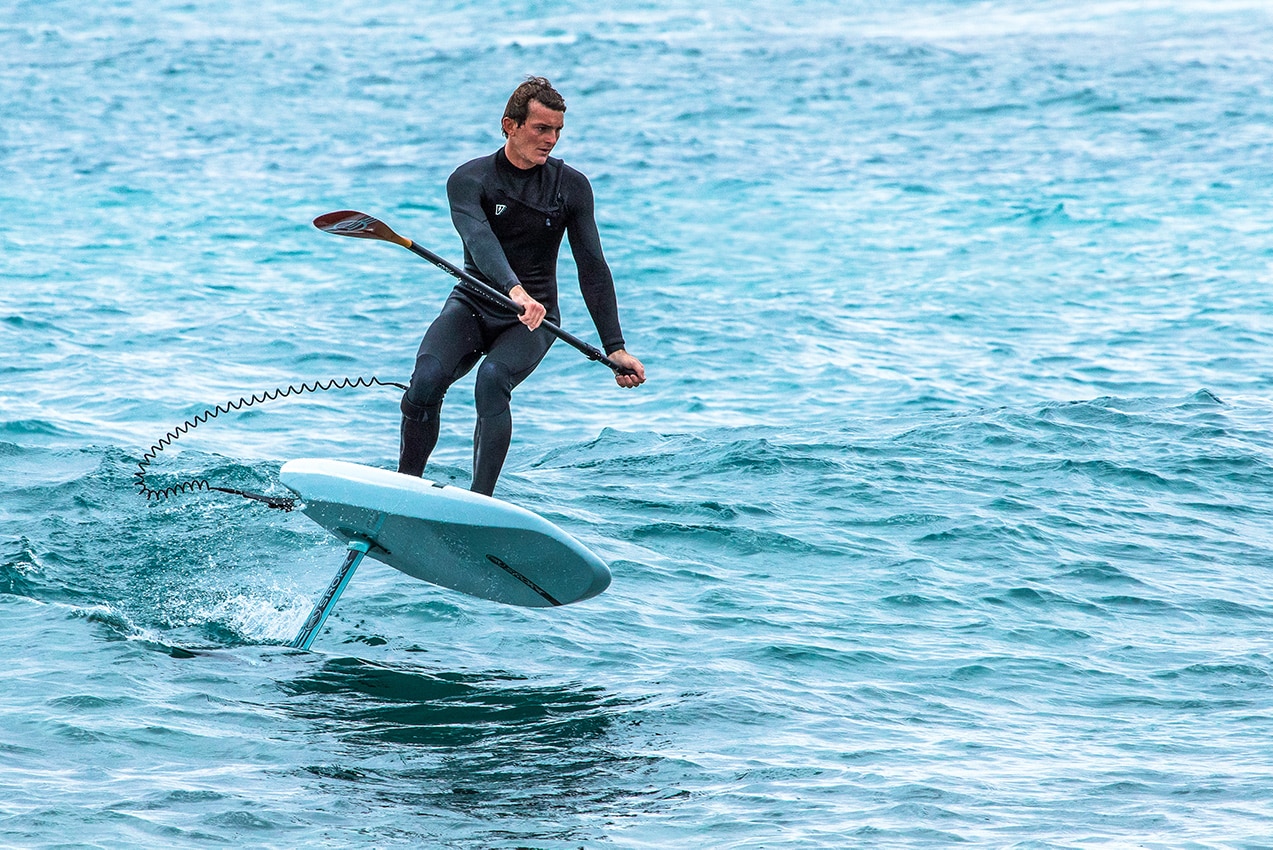
SUP Foiling involves surfing on a paddleboard equipped with a foil (or wing) below the surface. You cannot use a standard paddleboard unless you modify it. Ideally, hardboards are much more efficient. Generally, sup foil boards are much smaller than regular Sup boards. The board only serves to stand on and hold the foil. This foil, attached to the mast, allows the board to rise above the water as you gain speed, much like an airplane. Of course, you shouldn't forget the paddle. So, let's detail point by point.
A beginner will look for a bit of board length to glide and start earlier. Unfortunately, this type of board will have some inertia and won't be very reactive for the best riders. A suitable size can range from 6'3 to 8 feet. These are boards with some width to maximize stability.
The good rider will use a shorter board to maximize turns and reduce wingspan. The boards will be narrower and will start much earlier when paddling, but require more balance.
If you perfectly master sup foiling, go for thinner boards to maximize glide and reduce drag.
2. Choosing your sup foil
The mast: Generally, the mast is between 60 and 80 cm. Indeed, if you are on a beach break, the waves don't break very far, so prefer a shorter mast.
Front wing size: To start, a wing of 1250 cm2 or even 1500 cm2 can be a good alternative for beginning sup foiling with a fairly compact shape like the control range to gain maneuverability.
Fuselage: A short fuselage will provide more maneuverability, while a long fuselage will provide more stability. So, for beginners, choose a 68 fuselage to gain control and stability.
The stabilizer: A large stabilizer stabilizes your foil. A smaller stabilizer makes the foil perform better and more maneuverable.
Carbon or Aluminum Foil: Both work very well; it's a matter of budget. An aluminum foil will be cheaper and more solid on impact. A carbon foil will be faster and more maneuverable but will be more expensive.
3. Choosing the paddle for sup foiling
A carbon paddle will clearly be more efficient, more responsive, and lighter. To be most efficient when paddling, you should opt for a carbon paddle with a minimum of 50% carbon to get responsiveness and good propulsion.
Tip 2: Choosing the spot for Sup Foiling
- Don't overestimate yourself; choose a spot with few people to start, and especially stay away from everyone else to avoid colliding with another person.
- Prioritize gentle, reforming waves. Do not go into the impact zone.
- Be careful at low tide where there is generally no depth.
- Opt for waves no higher than hip height to start.
- When you want to get into the water, hold the foil by the handle and when you enter the water, never put your foil between you and the wave to avoid hitting your head with the foil or the board. Push your foil until you have enough depth and turn your foil in the water. Then get on the board.

Tip 3: Learning balance and stability in sup foiling
Before hitting a wave, get used to the stability of the paddle. If you're a complete beginner, try being towed by a boat first to experience flying. Alternatively, you can go to wakeboarding cable parks, most of which offer foil introductions.
Once you are comfortable, head to the spot and look for gentle waves with a soft slope.
Tip 4: Efficient paddling technique in sup foiling
The technique differs slightly with a short and long board. But paddling efficiency is fundamental for easy take-off. It is the explosiveness of your movement that will propel you forward quickly and allow you to gain speed and be pushed by the wave.
Foot positioning is crucial; the center of gravity must be positioned above the front wing of the foil. If you are flying balanced, then the placement is optimal. If you have too much pressure on your back leg, move back on the foil; if you have too much pressure on your front leg, move forward on the board.
Shoulder position is important. Avoid keeping the same position as surfing; face your shoulders towards the wave (open your shoulders). This allows you to balance better on the board and avoid being unbalanced.
Shoulder position is important. Avoid keeping the same position as surfing; face your shoulders towards the wave (open your shoulders). This allows you to balance better on the board and avoid being unbalanced.
Tip 5: Catching waves in sup foiling
The advantage of sup foiling is that you are standing, so you can observe the waves from afar and thus optimize your positioning as best as possible.
Turn your back to the wave and start paddling. The goal is to gain speed before the wave catches you so that you can, as the wave arrives, ride it. So don't tire yourself out too quickly by paddling frantically if the wave is far from you. Accelerate your paddle strokes as the wave gets closer to you.
When you feel the wave pushing you, transfer more weight to your front leg to accelerate the board down the face, then transfer your weight backwards for the board to lift off. Stabilize it by shifting your weight forward again.
This will allow the foil to accelerate and generate lift quickly, starting to fly.
Initially, do not try to turn; go straight and follow the wave.
Favor lefts if you are "goofy" and rights if you are "regular."
Tip 6: Safety and best practices in sup foiling
- Choose a gentle wave with few people.
- Use a leash that is long enough to avoid hitting yourself with the foil or the board.
- Never put your equipment between you and the wave, or you risk getting hit in the face.
- Do not go to the shore to avoid hitting the bottom.
- Avoid foiling in crowded areas.
- Find out about the size and period of the swell. An ideal wave for sup foiling is a wave of 80 cm to 1 m with a period of 8 to 10 seconds.
Our tips for getting started and progressing quickly in sup foiling
Here are some techniques to improve your technique and get familiar with foiling:
- Increase the wave size for more power and speed. This will force you to decrease the foil size, but you will increase speed and maneuverability.
- String together more turns and cutbacks to position yourself where there is the most power.
- To increase your efficiency, especially when paddling back to the peak, decrease the board size to increase maneuverability and reduce the overall volume of the board. Opt for higher aspect ratio wings.
In conclusion: The choice of equipment and wave conditions determine the speed of progression. The more you practice, the faster you will progress. Unfortunately, with this type of activity, you need to spend time in the water to progress in sup foiling and better master the different techniques.
Sup foiling is a first step. If you perfectly master sup foiling, you can then move on to downwind foiling, either with a wing or, if you are proficient enough at paddling, with a paddle. The idea is no longer to surf waves from the shore but to ride ocean swell by letting yourself drift downwind.