


How to maintain your carbon foil?
Our carbon foil is a technological marvel. Many people say that a carbon foil does not require maintenance. However, to optimize its longevity and long-term performance, a minimum of maintenance is necessary. Checking and maintaining your carbon foil will allow you to optimize its performance in the long term. In this article, we will list all the tasks to perform to properly maintain your carbon foil.
A carbon foil requires minimal maintenance!
Make sure your foil is properly screwed before you go riding.
Before each session, check that your screws are properly tightened. If you have sand in the screw thread, clean it before screwing to avoid damaging the thread.

A foil is an underwater airplane.
A foil is like an underwater airplane. Any encounter with an underwater obstacle leads to a more or less significant weakening of your foil. You have to think like an airplane. If an airplane encounters a cliff, there will necessarily be damage. A foil is not built to hit an obstacle. Keep this in mind to preserve the proper functioning of your foil. Especially if an extremity of the front wing touches an obstacle. The lever arm on the mast will be very important, and even more so if there is a large span and if the speed is high.
Tips: Stop far enough from the shore to avoid touching. Especially if you have a very light carbon foil (1.5-1.7 kg for the mast). This means it is foamed and therefore the amount of carbon is less. It is therefore more fragile. Stay away from buoys whose chains can tangle with and damage your foil.
Rinsing and drying
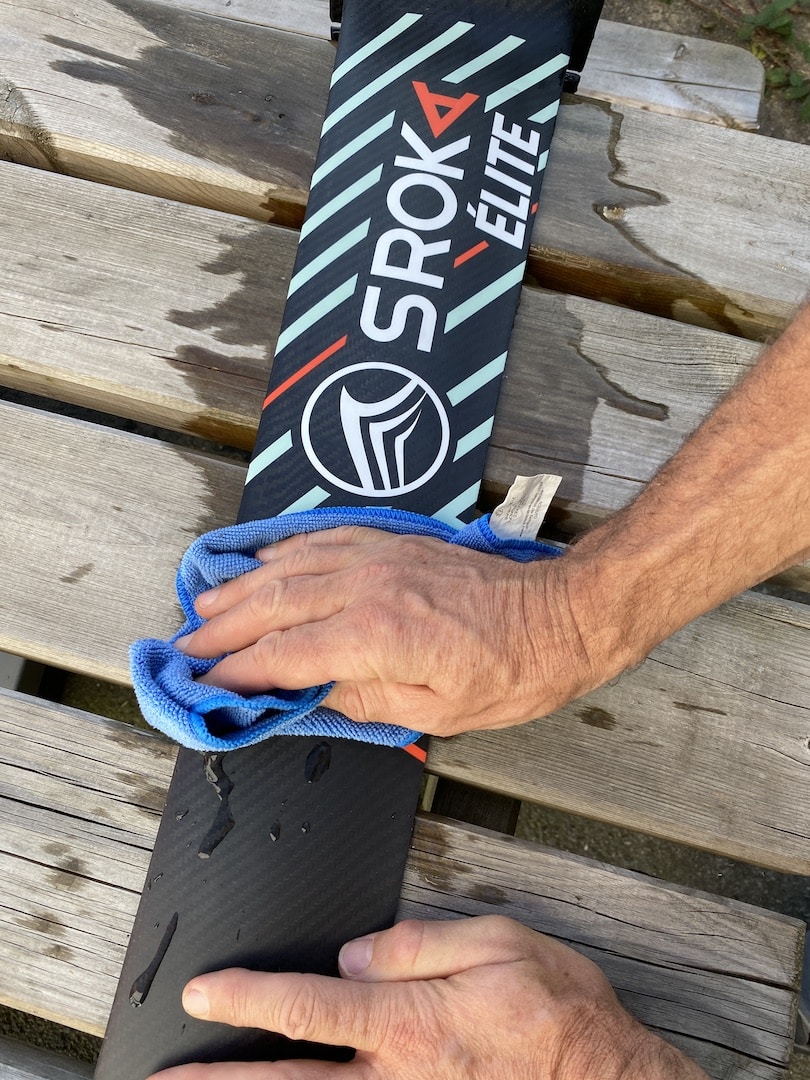
Whether you're riding in fresh water or at sea, rinse your foil from time to time. There are probably hydrocarbon residues or other things. Rinsing your foil properly will prevent these deposits from deteriorating its glide. The same applies to sunscreen. If you've applied cream to your face, avoid touching your foil. It's a greasy substance that will therefore deteriorate the efficiency of water flow over the mast profile or the wings.
Tips: After rinsing with clear water, wipe your foil with a soft cloth, which will allow you to check all its seams. This way, you can ensure that everything is in good condition. Moreover, it will prevent the bag from molding.
Scratches
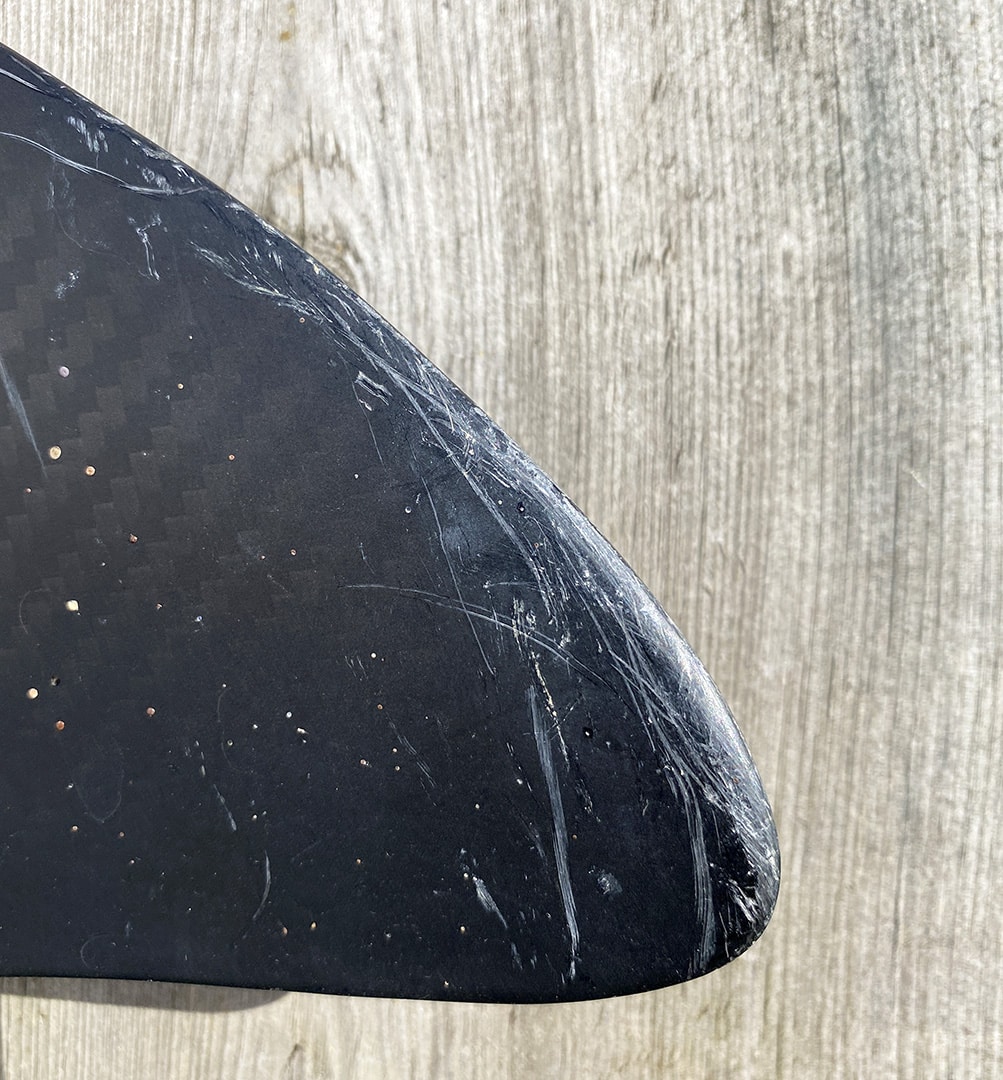
Any scratch on a front or rear wing slows down and hinders your foil. The water flow is disturbed, more or less affecting your speed and/or stability. Of course, if you're riding at 15 knots, you won't feel a difference. The higher your speed, the more you'll notice these scratches.
Tips: Avoid resting your board on its rail, with the front wing supporting it. Stop a little further from the beach to avoid scratching your wings.
Snags on the front or rear wings
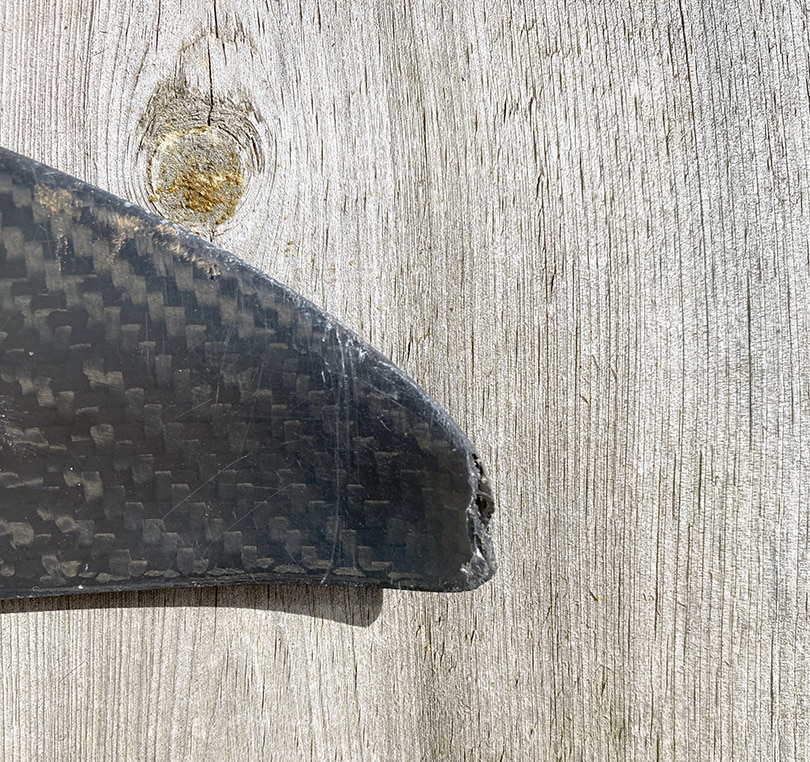
There are two ways for foil wings to get damaged.
- The first case is during handling your equipment on land. You drop your foil on the ground, or you haven't positioned the foil with the board aligned with the wind, and in strong winds, the foil pushes it, causing it to fall onto the tip of the wing.
- The second, you're riding and haven't paid attention to the depth. You hit an obstacle, a rock or something else.
Tips: Snags on the wings always happen due to negligence, so when you come back to shore, stop further out and swim a bit to start or return to shore.
- Always place your foil on the beach aligned with the wind to prevent a gust from pushing the mast sideways and tipping the foil over.
- Put the protective covers back on when your foil remains on the beach. This will prevent damage to your wings in case of contact with the ground. Similarly, when you disassemble your mast from the board, put on the mast cover to avoid damaging it.
- 20% of drag comes from the tips. So pay attention to the tips of your front and rear wings.
How to prevent heat damage?
The sun can be an enemy to your foil. The carbon mast is generally black, which means it absorbs a lot of heat in a very short time, whether in direct sunlight or in your car. Epoxy resin polymerizes at temperatures around 70°C. If your mast remains in direct sunlight, it is very easy to reach these temperatures, and the resin risks softening, thus losing its effectiveness. The same applies if you leave your foil in the car; it will overheat, and the epoxy resin will no longer work correctly.
If this is the case, we advise you to let your foil cool down before going riding so that the resin cools and the mast regains its properties. If you don't do this, you risk damaging your mast, especially with lightweight masts that are foamed and therefore have lower mechanical resistance. If the resin loses its effect, the mast will be even more flexible and will gradually become more fragile.
View all Carbon FoilsIn conclusion
You have invested or are going to invest in an expensive carbon foil. This investment is profitable in the long term if and only if you take care of it. In that case, it can serve you for many years. If you have bought a rigid, durable, and well-built mast, then maintaining it well will save you money and allow you to keep it longer. A Ferrari requires maintenance, and so does a high-modulus carbon mast.