


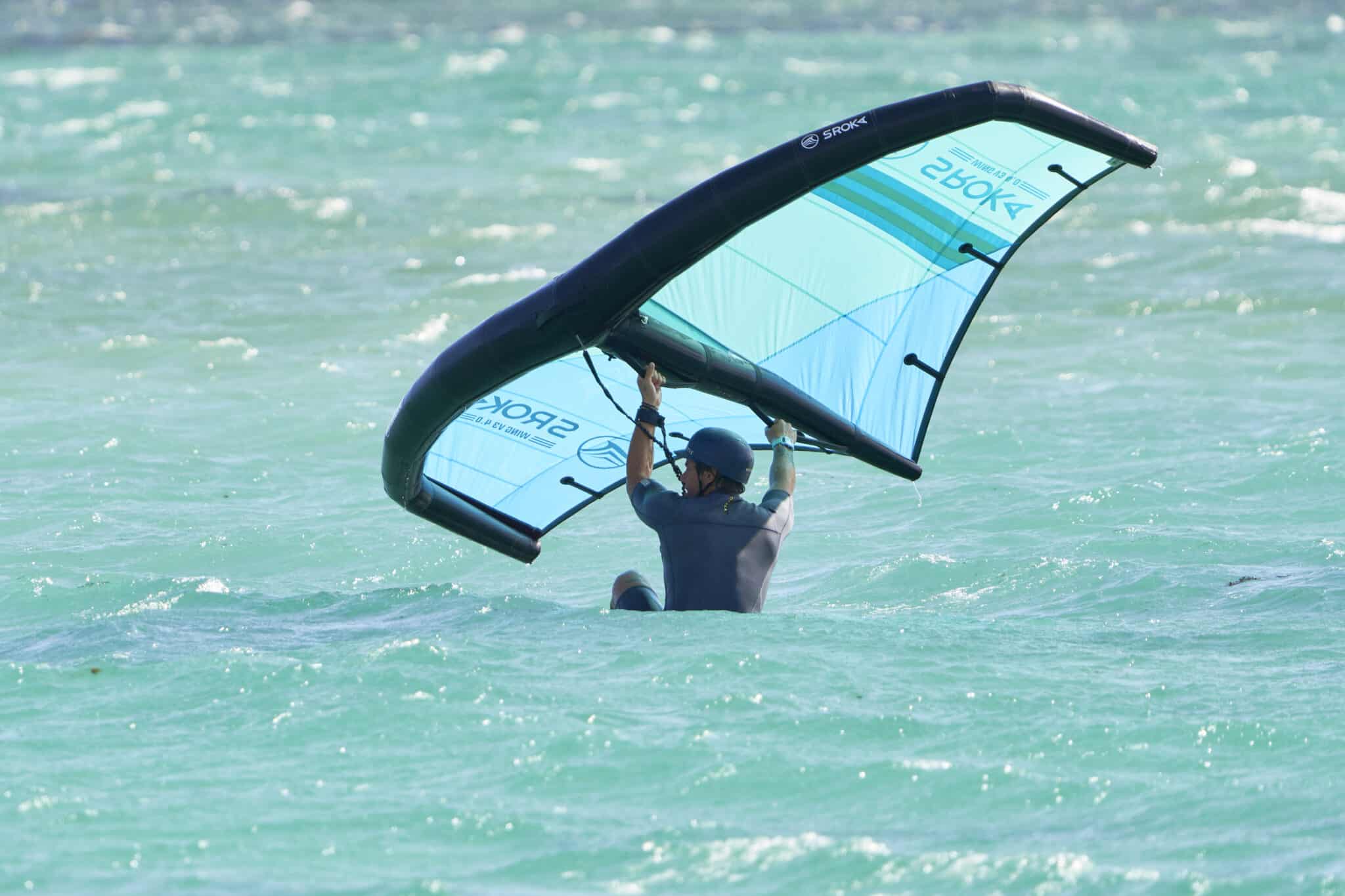
When progressing in Wing Foil, it becomes essential to master your waterstart. Indeed, when the volume of the foil board decreases, it sinks and the technique for launching is different.
The waterstart may seem complicated at first, but after reading this article, it will hold no more secrets for you.
Prerequisites for a Wing Foil waterstart
- Have sufficient water depth to sink the foil. Paddle on your board, like in surfing, to move away from the shore.
- Be well powered or overpowered at the start for an easier waterstart
- Have a good level in wing foiling: master basic maneuvers (jibe, tack, be comfortable in both directions) and know how to do a pumping start

Waterstart: the different types of Wing Foil boards
Small boards (less than 45 liters)
It is for this type of wing foil board that it is necessary to know how to manage your waterstart. Boards of this volume are ideal for surf foiling or wing freestyle. These boards are rather intended for experienced riders with a good level.
Intermediate volume boards (between 55 and 70 liters)
Most of the time, with the volume of these boards, you don't need to do a waterstart. Based on the fact that one liter is equal to one kilogram, you can start directly on your knees if your board's volume is equal to your weight (within 10 liters or kilograms).
Small boards
Intermediate boards
Reminder: How to start wing foiling with an intermediate volume board?
First, you need to get on the board and position yourself on your knees, sitting on your heels. This way, you will be slightly behind the center of gravity of your board. Then take your wing in hand, once you have gained a little speed, you can stand up, starting with your front foot.

Technique n°1: Waterstart with straps
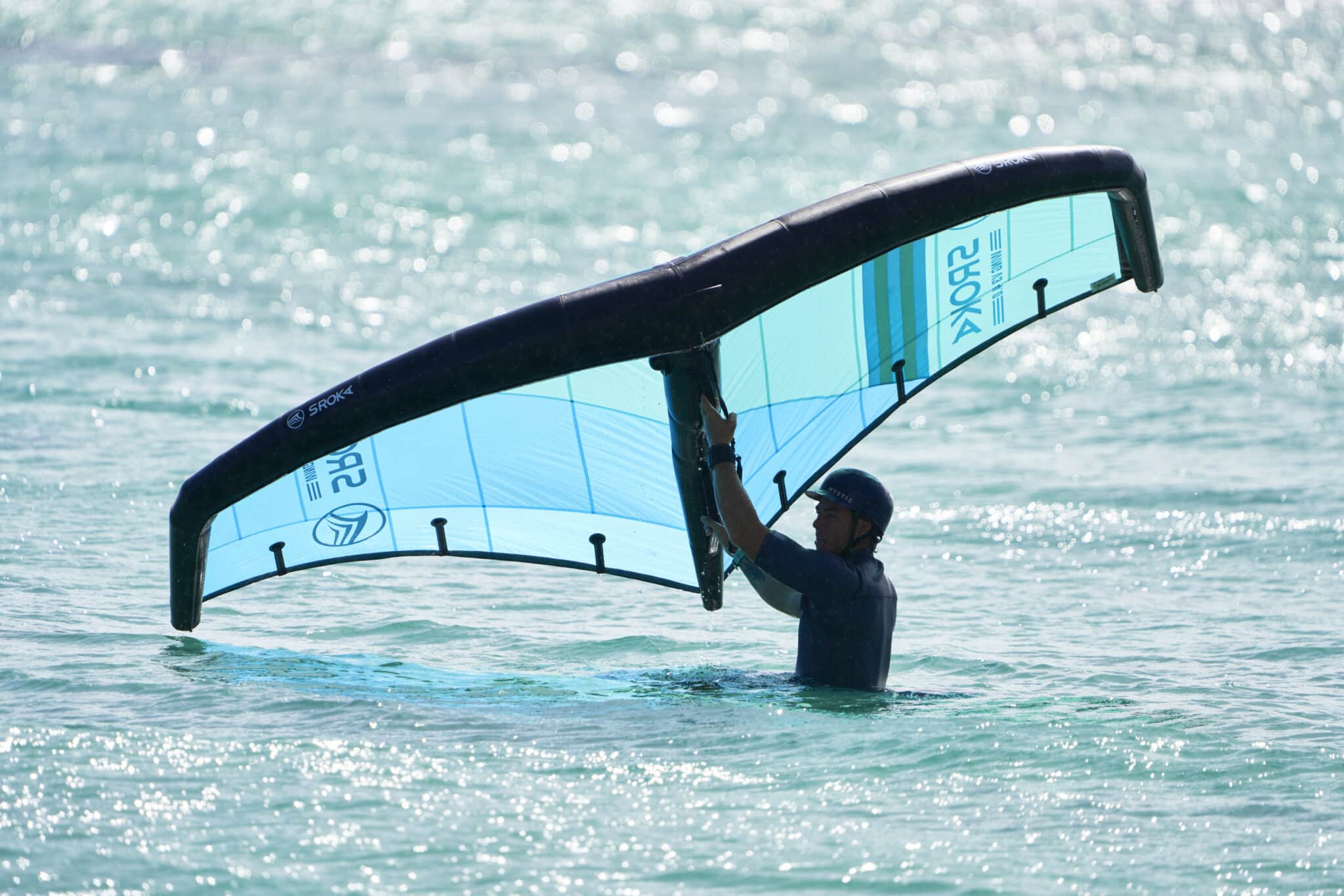
The technique for a successful waterstart in Wing Foil with straps is quite simple. Start by sitting straddling your board, like in surfing, then position your wing in the correct direction (handles facing down). You can use your wing to help you balance.
Next, push your board into the water with both hands to sink it so you can insert your feet into the straps. Once your feet are correctly positioned in the straps, you can grab your wing by the handles and start pumping the wing. This way, you will generate speed and start lifting the board out of the water. During this step, you need to be careful to nose up your board, meaning the nose of the board should be pointing upwards.
Once the board is on the water's surface, you'll be in the same situation as with a large board. You need to continue pumping to get the foil out of the water, and off you go!
Technique n°2: Strapless Waterstart
For this waterstart technique, the start is the same as for the technique with straps. You will first sit like surfing on your board and position your wing in the right direction. Then, you will need to kneel on your wing foil board. To successfully kneel, you can hold the board with your front hand for more balance. Be careful to keep your wing's leash in your hand to prevent it from flipping over. Once you have reached a balanced kneeling position, you can balance the board with your back leg. The nose of your board should be pointed slightly upwards.
When you feel comfortable, take the wing with both hands to catch some wind and generate a little speed to increase your stability. This will make it easier to transition from kneeling to standing. You can gradually lift your front foot as you start to move forward. Once you feel ready, you can also lift your back foot and continue to move forward little by little.
What's important is to have good support in your wing and start moving forward. The board will gradually come out of the water thanks to the power generated by the wing. You need to make sure the nose of the board is slightly pointed upwards. Once the board is on the surface, you can start pumping to get the board flying.
Tips for your wing foil waterstart
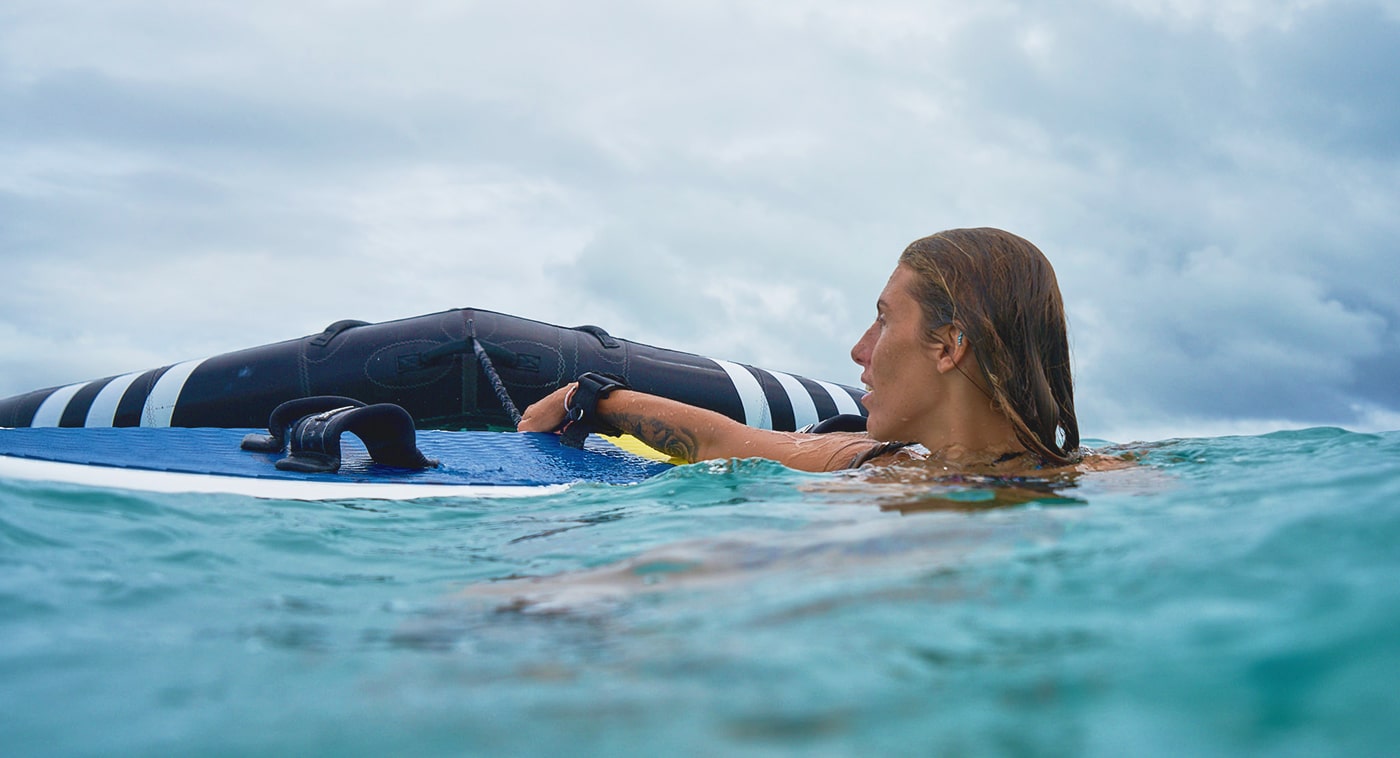
- Use your wing as a buoyancy aid to balance more easily.
- When doing a strapless waterstart in wing foiling, avoid being perpendicular to the wind. It's better to position yourself slightly downwind.
- You need to be careful with decreasing wind. The waterstart technique only works if there is enough wind to get out of the water. Remember to stop before there isn't enough depth.
- It will be easier to learn how to do your waterstart on a body of water with little chop.
If you still have questions on this topic, or for any other request, do not hesitate to contact us!