
 LE MAGAZINE
What are the differences between carbon and aluminium foils?

“It’s not enough to have the designation carbon to have a faster foil compared to an aluminum foil.”
What are the differences between carbon and aluminium foils?
| Criteria | Aluminium Foil | Carbon Foil |
|---|---|---|
| Price | Less expensive | More expensive |
| Resistance | More solid and shock-resistant | Dislikes shocks |
| Ease of use | Easy to assemble and adjust | Faster, so finer adjustment. |
| Upgradeable | Modular according to needs and conditions | Also modular, but each room costs more |
| Durability | Robust but sensitive to corrosion, 100% recyclable | Durable and resistant if well maintained, but sensitive to impact, non-recyclable. |
| Weight | 4.7 kg | 3.5 kg |
| Maintenance | Requires disassembly and rinsing as often as possible. | Requires no special maintenance (occasional checking of all parts). |
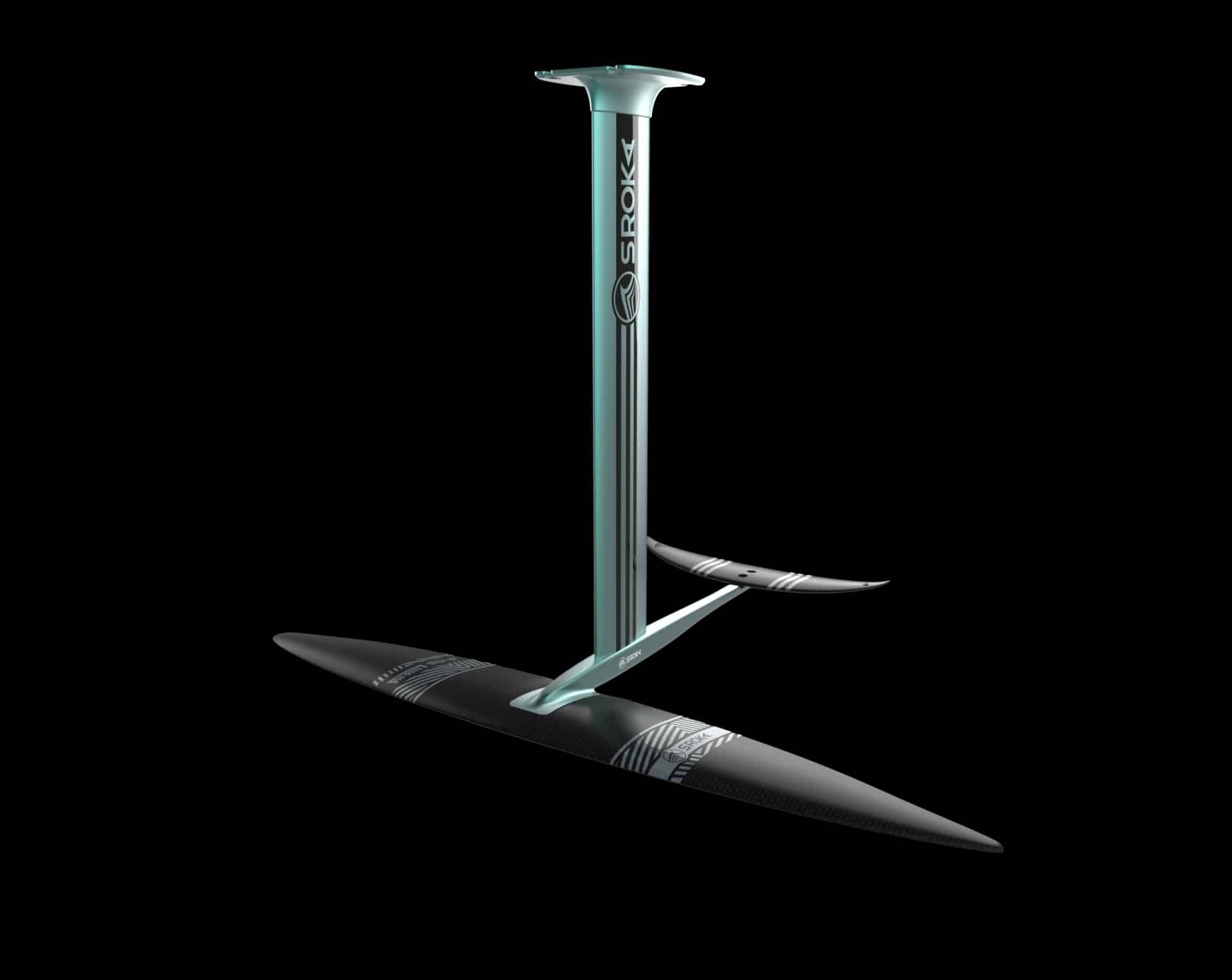
First of all, let’s look at the characteristics of aluminum foils:
- Price : aluminum foils cost less because they are mass-produced. The mast and fuselage are made of aluminium and the fins are made of fibre or carbon.
- Resistance : Aluminum foils are sturdy and can withstand shocks. A poised aluminium mast remains usable.
- Easy to use : Generally, aluminum foils are easier to use because they are more suitable with large fins for beginners.
- Scalable : You can easily change the length of the mast and fuselage at a lower cost depending on the program you want to do.
- Combined with small fins, they can be very efficient and sometimes even faster than some carbon foils.
- Durability : an aluminum foil is perfectly recyclable (all aluminum parts).
On the other hand
- It requires a little maintenance, you have to rinse it and disassemble them at each session (it takes 2 min)
- It is generally heavier than a carbon foil.
- Even though the mast is stiff, it is a little less responsive than a carbon mast.
Vous aimerez aussi
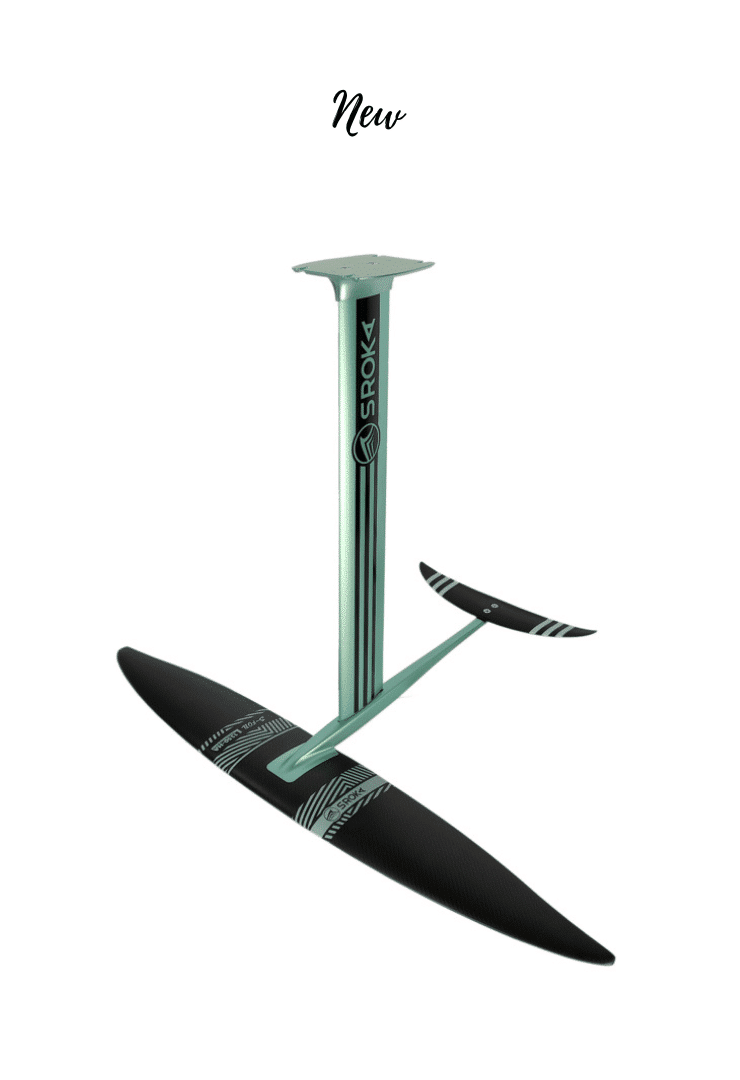
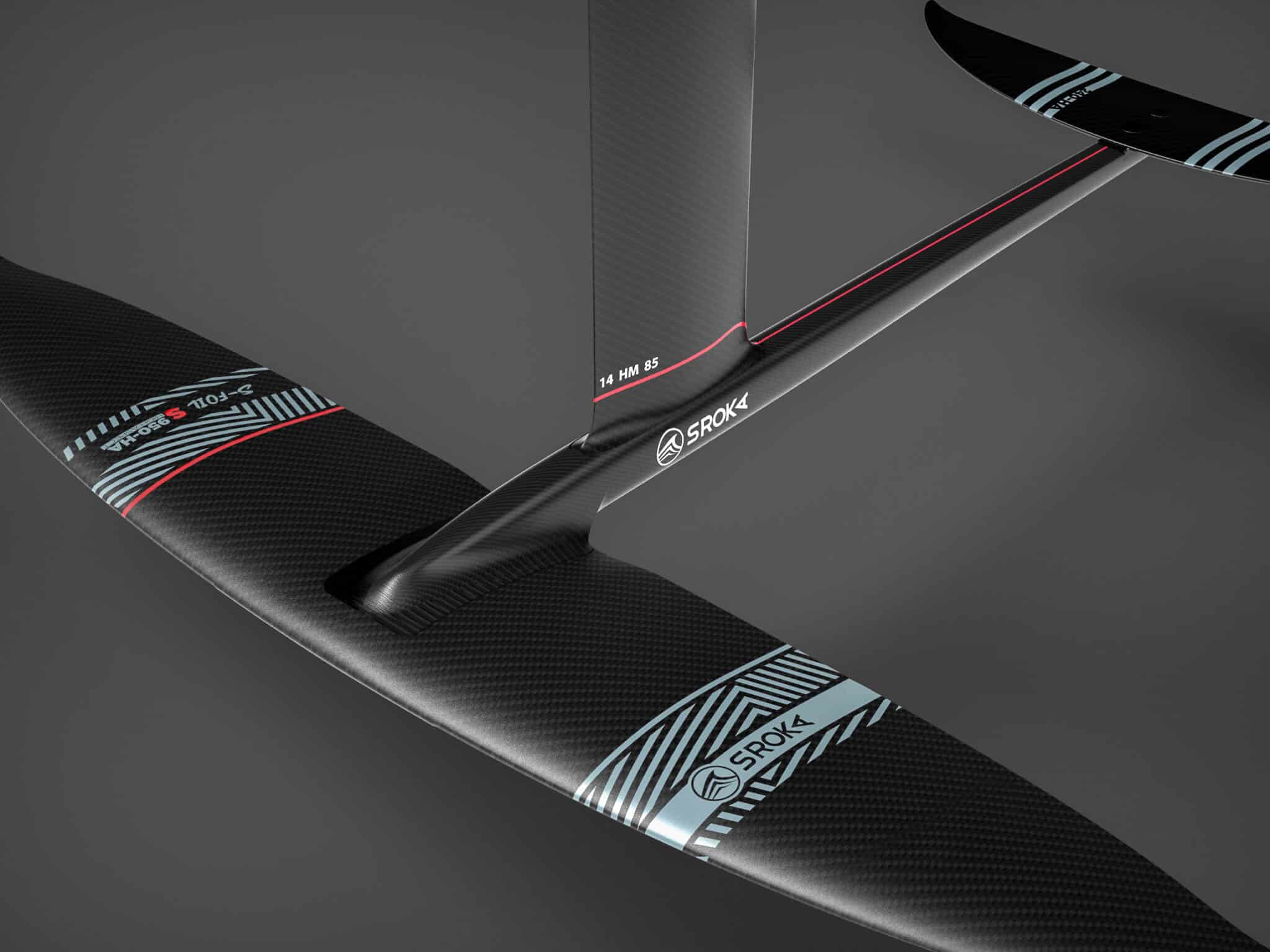
Characteristics of carbon foils:
- Price : a carbon foil can be much more expensive than an aluminum foil. An aluminium pole is produced on an assembly line and it is possible to produce many of them at a lower cost. A carbon mast is produced by hand, you can have up to 160 layers of carbon in a mast, which automatically leads to an explosion in manufacturing costs.
- Stability : if the carbon foil is well designed, it will be stiffer and provide more stability at high speeds. In the event that the technical development of the mast is not done in an optimal way, no performance gain will be observed, it may even be less efficient, less rigid than a well-developed aluminum foil.
- Performance : a carbon foil will perform better if and only if it is stiffer, with less chord and less thickness, which reduces the drag generated by the mast and therefore increases performance.
- Durability : a carbon foil requires more care because it is more fragile. It is not very resistant to shocks (even if any carbon part is repairable) but can last a long time if you protect it. However, it is not recyclable, so choose it wisely.
As we have seen, an aluminium foil has advantages and disadvantages just like a carbon foil, however
Is an aluminium foil really less efficient than a carbon one?
We’re going to explain why this isn’t always true, and if you’re going to opt for a carbon foil, make sure you know what you’re getting into, so as not to be disappointed.
Let’s start with a few postulates, so that everyone can understand what we’re thinking.
First of all, we’re going to imagine that we’re using the same aircraft (front wing, rear wing and fuselage). We’re going to concentrate on the mast, as it generates a lot of drag due to its length, thickness, profile and chord.
There is 800 times more drag in water than in air. Therefore, the more contact surface there is, the greater the drag
The contact surface is defined by the thickness of the mast, its chord, its profile, its length.
Like what:
- If two masts are identical except for their construction (one in carbon and the other in aluminium): performance will be the same because the drag will be identical.
- If a carbon mast has more chord (distance between the leading board and trailing edge) than an aluminium mast with the same profile, the same size and the same thickness: it will go slower than an aluminium mast because + equal rope + drag.
- A carbon mast with a slower profile (with more thickness close to the driving board, and there are infinitely many) will go slower than an aluminum mast with the same characteristics (chord, thickness, height) but with a faster and more efficient profile.
- A less rigid carbon mast (in torsion and bending) will be less stable and therefore potentially slower than a steeper aluminium mast. In this example, it is quite possible that an aluminum mast is stiffer than a carbon mast, especially if the carbon used is standard (not of good quality).
In summary, to claim that a carbon mast is faster than an aluminium mast is totally false because there are a lot of parameters that influence the rigidity and performance of a mast. Test and observe carbon foils yourself before buying one.
So how can a carbon mast, and therefore a carbon foil, perform better?
To be more efficient, you have to be stiffer, thinner, have less string and have a more efficient and efficient profile.
How is that possible?
To go fast, you have to reduce the rope of the mast (on the submerged part). Our aluminum mast has a 121mm cord, our carbon pole has a 108mm cord. So there is a decrease of more than 10% in the rope and also a 10% decrease in the drag related to the rope.
To go fast, you have to refine the mast as much as possible and therefore reduce its thickness. To give you an example, our aluminum mast is 18.5 mm and our carbon mast on the lower part (where there is the maximum drag) is less than 14 mm. In this example, we have reduced the thickness of the carbon mast by more than 25% and therefore we have reduced the drag of the mast by more than 25%.
The profile applied to a carbon mast should be the most slippery and fastest. Our profile used on our carbon mast reduces drag by 10% compared to our aluminium mast.
Finally, the mast should be the most rigid in torsion and bending. This is the most complicated part because to be rigid you have to:
- A perfectly designed draping plane to reduce twisting and bending. (And it’s not that easy to do, some brands can’t do it.) A mast with too much twist will not be able to be used with large wings such as a 1.40 m wing. It won’t handle lateral effort and will lead to parasitic movements and uncontrolled movements that will make your navigation uncontrollable at times.
- Increase the amount of carbon to maximize stiffness. At SROKA, our carbon mast is a mast with more than 140 layers of carbon. In the lower part, the mast is completely full. There is no foam, which optimizes stiffness and torsion.
- High-modulus carbon fibers. As a result of all these surface area reductions to reduce drag, our mast is made of 100% high modulus M40 J fibers that guarantee lower elasticity and better rigidity. Most of the time this type of carbon is used in F1, aerospace or aviation. However, it should be noted that this carbon costs much more and therefore increases the overall cost of a mast. A high-performance carbon mast is therefore a mast that will be expensive. Few foil brands make 100% carbon masts with high-modulus fibers.
In short
To sum up, for a carbon mast to be more efficient and go faster, you need to reduce the thickness of the mast, reduce the thickness of the rope, have a fast profile, increase the amount of carbon in the mast (because reducing the rope and thickness makes the mast softer) and finally use high-modulus fibers to optimize stiffness for a responsive, fast foil.
In this case, and only in this case, a carbon foil is faster than an aluminum foil.
“It’s not enough to have the designation carbon to have a faster foil in comparison with an Aluminum foil.”
At SROKA, we really want to push back the limits of carbon Foil and create a real difference compared to aluminum masts.
So we’re offering you a 100% carbon mast with high-modulus fibers, slimmer and stiffer than our aluminum mast, which is already a benchmark.
Increase your performance by opting for our Elite HA 14mm carbon mast. You’ll gain over 25% more performance than a SROKA aluminum foil, and almost 40% more than other competitive foils.
If you have any further questions, or if you have any other requests, please don’t hesitate to contact us!
 Le Magazine
Article you may be interested in