


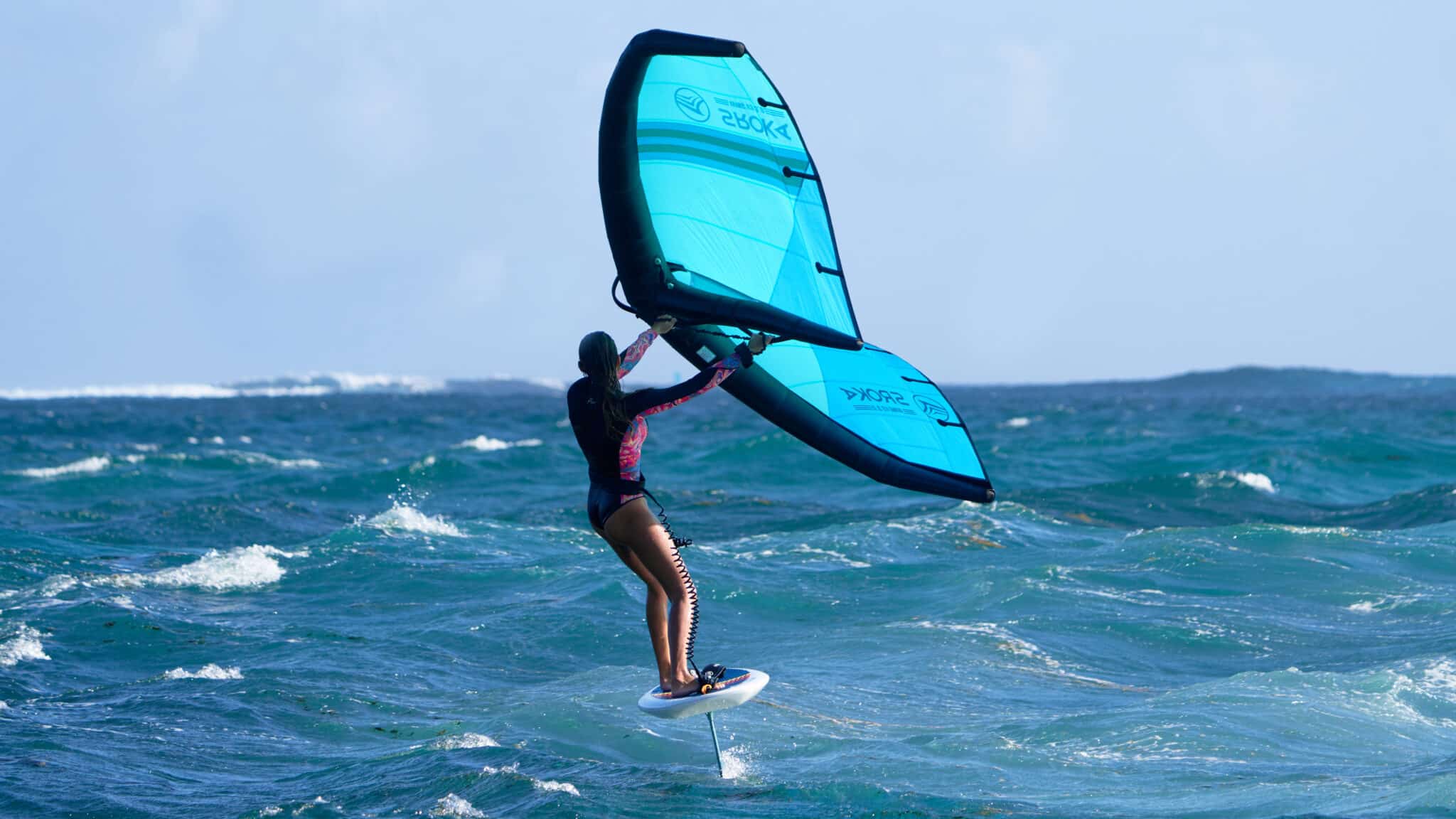
There are several weather factors to consider when wing foiling in the best possible conditions. Here, we'll look at what these factors are and what tools you can use to analyze them.
Step 1: Check the wing's condition
Preparing your Wing Foil wing is straightforward, just pay attention to a few points. First, before heading out, it's important to perform a visual check of your wing. The goal is to ensure there are no defects like cuts or tears in the fabric. This could also include scuffs on the leading edge or leaks. If you notice any damage, it is strongly recommended not to use the wing until it is repaired.
Next, we advise you to test the air pressure in the wing. To do this, use your pump's manometer. Make sure the pressure complies with the manufacturer's specifications. For our Wing V3, we recommend inflation between 6 and 8 PSI (and definitely not 6 and 8 bar… yes, it happens). If the pressure is insufficient, add air until it is correct. If the pressure is excessive, absolutely do not go in the water and release some air to reach the recommended pressure.

Important weather factors for Wing Foiling
- Wind speed and direction: wind is the main power source for wing foiling, so it's important to know its speed and direction to choose the right spot.
- Wave height: wave height varies depending on weather conditions. High waves can naturally make wing foiling more difficult, or even dangerous if you're not experienced enough.
- Swell direction: swell direction affects your stability and the quality of waves for surf foiling. It's best to favor a swell that arrives at the spot regularly and steadily.
- Temperature: temperature is an important factor for your wingfoil equipment. You need to be careful with heat. If you leave your board in direct sunlight, the internal pressure might rise and damage it. To avoid this, you should slightly unscrew the decompression screw when the board will be exposed to heat for a long time. However, remember to screw it back on before going into the water!

Ideal conditions for beginners in Wing Foiling
Wind speed
For Wing Foil beginners, the recommended wind speed is between 13 and 15 knots. Starting wing foiling with 13 knots will make it difficult to get airborne, especially if you are a larger person. However, this will allow you to get a feel for the board and move calmly on the water, without risk. Once comfortable with handling the wing and board, you can seek out slightly stronger winds. A wind speed of 15 knots is ideal for being able to fly.
Wind direction
To start Wing Foiling in the best conditions, we recommend choosing a day where the wind blows consistently in the same direction. This way, you can focus on learning the basics of wing foiling without being disturbed by changes in wind strength or direction. Wind direction also influences the quality of the water surface.
Different wind directions:
- Offshore and Side off: An offshore wind, meaning one that comes from land towards the sea, should be absolutely avoided if you are a beginner. It's dangerous because if you get into trouble and don't yet know how to go upwind, it will carry you out to sea.
- Onshore: a completely onshore wind is not ideal either (straight from the sea towards the beach). It's a safe wind but annoying for beginners. Starting will be difficult and you will constantly be pushed towards the beach.
- Sideshore and Side On: These are the best wind orientations for beginners! Here, the wind blows diagonally, from the sea towards the beach (Side On) or from the side (Sideshore). These are the optimal orientations for starting. They are safe and also ideal for having fun and progressing easily.
Wave height
To start Wing Foiling, we advise you to choose the flattest possible body of water. The best option is to learn on a lake. Indeed, a flat body of water allows you to concentrate 100% on learning basic techniques and maneuvers without being unbalanced by waves. It is important to know, however, that on inland waters such as lakes, the wind is often gustier.

How to predict weather conditions for Wing Foiling?
Weather conditions are not an exact science; it's important to remember that the weather can change very quickly. However, to plan your Wingfoil, surf, or Kite sessions, many applications offer fairly reliable forecasts 1 to 2 days out:
- Wind forecast websites and apps: If you're sailing at sea, sites like Windguru or Météo Marine will provide you with forecasts for wind, swell, tide, temperature... These sites, also available as apps, are very useful for estimating the weather conditions of a Wing Foil spot.
- Live wind conditions: Several sites offer free real-time readings to share live wind strength. This is the case with Windy, for example, which offers an interactive map. To quickly find weather beacons that provide live wind conditions, you can type "live wind readings [Your City/Spot]". Some of these sites, like Winds-up or Infosvent, offer live readings, but the free version only gives access to readings from the last few hours.
- Wave forecast websites: To find out wave forecasts, you can use sites like Surf report or Surf forecast, which are useful for Wing Foiling and quite reliable.
Frequently asked questions about weather conditions for Wing Foiling
What is the minimum wind speed required for wing foiling?
The minimum wind strength for wingfoiling is generally 7 or 8 knots. However, this depends on individual skill levels. A beginner in Wing Foiling will need a minimum of 13 knots to comfortably navigate.
Is there a maximum wind speed beyond which one should not wing foil?
Generally, it is strongly advised not to wing foil when the wind speed is greater than 30 knots, which is about 55 km/h. However, this can vary depending on size, weight, and experience level.
Can air and water temperature influence wing foiling?
Not specifically; air and water temperature primarily affect your comfort while riding.
Can rain affect wing foiling?
Sustained rain can only degrade visibility between riders.
Common mistakes to avoid:
- A wind speed between 13 and 15 knots is ideal for starting Wingfoiling.
- Favor Sideshore (from the side) and Side On (from the sea) winds for more safety and easier learning.
- Keep in mind that weather conditions are not 100% reliable and can change during the session.
- If you're discovering a spot for the first time, whether you're a beginner or experienced, don't hesitate to chat with regulars to learn more about the spot's specificities or the optimal conditions for wing foiling there.
If you still have questions about this, or for any other request, don't hesitate to contact us!