


Which paddleboard for use on a lake?
Stand up paddleboarding is one of the most accessible board sports. Easy to use and not bulky, it allows you to get around, discover nature, have fun with family, or simply go for a ride alone, with others, or with family. Widely practiced in the sea, it is also gaining increasing popularity in lakes, and in my opinion, it is particularly suitable for lakes, as this type of calm water is easier for beginners. It also allows for a variety of practices such as yoga, fitness, fishing, hiking, racing, or going on a bivouac or picnic.
In this article, we will provide you with tips and recommendations to help you choose the most suitable paddleboard for lake use.
What types of paddleboards are suitable for lake use?
There are two main types of paddleboards: rigid paddleboards and inflatable paddleboards. An inflatable paddleboard is the most sensible choice for a lake. A rigid paddleboard will be preferred specifically for surfing waves in the sea or for racing. (And even so, more and more racers are using inflatable paddleboards for simplicity. The inflatable paddleboard is the ideal option if you are looking for a versatile SUP (leisure, touring, fishing, yoga...).
A good quality inflatable paddleboard will guarantee very good gliding performance, better shock resistance, and a more affordable price compared to a rigid paddleboard. Not to mention the ease of transport and storage. In other words, the inflatable paddleboard is the best option for paddleboarding on a lake.

The inflatable paddleboard
1. What are the advantages of an inflatable paddleboard?
- Easy to transport
- Versatility
- Ideal for beginners, alone or with family
- Good value for money performance.
2. Disadvantages of an inflatable paddleboard
- The rigidity of an inflatable paddleboard is determined by the amount of material it contains. The more PVC layers an inflatable paddleboard has, the more rigid, solid, and durable it will be. This will also determine the stability of the paddleboard. In other words, a budget inflatable paddleboard will be less stable and less resistant.
- The stability of an inflatable paddleboard is a function of its width; the more stable a paddleboard is, the wider it is. However, a very stable, therefore wide, paddleboard will be slower. Paddleboarding on a lake is relatively easy because there are rarely waves, so you can afford to have a narrower, more slippery paddleboard to maximize the feeling of speed.
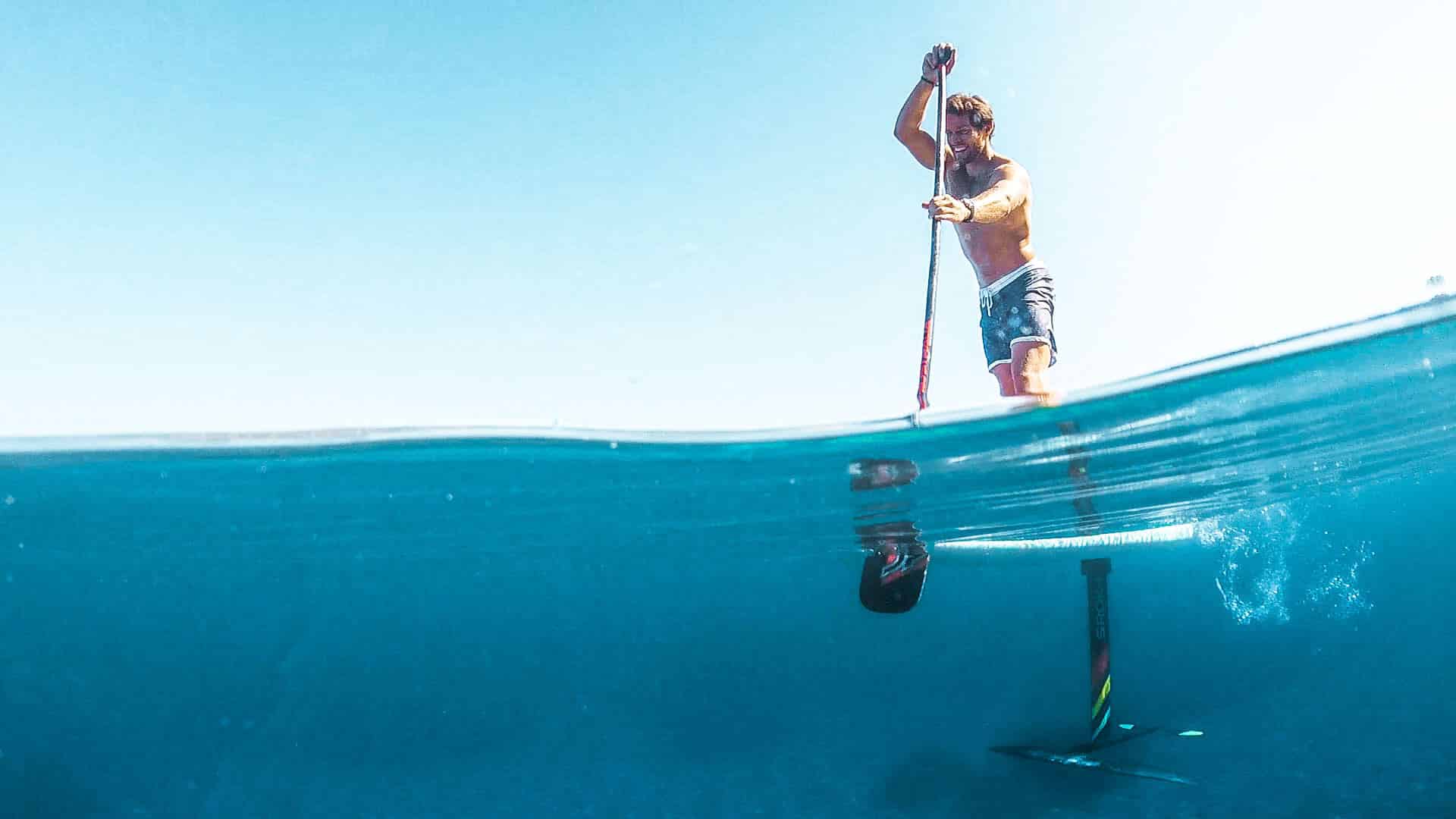
The rigid paddleboard
1. What are the advantages of a rigid paddleboard?
- Stability
- Performance
- Durability.
2. Disadvantages of a rigid paddleboard
- More bulky and therefore less practical to transport and handle.
- More fragile to impact with rocks.
- More expensive.
Which paddleboard is best suited for you to navigate on a lake?
The shape of the paddleboard affects its stability, glide, and maneuverability. There are several shapes of paddleboards. A compromise must be found between glide and stability. A thinner paddleboard will have better water penetration and better glide. It will push less water but will be less stable. The advantage of calm water, as on a lake, allows you to choose a paddleboard that is slightly narrower than a paddleboard for the sea, thus maximizing glide.
For lake use, we advise you to choose a quality paddleboard. Depending on your body of water and your shoreline, a budget paddleboard can get damaged quickly. By opting for a more reinforced paddleboard, you will get better product durability.
Adapt your paddleboard to your size and needs
Here are some tips to help you choose your paddleboard:
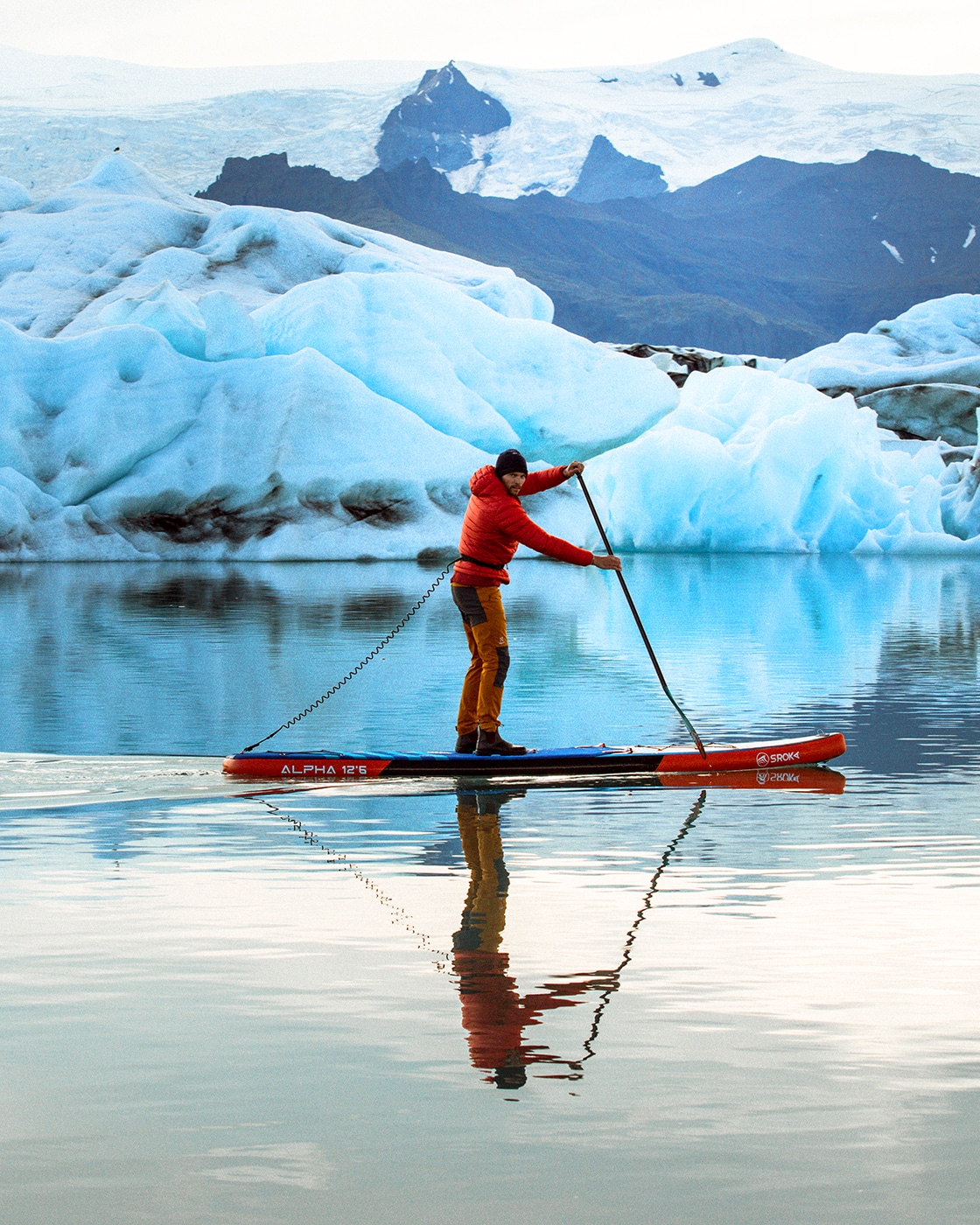
If you are a beginner
If you are a beginner or looking for a versatile board, you can opt for an all-round paddleboard, which is a board with a round and wide nose (between 30 and 34 inches), offering excellent stability and good maneuverability. This type of board is suitable for touring on the lake.
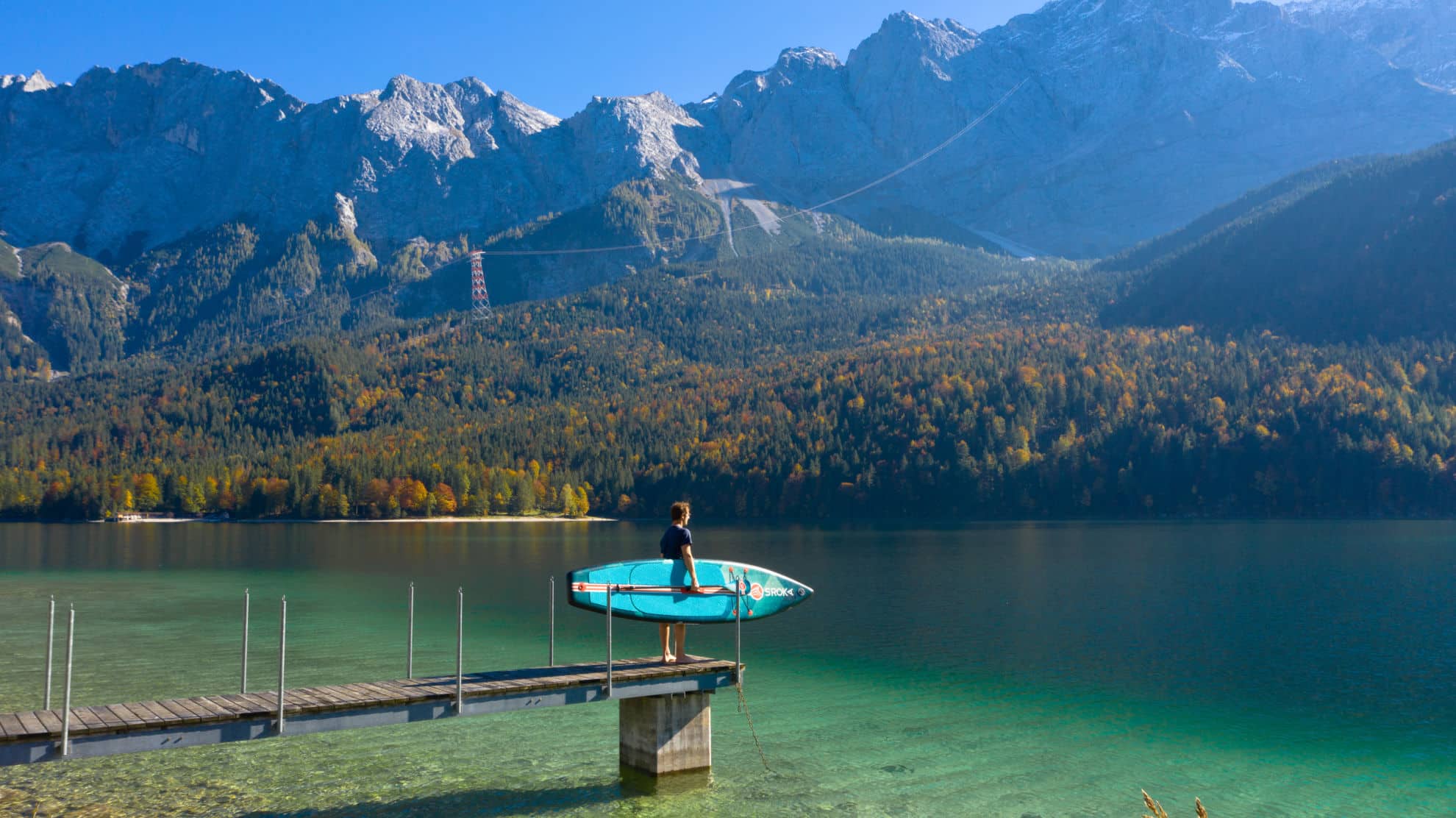
If you are experienced
If you are more experienced, looking to race or cover long distances, you can opt for a race paddleboard, which is a long board (over 12 feet), thin (under 28 inches), with a pointed nose at the front, offering excellent glide. Race paddleboards are less stable and less maneuverable but faster and have good tracking ability. Alpha Fusion models under 28” wide are suitable; the heavier you are, the longer board you will need for an adequate volume.
If you are an intermediate paddler
If you are an intermediate paddler, you can also opt for a touring paddleboard, which is a long (between 11'6 and 14 feet), streamlined board of intermediate width (between 28 and 32 inches), with a pointed front and a slightly wider tail. This type of paddleboard is optimized for glide, speed, and stability.
Choosing a paddleboard based on lake activity
Paddleboard for fishing
If you are a fishing enthusiast, you can opt for a fishing paddleboard, which is a wide (>32 inches) and voluminous board, offering good buoyancy and ample space to carry your equipment with an elastic net to secure your belongings.
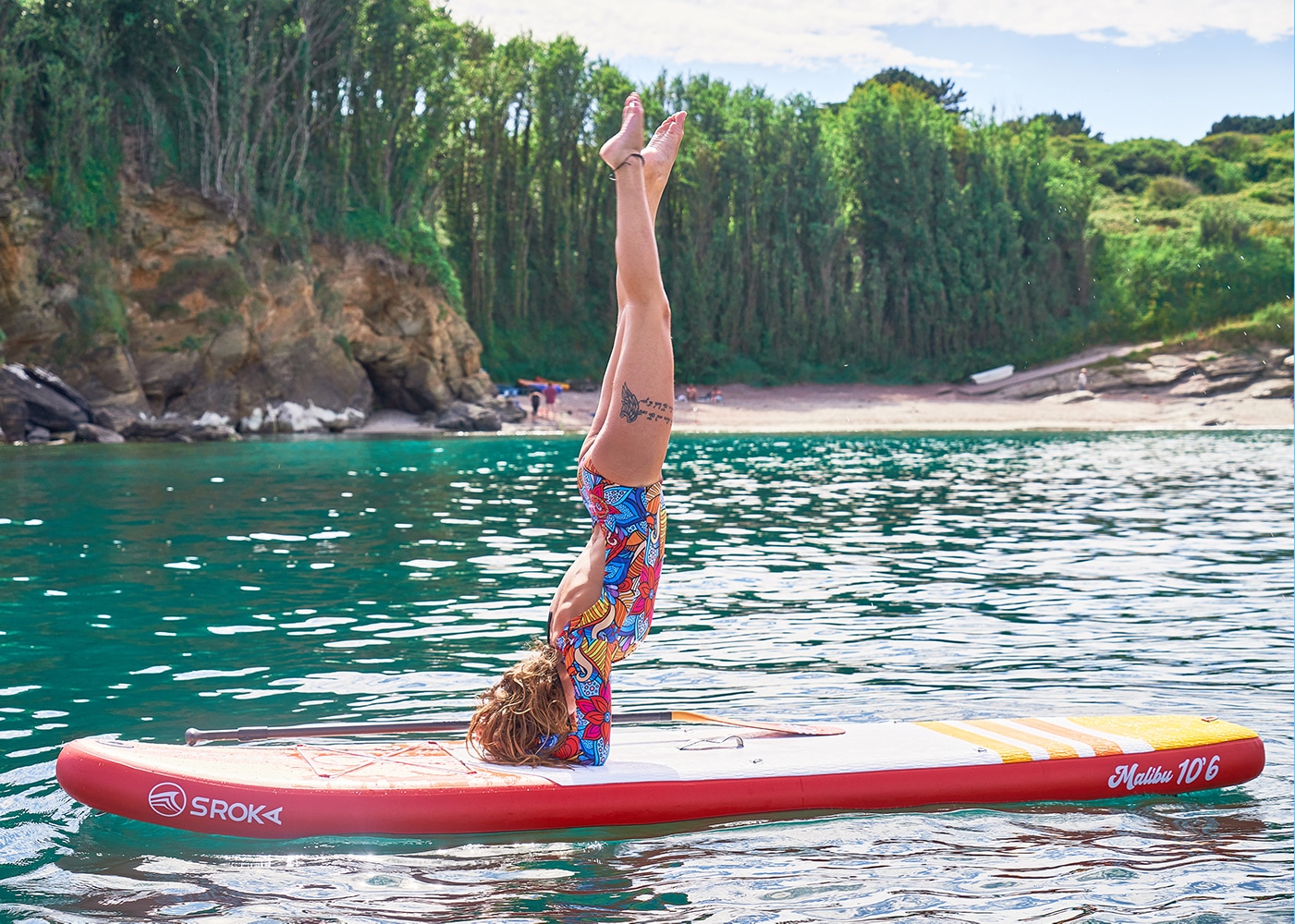
Paddleboard for yoga
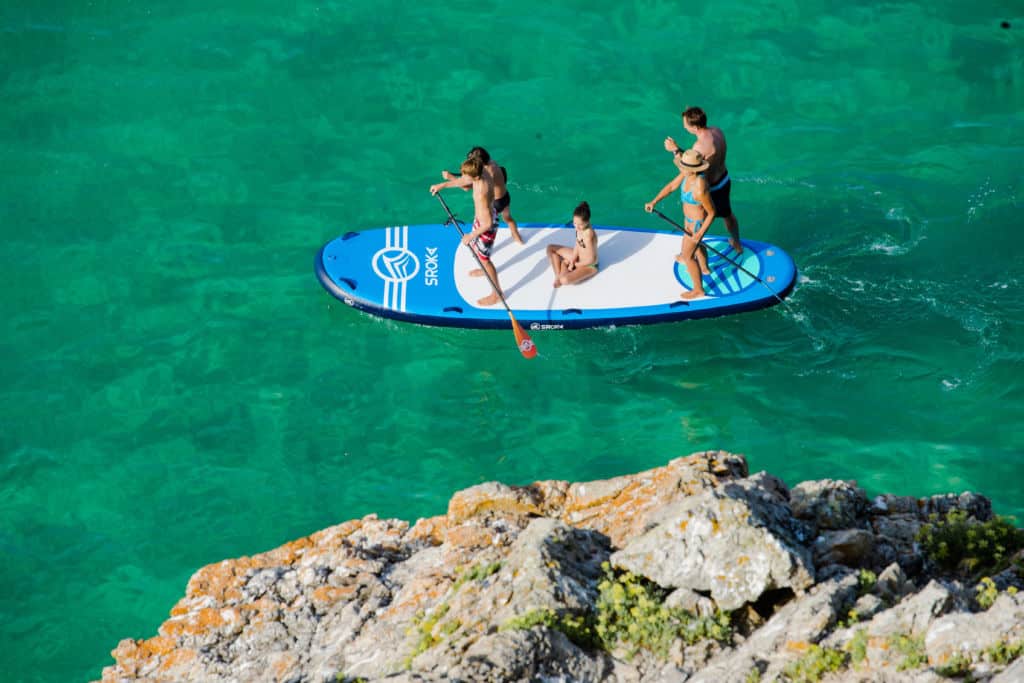
If you are a fan of yoga, fitness, or looking for a relaxing board, you can opt for a very wide (over 32”) and very stable paddleboard, offering a good surface to practice poses without falling into the water. This type of board is suitable for doing yoga on calm lake waters. Our XL giant paddleboards or XXL allow multiple people to be on the board for games or aperitifs on the water. However, these cannot be used alone.
For paddleboarding with multiple people
If you want to paddleboard with several people on the same board (with family or in competition mode), opt for our two-person duo paddleboards for two, or our XL paddleboards (up to 6 people) or XXL paddleboards (up to 8 people) for family or friends.
The Best Lakes for Paddleboarding
Attached is a non-exhaustive list of fabulous places to discover by paddleboard. Regarding weather conditions, there's no need to have precise meteorological knowledge. Just check that there are no thunderstorms or strong winds.
- Lac de Sainte Croix (Var/Alpes de Haute-Provence)
- Lac du Bourget (Savoie)
- Lac Pavin,
- Lac de Castillon,
- Lac d’Annecy
- Lake Geneva
Practical Tips for Lake Paddleboarding
Safety
In terms of safety, remember that even on a lake, you need to know a minimum of safety rules.
- Don't go out alone at nightfall.
- Paddle with a board leash. In case a storm brews, you will always be connected to your paddleboard.
- If you are not a strong swimmer, opt for a buoyancy aid or a life jacket.
- Wear an insulated wetsuit if the water is not warm.
- Always inform someone of your departure.
- Avoid going into the paths of motorboats.
Paddleboard Maintenance
You don't need much maintenance for your paddleboard. You just need to pay attention to a few points to extend the life of your equipment.
- Due to heat, slightly deflate your paddleboard to prevent it from bursting.
- Do not leave your paddleboard in a car in direct sunlight. In a car, the temperature can rise very quickly to 80 degrees. This will weaken the adhesives and may lead to leaks in your paddleboard.
- Be careful of shorelines where there may be objects that could puncture your paddleboard.
In conclusion
Opt for a rather long and narrow paddleboard if you want to maximize glide and take long rides on a lake. A wide paddleboard will offer more stability but will move slower.
If you opt for a budget paddleboard, be cautious. To reduce the price of a paddleboard, one must decrease the quantity of material and lower the quality of materials. This leads to a loss of stability and a board that will twist in every direction. It's better to rent a paddleboard if you don't have the means than to buy a low-end product that won't provide stability or efficiency.