
 LE MAGAZINE
10 mistakes to make when starting out in Wing Foil

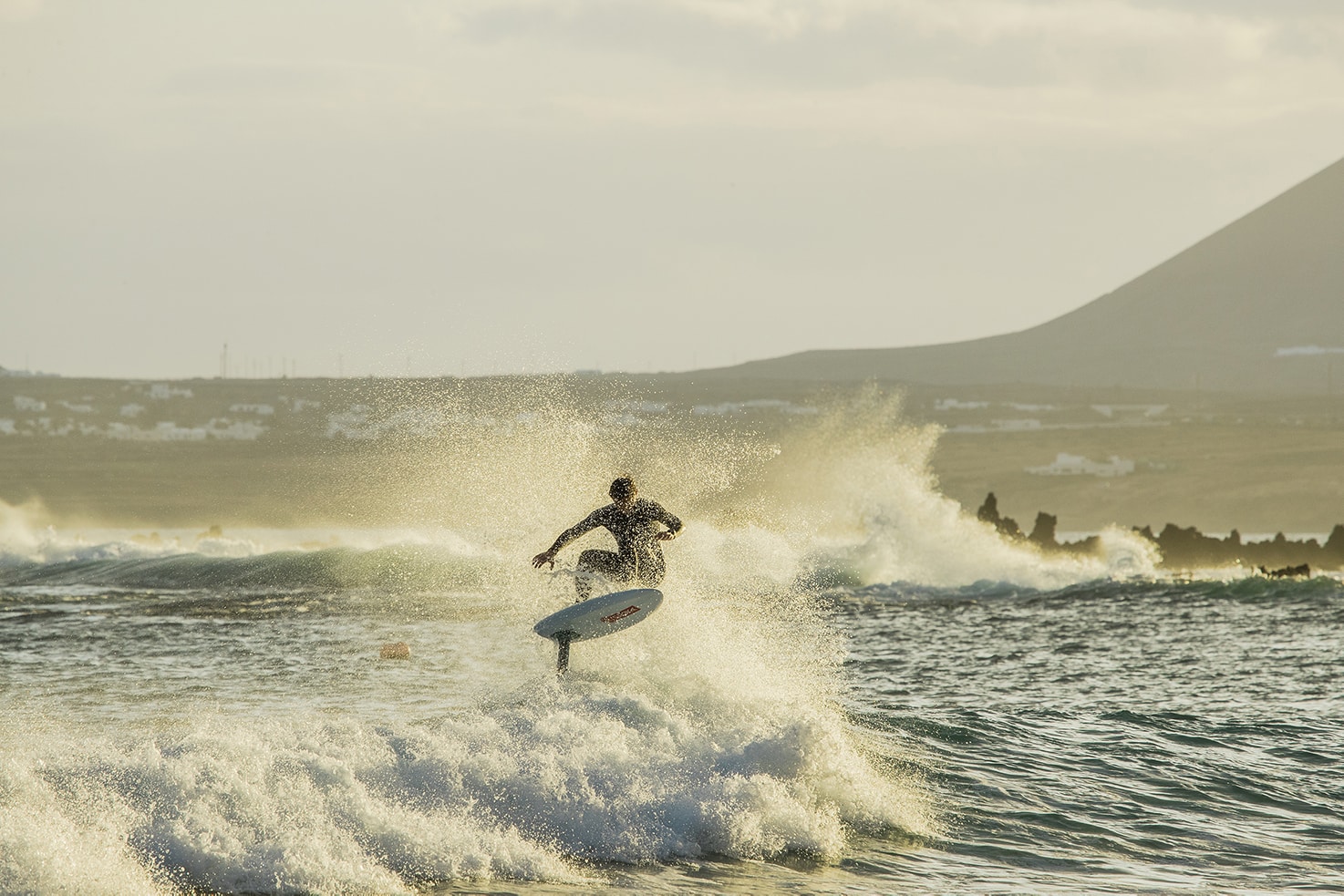
Getting started in Wing Foil is accessible to all, but requires a minimum of practice and learning to evolve effectively. If you’re new to the sport, the Wing Foil consists of sailing on the water, standing on a board and foil, with a wing held in both hands. The WingFoil allows you to move freely thanks to the energy of wind and waves.
Starting this sport allows you to feel new sensations on any type of body of water with simple and easy to set up equipment. So as not to lose any time in your progress, SROKA Company informs you of the 10 mistakes not to make when starting out in Wing-Foil. If you’d like to try your hand at Wing Foil, read our article “How to get started with Wing Foil”.
Mistake n°1: Unsuitable equipment
Starting out in Wing Foiling with old equipment or a foil you used for other purposes won’t allow you to progress with ease. Equipment is evolving fast, and every year companies innovate to offer increasingly comfortable, high-performance products.
For starters, a large front fin area will provide you with stability and lift. Your foil will be a little slower, but the advantage is that you’ll be able to fly in light wind conditions. Beginners will prefer the Medium Aspect or Low Aspect models with a fast start in light wind. However, if you are looking for a fin that is easy to use, while having good performance, we recommend the Medium Aspect. This scalable model will be able to follow you throughout your progress, without forcing you to change equipment. Our SROKA 1750 (XL) front foil fin is the ideal weapon to get you started in Wing Foil and get you off the ground immediately.
The size of the mast is just as important. Indeed, it will be easier to find the balance with a relatively short mast (60 to 70cm), while more experienced WindFoil or SurfFoil practitioners can turn to a longer mast (70 to 80cm). However, a mast that is too short will very quickly be limiting, so we advise you to go for an 80 cm mast.

Error no. 2: Incorrect body positioning
Good board position is the basis… Your posture has a direct influence on your balance and your ability to control the foil.
The most common mistake is to position yourself too far back on the board. Contrary to initial intuition, you must move your body weight forward so the foil takes off more easily.
For effective posture, keep these points in mind:
- Knees slightly bent to absorb movement
- Back straight, not curved
- Look towards the horizon (never towards your feet)
Upwind, keep the wing high to harness the power. When the wind is crosswind, tilt it slightly forward to gain speed.
Here’s a tip: first practice kneeling on the board to get the feel for it before standing up. This intermediate step makes it much easier to learn.
Mistake #3: Neglecting apprenticeships and vocational courses
Launching a wingfoil alone can quickly turn into a disillusionment: the idea may be interesting, but in practice it often slows progress.
A qualified instructor will provide you with :
- A solid technical foundation from the outset
- Immediate correction of your mistakes
- Progression adapted to your level
- Personalized advice on equipment
Even a single day of lessons can make the difference between weeks of frustration and smooth progress.
Error 4: Ignoring wind direction and safety measures
The wind is the engine of your wingfoil… but also your worst enemy if you underestimate it. Knowing where it comes from and how hard it blows is essential.
A common mistake is to set off in offshore winds, which are extremely dangerous. For your first outings, opt for onshore winds (from the sea) or side-shore winds (parallel to the coast).
Safety rules to keep in mind:
- Never practice alone as a beginner
- Wear an impact vest and possibly a helmet
- Always attach the leash to your ankle
- Check the weather before each session
Don’t forget that the weather can change rapidly. Knowing how to give up a session is part of learning.
Another point often overlooked: learning to read the water surface. Areas where the wind is stronger (reefs) can be identified by a darker surface.
Error 5: Incorrect foil configuration and maintenance
The foil is undoubtedly the most technical part of your equipment. Poor configuration or neglected maintenance can quickly slow your progress, and even put your safety at risk.
The first common mistake is not to check the tightness of the screws before each session: the foil takes a lot of stress in the water, and incorrectly tightened screws can lead to dangerous situations.
For daily maintenance:
- Always rinse with fresh water after use.
- Dry equipment before storing
- Check regularly for corrosion
- Protect the foil during transport
In terms of configuration for beginners :
- Choose a short mast (60-70 cm) for first sessions
- Choose a large rear stabilizer (stab)
- Choose a front wing with a thick profile for early takeoff
Don’t forget that small adjustments can have a big impact: moving the mast forward a few millimeters makes take-off easier, and moving it back improves stability at high speed.

Mistake 6: Ignoring foot placement on the board
Foot position directly determines your ability to control the foil. Properly placed, everything becomes more stable and intuitive.
The rear foot should be positioned just above the foil mast. This is where you have the best leverage to control the board. Too far back and you’ll rear-end. Too far forward and you’ll dive.
The front foot is positioned about shoulder-width apart from the rear foot, in the center of the board for greater comfort and stability.
How you distribute your weight is just as important:
- On take-off: 60% on front foot, 40% on rear foot
- In stabilized flight: balance 50/50
- More weight on the inside foot when cornering
Finally, remember to stay flexible. Slightly bent knees and relaxed ankles will help you absorb the movements of the foil and keep you in control, even when the water gets rougher.
Mistake 7: Trying to get up too early
Impatience is the enemy of the beginner wing foiler. Wanting to stand up prematurely paradoxically delays progress.
First, master the preliminary steps:
- Kneeling on the board
- Wing control in seated position
- Feeling the lift of the foil
How do you know when you’re ready to get up?
- You can navigate comfortably on your knees
- You control the power of your wing without losing balance
- Feel the lift of the foil under the board
- You maintain a stable trajectory
Patience pays off in wing foil. Riders who follow this progression learn faster than those who skip ahead.
Mistake n°8 : Not anticipating the look ahead
Many beginners stare at the water just in front of the board, or worse, at their feet.
Your gaze should constantly be focused on the horizon, in the desired direction. This visual anticipation allows your body to align itself naturally and prepares you for your movements.
- Choose a fixed point in the distance (a tree, a building)
- Keep this point as your visual target during navigation
- Observe how your body naturally aligns itself
During a turn : first look in the direction of the turn before you even start. Looking ahead also helps you spot obstacles or other users, improving your safety on the water.
Mistake 9: Giving up too soon
Wing foil has a particular learning curve: difficult at first, then suddenly everything speeds up. Unfortunately, many people give up just before the click.
The first sessions are often made up of falls, failed attempts and confused sensations. This is normal. This somewhat thankless phase is an integral part of the learning process, even if it can feel like you’re not making any progress.
To stay on course and progress more serenely :
- Set yourself realistic, progressive goals
- Celebrate every little bit of progress
- Vary conditions and spots
- Join a community of practitioners to share experiences and encouragement
Frustration is part of the game. Rather than endure it, see it as a sign that you’re learning and pushing your limits. In wingfoil, perseverance is often the key that opens the door to fun.
Mistake n°10: Not appreciating the learning process
The final and perhaps most subtle mistake is to focus solely on the end goal, without enjoying the journey.
Learning to wing foil is an adventure in itself. Each session brings new discoveries, new sensations and a connection with the environment. This period of learning has its own magic, which many of us regret once we’ve mastered it.
Always keep a constructive mentality:
- Every fall brings you closer to success
- Difficult conditions are learning opportunities
- Windless days allow you to refine your shore technique
Keeping track of your progress will enable you to see, a few months later, just how far you’ve come.
Once you’ve mastered the basics, wing foil offers incomparable freedom and sensations. Armed with these tips, you’re ready to embark on this magnificent adventure with all the tools you need to progress effectively.
So equip yourself properly, pace yourself and enjoy the process. The pleasure of flying over water is well worth the effort of the first few sessions. If you have any further questions on this subject, or any other request, please do not hesitate to contact us !
 Le Magazine
Article you may be interested in