


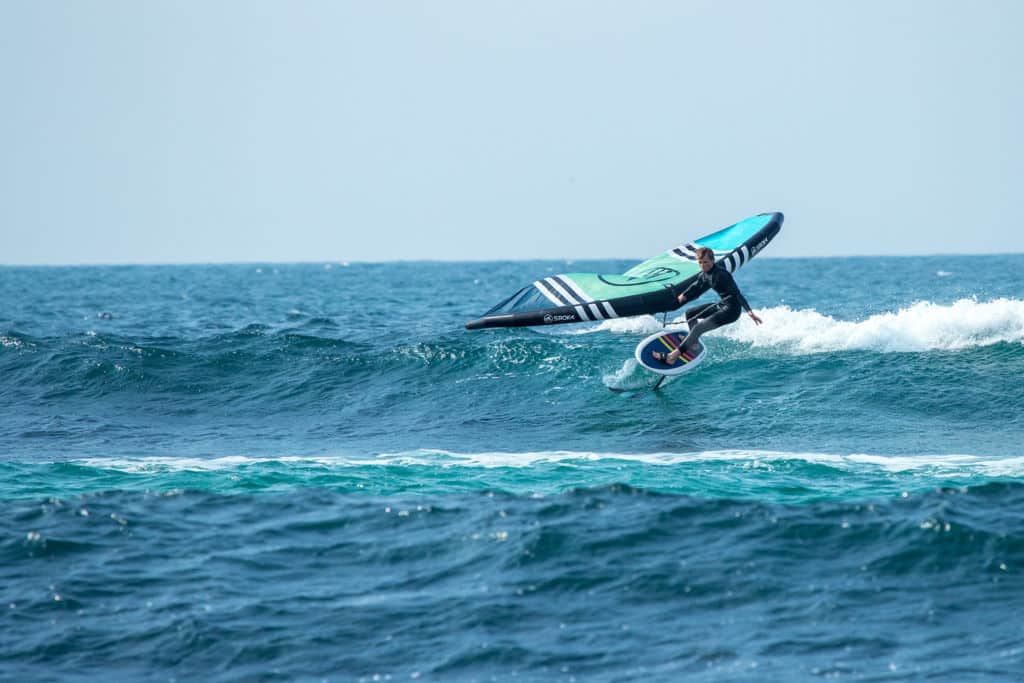
Whether in Wingfoil, Surf foil or Sup Foil, it quickly becomes interesting to make your foil more maneuverable. Indeed, many foilers, once they reach a certain level, want to carve uncompromising turns, increase their gliding sensations, and expand their possibilities. To continue progressing, it can therefore be interesting to make your foil more maneuverable.
In this article, we explain how to gain maneuverability through 4 options.
First and foremost, it’s important to understand that by gaining maneuverability, you will lose stability. This is inevitable.
We could draw a parallel with an airplane: the longer the airplane’s wings, the more stable the plane will be, but it will take much longer to turn. If the airplane’s wings are shorter, it will turn much more easily but will be much less stable.
It's the same principle for your foil: by reducing the span of the wings, it will be more maneuverable and less stable. In this way, by playing with the size and shape of the different components of your foil, you will gain maneuverability.
Option 1: Modify the front wing
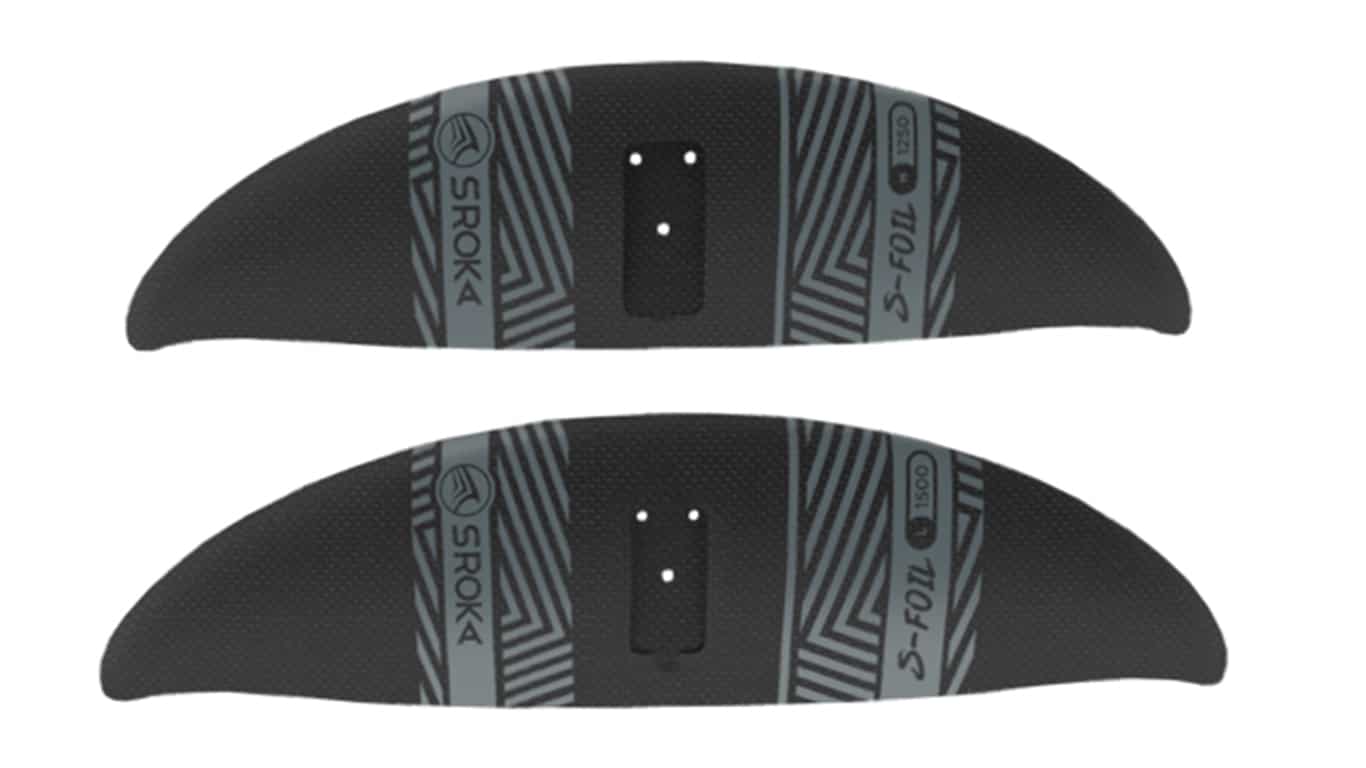
The maneuverability of a foil is closely correlated with the span and shape of the front wing. The first step is therefore to reduce the surface area of the front wing. You will lose stability but you will turn much more easily.
The shape of your front wing will also modify the stability of your foil. A flatter wing with high aspect ratio (S-Foil HA Ratio wing) provides more stability but reduces maneuverability. With an equal span, for more maneuverability, it is better to opt for a sturdier, slightly curved wing with a low aspect ratio (S-Foil Classic wings). Indeed, Classic wings are naturally more maneuverable due to their shape. HA wings, on the other hand, prioritize efficiency and therefore require more experience to control and benefit from superb maneuverability.
Option 2: Change the fuselage length
The longer the fuselage, the more stable the foil. By reducing the distance between the front wing and the stabilizer, the foil will become more maneuverable.
Short (62cm) and ultra-short (56cm) fuselages will offer tight turns in waves and radical maneuvers. However, they are much less stable longitudinally and require a higher pumping frequency. These fuselages are more intended for intermediate or experienced foilers.
Option 3: Reduce the stabilizer surface area
As its name suggests, the stabilizer is there to stabilize your foil. The larger the stabilizer, the more stable your foil will be. So, by reducing the size of the rear wing, you will gain speed and turn more, especially due to a reduction in drag.
Find our 3 S-foil stabilizers here:
Option 4: Play with the mast length
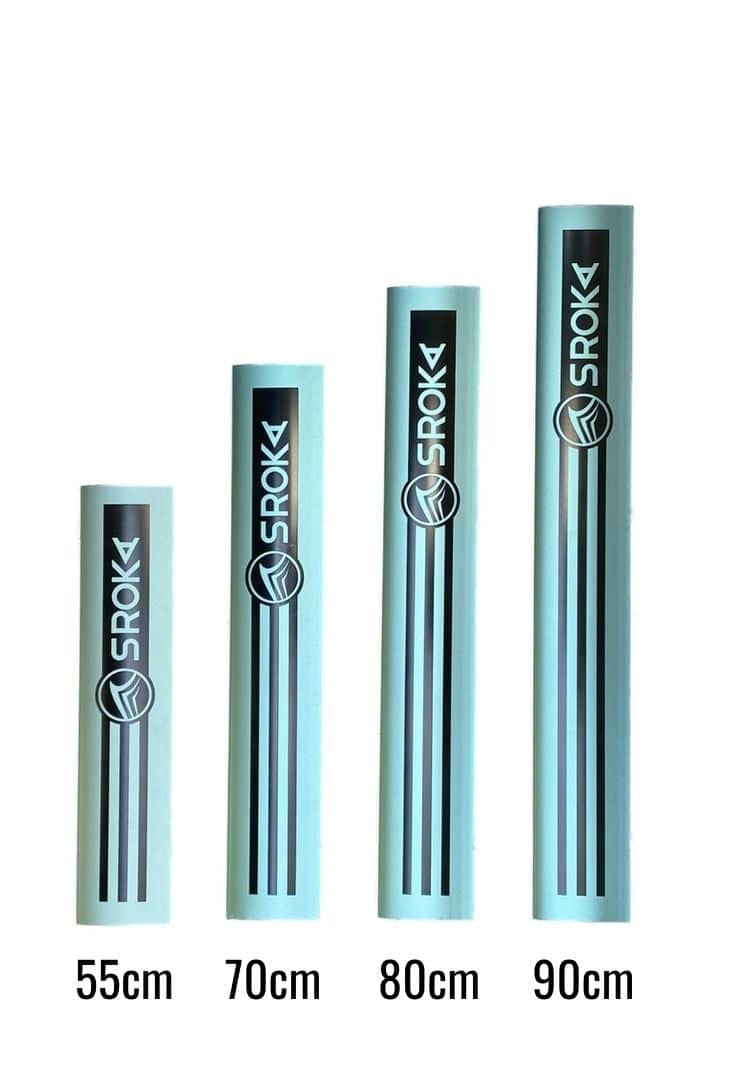
At Sroka, we have four mast lengths: 55cm, 70cm, 80cm, and 90cm. Standard masts are 80cm. However, if you have modified the three previous options, your foil will have significantly lost stability. To compensate for this loss of stability, you can opt for a shorter mast. This way, you will regain comfort and stability. Indeed, the longer the mast, the more sensitive it is. So, by reducing the mast length, you can have better support, while maintaining high maneuverability with a small wing, a small stabilizer, and a short fuselage.
Good construction for better maneuverability
We have chosen to develop reactive and playful masts while maintaining control. The shortened chord of our masts will allow you to gain maneuverability to offer sensational turns.
Its aluminum construction guarantees excellent rigidity, so your foil will be more responsive and more maneuverable.
With this design, the twist phenomenon is eliminated, so the foil retains full control.
Do you need to change everything?
Each option can be combined with another. However, it is not necessary to act on all variables at once to make your foil more maneuverable; a single parameter can change everything. When you want to gain maneuverability, you lose control and stability. You therefore have to compensate by changing other variables to regain stability.
For example, if you have a very small wing like a 670 or a 700, you can keep a standard fuselage to maintain some stability. This way, you will regain control and be able to accelerate more.
If you still have questions about this, or for any other request, do not hesitate to contact us!